
Visual pollution
We protect what we hear and breathe. What we see every day shapes our mood, our attention and our sense of place just as much.
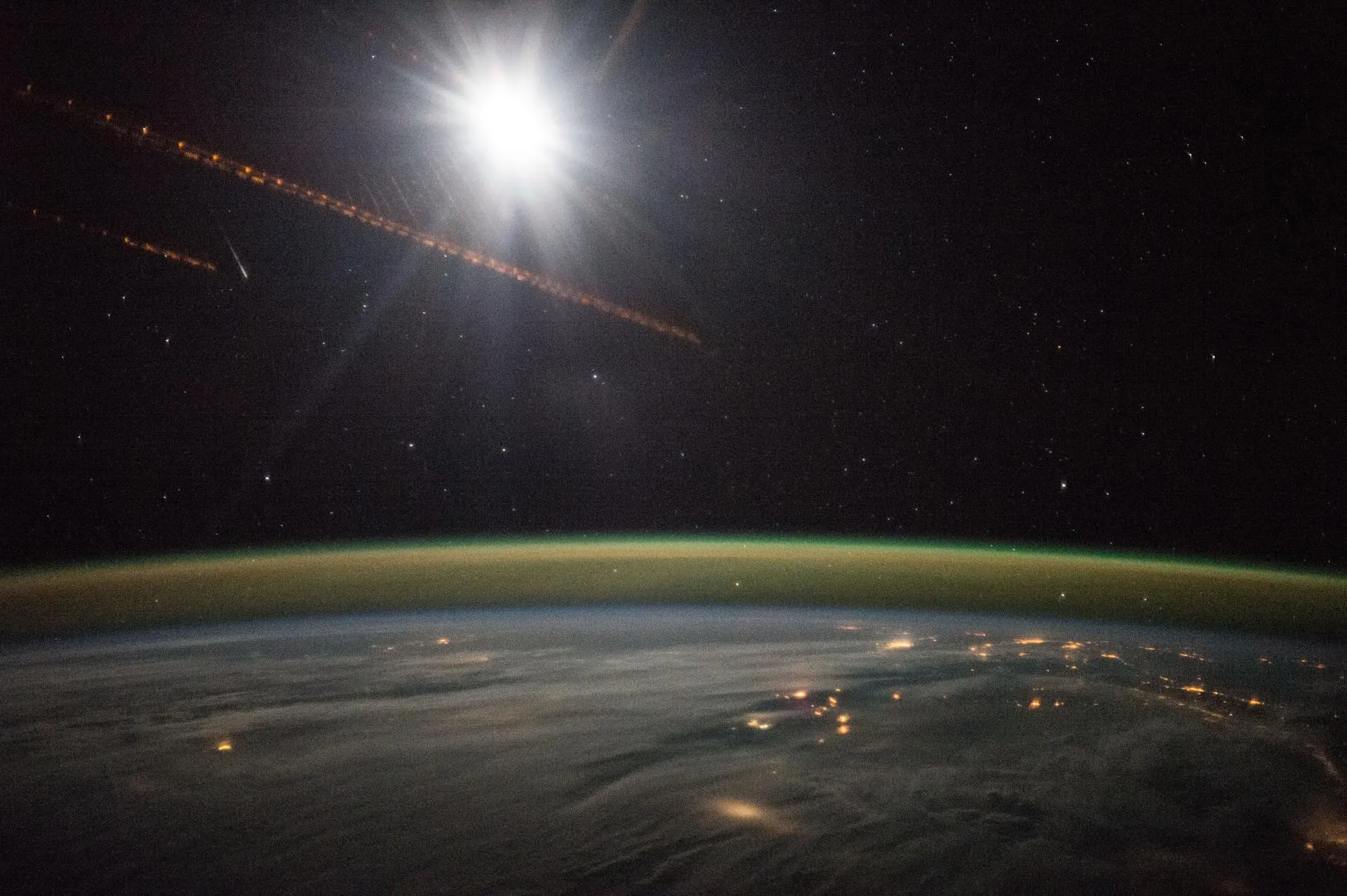
NASA
Visual pollution is the clutter that crowds our view: oversized advertising, tangles of overhead wires, abandoned buildings, litter, glaring signs and, increasingly, the lights of human technology crossing the night sky. It rarely makes headlines because it does not poison anyone directly. But the places people love most, historic centres, parks, coastlines and dark skies, are nearly always the places where it has been controlled.
What counts as visual pollution
- Outdoor advertising. Billboards, digital screens and signs, especially bright, animated ones along roads and in residential areas.
- Clutter. Overhead cables, poles, redundant street furniture, badly placed antennas and poorly maintained buildings.
- Litter and graffiti that signal neglect.
- Light clutter. Clusters of bright, competing lights, part of light pollution.
- Satellite trails. Tens of thousands of satellites are planned for low orbit. Many are bright enough to streak across telescope images and, at twilight, across the naked-eye sky, and the International Astronomical Union has set up a centre to protect the dark and quiet sky from satellite constellation interference.
Why it matters
Bright animated screens along roads compete for drivers’ attention. Cluttered streets are harder to navigate for older people and people with poor sight. Scenic landscapes support tourism and property values. And a sky full of moving points of light changes one of the oldest views humanity shares.
The most valuable views on the planet are protected ones.
What places have done
- São Paulo passed its Clean City Law in 2006, removing most outdoor advertising from Brazil’s largest city; the city found it had rediscovered its architecture.
- Four US states, Vermont, Maine, Hawaii and Alaska, ban billboards.
- Many historic cities limit sign sizes, colours and lighting in their centres, and bury overhead cables when streets are rebuilt.
- Satellite operators and astronomers are working together on darker satellite designs and better scheduling, coordinated through the IAU Centre for the Protection of the Dark and Quiet Sky.
How you can help
- Report neglect such as abandoned signs, broken street furniture and illegal dumping to your local authority; many have apps for it.
- Ask your council about its advertising policy: size limits, no animated screens in residential streets, and signs off at night.
- Keep your own frontage tidy, and switch off shop signs after closing time.
- Support undergrounding of cables when streets are dug up.
- Record the sky. Amateur astronomers can report satellite trails to research projects that track their effects.
- Help map it. Volunteer through the contribution board.
Sources and further reading
- IAU Centre for the Protection of the Dark and Quiet Sky from Satellite Constellation Interference, cps.iau.org
- Scenic America, Billboard control
- City of São Paulo, Law 14.223 of 2006, Lei Cidade Limpa