
Waxbarashadan waxaa qoray Local Solar System Foundation kooxda xubna ah oo ay ku hagaajin karaan qiimeeye xirfad leh. Ma waxaad u qalmin in ay arrimo this? Soo jeedin edit
Orbit Sandbox
Fur bogga oo dhanDhinaca ugu dhow waa gudaha jirka dhexe: orbitkan wuxuu burburi doonaa.
Sawirada dhaqdhaqaaqa waxay ciyaartaa wareeg kasta 8 ilbiriqsi; waqtiga la muujiyey waa kan dhabta ah.
Tallaabada (marka laga reebo qoraalka)
| Waqtiga | Dhererka qorraxda hadda | Xawaaraha hadda |
|---|
Around 1600, Johannes Kepler spent years trying to make the planets move in perfect circles. The observations of Mars refused to fit. What he found instead are three rules that still steer every spacecraft we launch.
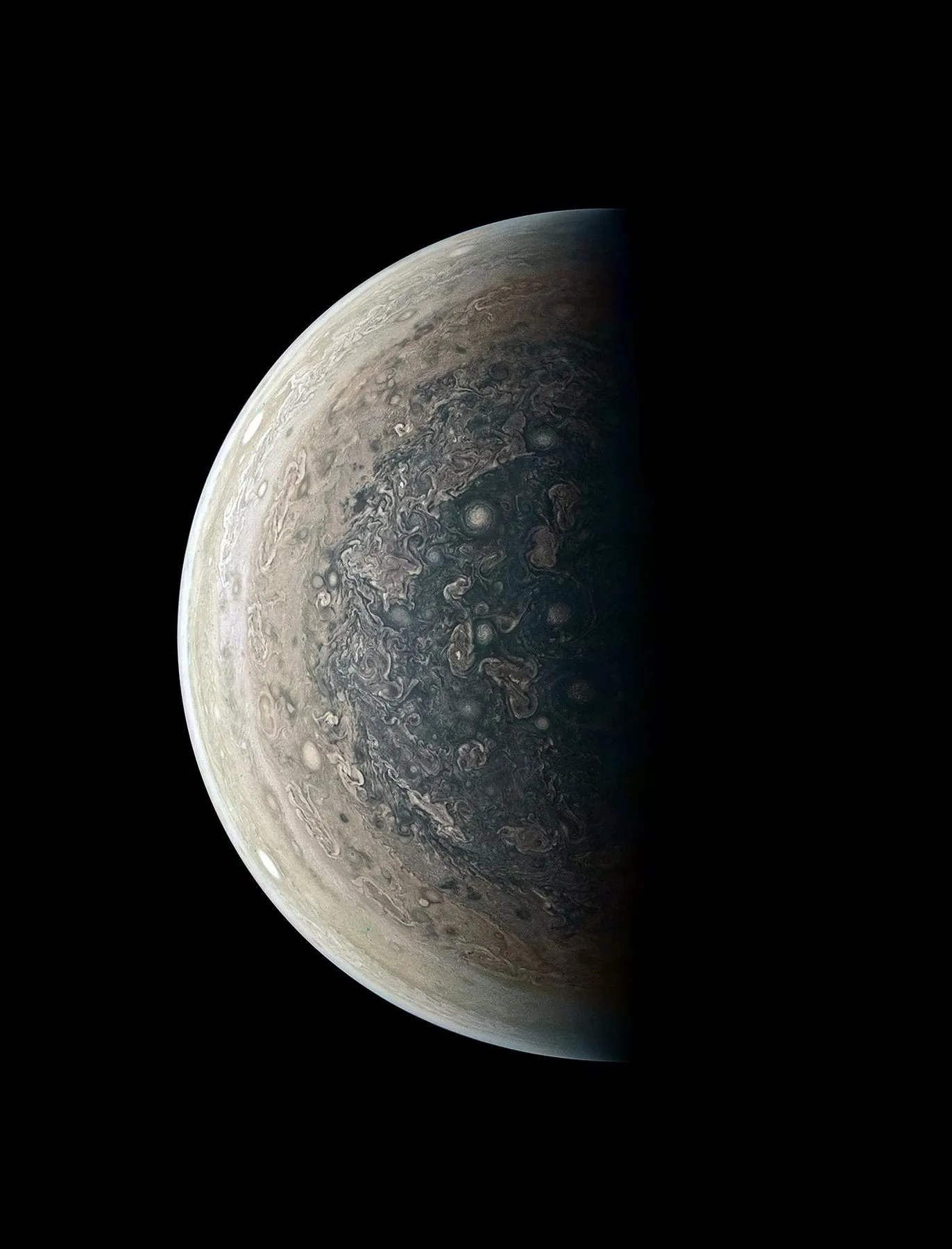
The numbers refused to fit the circles. So Kepler changed the circles.
Look
Around 1600, Johannes Kepler worked with years of very precise observations of Mars made by Tycho Brahe. Everyone assumed planets moved in perfect circles. The numbers refused to fit. After years of work, Kepler found three rules that do fit.
- Orbits are ellipses (stretched circles), with the Sun a little off-centre at a point called a focus.
- A planet speeds up near the Sun and slows down far from it. Draw a line from the Sun to the planet: it sweeps out equal areas in equal times.
- Bigger orbits take much longer. Not just longer because the path is longer, but disproportionately longer.
In the sandbox above, Halley’s Comet is loaded. Watch it whip around the Sun and then crawl through the outer part of its orbit. The coloured slices are all swept in the same amount of time: thin and long far away, short and wide close in. Same area, same time. That is the second law in action.
Understand
An ellipse is described by two numbers:
- The semi-major axis a: half the longest width. It sets the size.
- The eccentricity e: how stretched it is. 0 is a circle; close to 1 is very long and thin.
The closest point to the Sun is the periapsis (perihelion for the Sun), at distance a(1 − e). The farthest point is the apoapsis (aphelion), at a(1 + e).
| Object | a (au) | e |
|---|---|---|
| Earth | 1.000 | 0.017 |
| Mars | 1.524 | 0.093 |
| Halley’s Comet | 17.9 | 0.967 |
Third law. For everything orbiting the Sun, the square of the period is proportional to the cube of the semi-major axis. In years and au:
T² = a³
Jupiter: a = 5.20 au, so T = 5.20^1.5 = 11.9 years. Halley: a = 17.9 au gives T = 75.9 years, close to its famous 75 to 76-year return.
The sandbox shows T²/a³ in years² per au³. Change the orbit around the Sun as much as you like: it stays 1.
Master
Newton derived all three laws from his law of gravity. The third law in full form is:
T = 2π · √(a³ / μ), μ = G(M + m)
So T²/a³ = 4π²/μ is the same for every orbit around one central body, but different for different bodies. Switch the sandbox’s central body to Earth and the constant becomes about 9.9 × 10⁻⁵ s² km⁻³ instead of 1 yr² au⁻³. The m in μ is why Kepler’s version is slightly off for Jupiter, whose mass is about 0.1% of the Sun’s.
The second law is conservation of angular momentum. The areal velocity is dA/dt = h/2, where h = r²·dν/dt is the specific angular momentum, constant for any central force. At periapsis and apoapsis the velocity is perpendicular to the radius, so r_p·v_p = r_a·v_a: the speed ratio equals the inverse distance ratio. For Halley, r_a/r_p = (1 + e)/(1 − e) ≈ 60, so it moves about 60 times faster at perihelion than at aphelion.
To place a body on its orbit at a given time you need the mean anomaly M = n(t − t_p), with mean motion n = 2π/T, and then Kepler’s equation, M = E − e sin E. It has no closed-form solution; the tools on this site solve it by Newton iteration, which converges in a few steps even for Halley’s e = 0.967.
Ku day
In the sandbox, pick 'Earth around the Sun'. Note the value of T²/a³. Now change the semi-major axis to anything you like and check T²/a³ again. Then switch the central body to Earth: what changes, and why?
Wayn. Dhibaatooyinka waa halka waxbarashada ku shubto.
Imtixaan degdeg ah
3 su'aalo degdeg ah. Dooro jawaab si aad u aragto haddii aad xaq tahay.
-
According to Kepler's first law, a planet's orbit is:
- A A perfect circle centred on the Sun
- B An ellipse with the Sun at one focus
- C An ellipse with the Sun at the centre
- D A spiral
Tuso jawaabta
B. An ellipse with the Sun at one focus
-
A comet moves fastest when it is:
- A Farthest from the Sun
- B Closest to the Sun
- C Halfway along its orbit
- D It always moves at the same speed
Tuso jawaabta
B. Closest to the Sun Kepler's second law: equal areas in equal times, so close to the Sun the comet must cover more path per day.
-
A planet's orbit has a semi-major axis 4 times Earth's. How long is its year?
- A 4 years
- B 8 years
- C 16 years
- D 64 years
Tuso jawaabta
B. 8 years T² = a³ = 64, so T = 8 years.
Jidka dhamaadka
- La ciyaaray la interactive
- Akhri akhriska
- Ma dhibco
- Ku qaatay imtixaankan
Mark fasalka dhamaystiran si aad u badbaadiso in horumarka aad ku qalabkan.
Waxbarasho dhamaatay. Wanaagsan!
Kor u qaad Orbital elementsErayada akhriskaan
Isha
- NASA JPL, Basics of Space Flight, Chapter 3: Gravity and Mechanics
- J. Kepler, Astronomia Nova (1609), facsimile at the Internet Archive
- JPL SSD: Keplerian elements for approximate positions of the planets
- NASA Earth Observatory: Planetary Motion, the history of an idea
Waxbarashadani waa la siiyay CC BY-SA 4.0.