
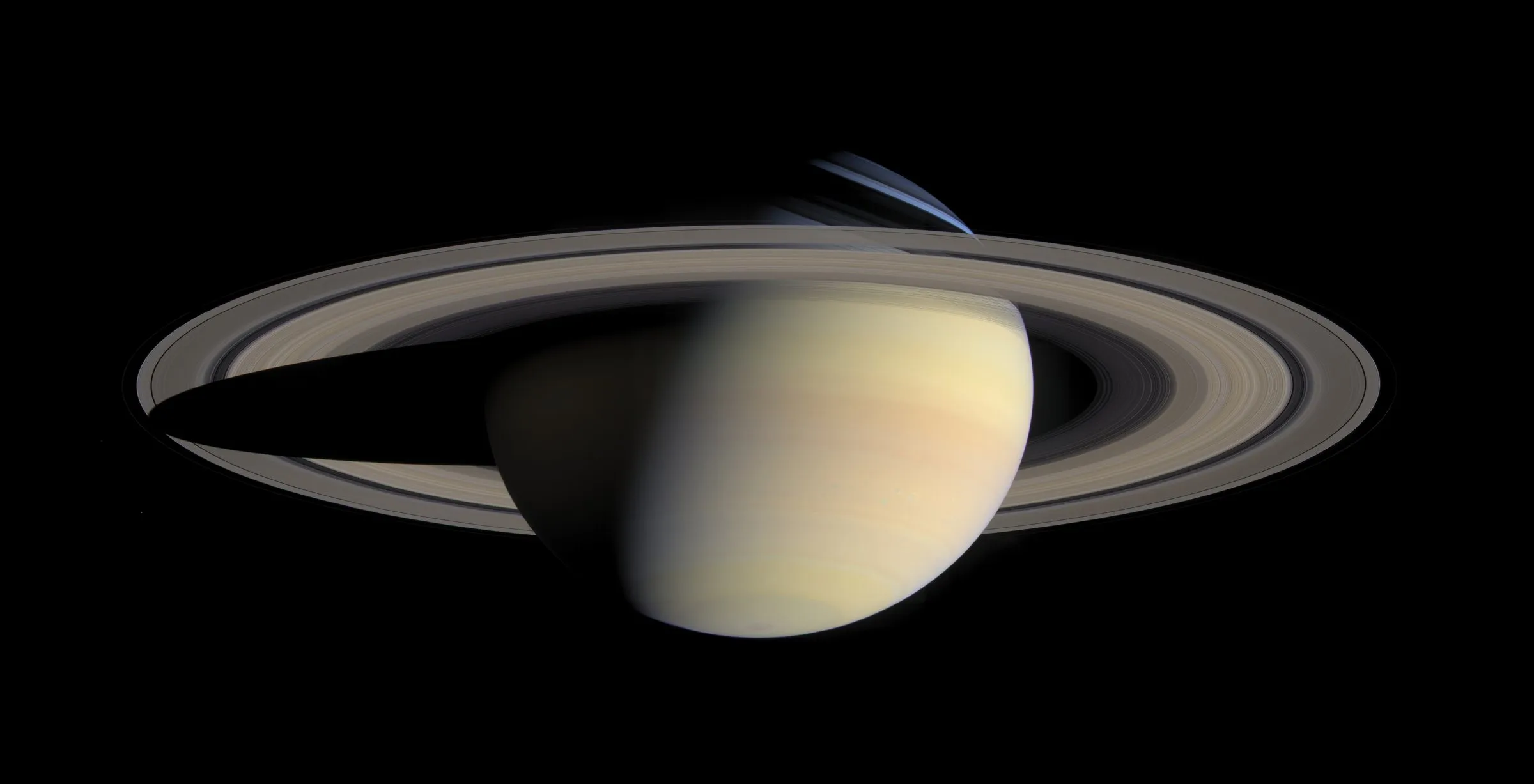
دا درس د Local Solar System بنسټ ټیم غړی لخوا لیکل شوی و او کیدای شي د یو وړ کتنه کونکي لخوا ښه شي. تاسو په دې موضوع کې وړتيا لرئ؟ د سمون وړاندیز وکړئ
مدار شګه بکس
ټول مخ پرانيستلنږدې نقطه د مرکزي بدن دننه ده: دا مدار به سقوط وکړي.
د ژوندۍ بڼې هر مدار په 8 ثانیو کې لوبوي؛ ښودل شوې دوره ریښتینې ده.
اومتوک لښتيال (د ليکنې بديل)
| مهال پړاو | د لمر څخه اوسنی واټن | اوس چټکول |
|---|
How fast is a spacecraft moving? Tell me how far it is from the planet and how big its orbit is, and one short equation answers the question anywhere along its path. Mission planners use it every day.
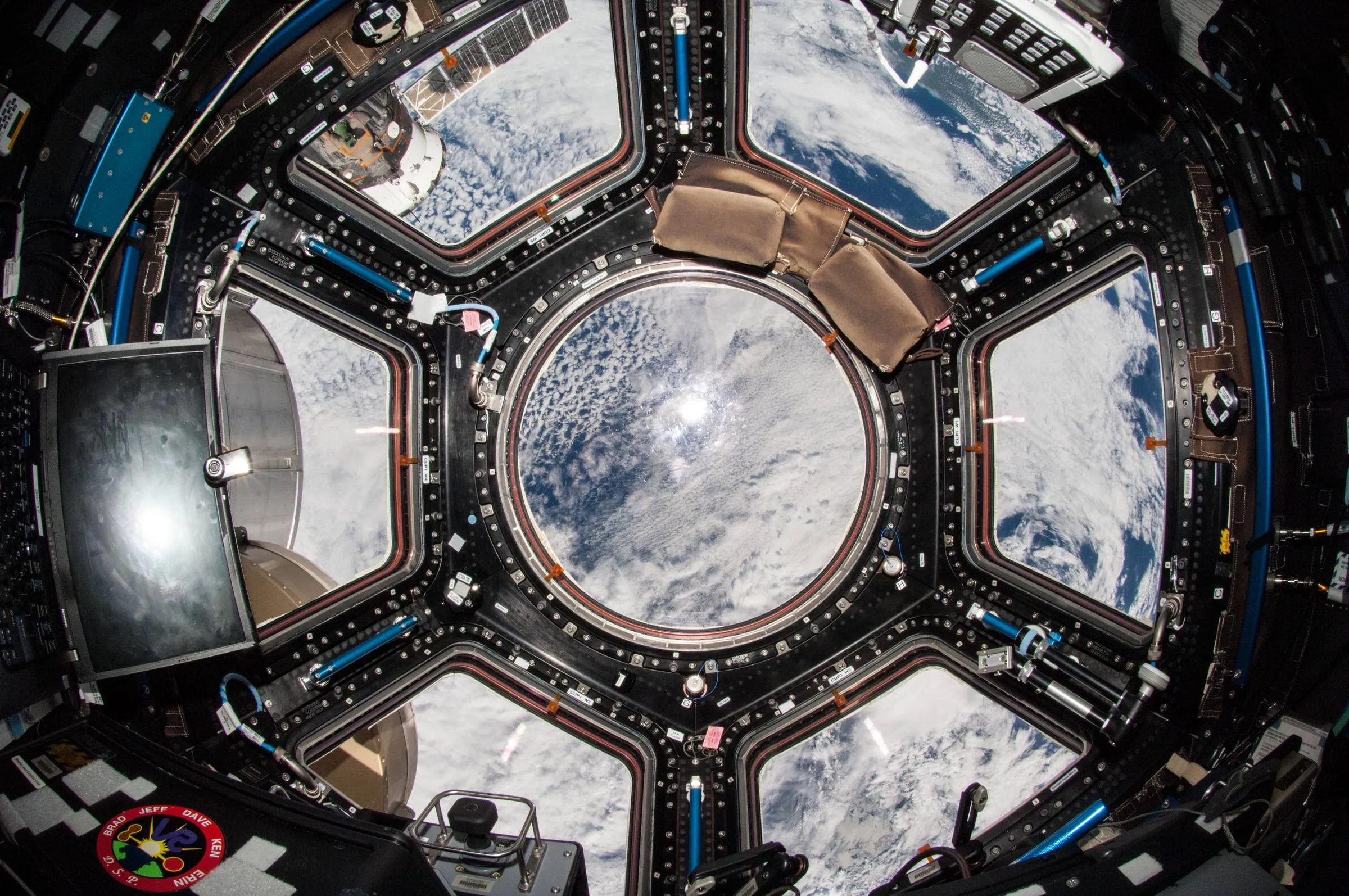
One short equation gives the speed anywhere along an orbit.
Look
Anything in orbit is always trading height for speed, like a skateboarder on a half-pipe.
- Falling closer to the central body, it speeds up.
- Climbing away, it slows down.
In the sandbox the yellow arrow shows the speed: long arrow, fast; short arrow, slow. Watch it grow as the body swings in, and shrink as it climbs out.
Earth does the same thing, just gently because its orbit is almost circular: it moves about 30.3 km/s in early January and about 29.3 km/s in early July.
Understand
The vis-viva equation (“living force”, an old word for energy) gives the speed at any point:
v = √( μ · (2/r − 1/a) )
- v: speed
- μ: the central body’s gravitational parameter (GM)
- r: current distance from the centre of the central body
- a: semi-major axis of the orbit
Check it:
- Circle (r = a): v = √(μ/a). That is the circular speed from the Newton lesson.
- At periapsis, r is smallest, so 2/r is largest and v is fastest.
- Very far away on an escape path (a → ∞): v = √(2μ/r). That is the escape speed, covered in the next lesson.
Worked example: Earth around the Sun, μ = 1.327 × 10¹¹ km³/s², a = 149.6 million km. At aphelion r = 152.1 million km:
v = √(1.327 × 10¹¹ × (2/1.521 × 10⁸ − 1/1.496 × 10⁸)) ≈ 29.3 km/s.
Master
Vis-viva is energy conservation in disguise. The specific orbital energy (energy per kilogram) is
ε = v²/2 − μ/r = −μ / (2a)
Kinetic plus potential energy is constant along the orbit and depends only on a. Solve for v and you get vis-viva. Consequences:
- The sign of ε classifies the orbit: negative for ellipses, zero for a parabola, positive for a hyperbola.
- At any given distance, the speed alone determines a. This is why a single engine burn at one point changes the size of the whole orbit, and why the next lessons can talk about delta-v budgets.
Apsis speeds follow from vis-viva with r = a(1 ± e):
v_p = √(μ/a · (1+e)/(1−e)), v_a = √(μ/a · (1−e)/(1+e))
Their product is v_p · v_a = μ/a = v_circ², so the circular speed is the geometric mean of the two, not the arithmetic mean. That answers the Try it question.
هڅه کول
With the Sun as central body, set a = 1 au and e = 0. Note the speed. Now raise e to 0.6 and compare the fastest and slowest speeds with that number. Is the average of the two equal to the circular speed?
لوی. ننګونې دي چېرته چې د زده کړې سټیکونه.
چټکه پوښتنه
3 چټک پوښتنې. د ځواب غوره کړئ چې وګورئ که تاسو سم یاست.
-
In the vis-viva equation, what happens to the speed as the body moves closer to the central body?
- A It increases
- B It decreases
- C It stays constant
- D It becomes zero
ځواب ښودل
A. It increases
-
For a circular orbit (r = a), vis-viva gives:
- A v = √(2μ/r)
- B v = √(μ/r)
- C v = μ/r
- D v = 0
ځواب ښودل
B. v = √(μ/r)
-
Earth moves about 29.8 km/s around the Sun on average. Roughly how fast at perihelion?
- A 29.3 km/s
- B 30.3 km/s
- C 35 km/s
- D 42 km/s
ځواب ښودل
B. 30.3 km/s v_p = √(μ/a · (1+e)/(1−e)) with e = 0.0167 gives about 30.3 km/s.
پای ليکه
- د تعاملي سره لوبېدلی
- درس ولولئ
- د چالش ترسره کول
- د پوښتنې ځواب
د دې لپاره چې په دې وزله کې يې خپل پرمختګ ته وساتئ، ټوله درسنه نښه کړئ.
زده کړه بشپړه شوه. ښه ترسره شو!
راتلونکی بره Escape velocityپه دې درس کې ويېونه
سرچينې
- JPL SSD: astrodynamic parameters (GM of the Sun)
- NASA JPL, Basics of Space Flight, Chapter 3: Gravity and Mechanics
- NASA NSSDCA Planetary Fact Sheet (orbital velocities)
دا درس د CC BY-SA 4.0 منښتليک لري.