
שיעור זה נכתב על ידי חבר צוות Local Solar System Foundation וניתן לשפר אותו על ידי מבקר מוסמך. האם אתה מוסמך בנושא זה?
מסלול
פתוח דף מלאהנקודה הקרובה ביותר נמצאת בתוך הגוף המרכזי: מסלול זה יתרסק.
האנימציה מראה כל מסלול ב-8 שניות; התקופה המוצגת היא האמיתית.
טבלת נתונים (טקסט חלופי)
| צעד זמן | המרחק מהשמש עכשיו | מהירות עכשיו |
|---|
How fast is a spacecraft moving? Tell me how far it is from the planet and how big its orbit is, and one short equation answers the question anywhere along its path. Mission planners use it every day.
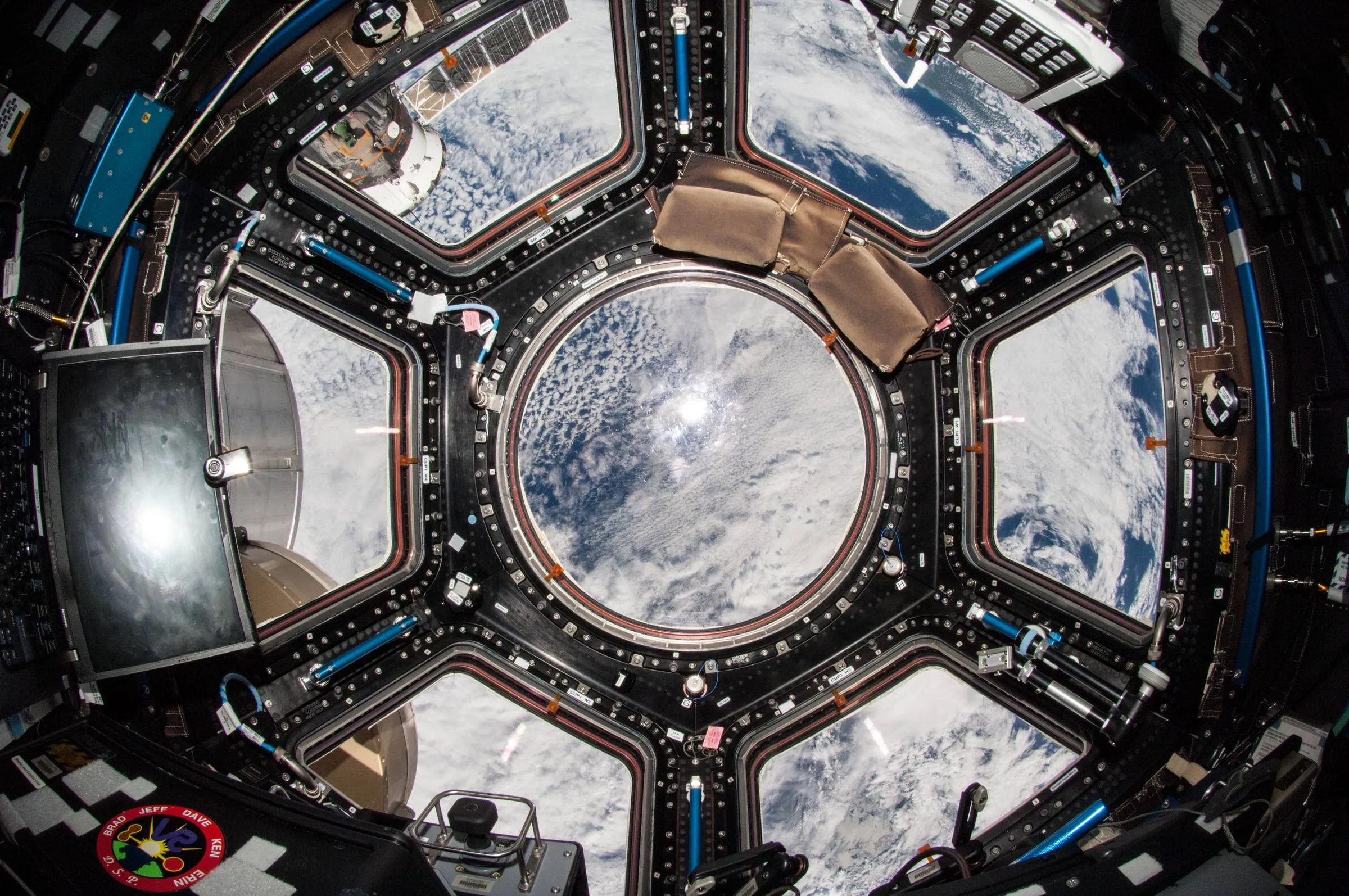
One short equation gives the speed anywhere along an orbit.
Look
Anything in orbit is always trading height for speed, like a skateboarder on a half-pipe.
- Falling closer to the central body, it speeds up.
- Climbing away, it slows down.
In the sandbox the yellow arrow shows the speed: long arrow, fast; short arrow, slow. Watch it grow as the body swings in, and shrink as it climbs out.
Earth does the same thing, just gently because its orbit is almost circular: it moves about 30.3 km/s in early January and about 29.3 km/s in early July.
Understand
The vis-viva equation (“living force”, an old word for energy) gives the speed at any point:
v = √( μ · (2/r − 1/a) )
- v: speed
- μ: the central body’s gravitational parameter (GM)
- r: current distance from the centre of the central body
- a: semi-major axis of the orbit
Check it:
- Circle (r = a): v = √(μ/a). That is the circular speed from the Newton lesson.
- At periapsis, r is smallest, so 2/r is largest and v is fastest.
- Very far away on an escape path (a → ∞): v = √(2μ/r). That is the escape speed, covered in the next lesson.
Worked example: Earth around the Sun, μ = 1.327 × 10¹¹ km³/s², a = 149.6 million km. At aphelion r = 152.1 million km:
v = √(1.327 × 10¹¹ × (2/1.521 × 10⁸ − 1/1.496 × 10⁸)) ≈ 29.3 km/s.
Master
Vis-viva is energy conservation in disguise. The specific orbital energy (energy per kilogram) is
ε = v²/2 − μ/r = −μ / (2a)
Kinetic plus potential energy is constant along the orbit and depends only on a. Solve for v and you get vis-viva. Consequences:
- The sign of ε classifies the orbit: negative for ellipses, zero for a parabola, positive for a hyperbola.
- At any given distance, the speed alone determines a. This is why a single engine burn at one point changes the size of the whole orbit, and why the next lessons can talk about delta-v budgets.
Apsis speeds follow from vis-viva with r = a(1 ± e):
v_p = √(μ/a · (1+e)/(1−e)), v_a = √(μ/a · (1−e)/(1+e))
Their product is v_p · v_a = μ/a = v_circ², so the circular speed is the geometric mean of the two, not the arithmetic mean. That answers the Try it question.
נסה את זה.
With the Sun as central body, set a = 1 au and e = 0. Note the speed. Now raise e to 0.6 and compare the fastest and slowest speeds with that number. Is the average of the two equal to the circular speed?
אתגרים הם המקום שבו הלמידה מתעקשת.
בחינה מהירה
3 שאלות מהירות. בחר תשובה כדי לראות אם אתה צודק.
-
In the vis-viva equation, what happens to the speed as the body moves closer to the central body?
- A It increases
- B It decreases
- C It stays constant
- D It becomes zero
הראה את התשובה
A. It increases
-
For a circular orbit (r = a), vis-viva gives:
- A v = √(2μ/r)
- B v = √(μ/r)
- C v = μ/r
- D v = 0
הראה את התשובה
B. v = √(μ/r)
-
Earth moves about 29.8 km/s around the Sun on average. Roughly how fast at perihelion?
- A 29.3 km/s
- B 30.3 km/s
- C 35 km/s
- D 42 km/s
הראה את התשובה
B. 30.3 km/s v_p = √(μ/a · (1+e)/(1−e)) with e = 0.0167 gives about 30.3 km/s.
שורה סופית
- שיחקתי עם המשחק האינטראקטיבי.
- קרא את השיעור.
- עבר את האתגר.
- עשיתי את הבחינה.
סימן את השיעור כסיים כדי לשמור אותו בקידמת ההתקדמות שלך במכשיר זה.
שיעור מושלם, עבודה טובה!
הבא בתור. Escape velocityמילים בשיעור זה
מקורות
- JPL SSD: astrodynamic parameters (GM of the Sun)
- NASA JPL, Basics of Space Flight, Chapter 3: Gravity and Mechanics
- NASA NSSDCA Planetary Fact Sheet (orbital velocities)
שיעור זה מופץ תחת הרישיון CC BY-SA 4.0.