
ئەم وانەیە لەلایەن ئەندامێکی تیمی Local Solar System Foundationەوە ئامادەکراوە و دەتوانرێت باشتر بکرێت بە ڕەخنەگری پسپۆڕ. ئایا تۆ لەم بابەتەدا شارەزایت؟ پێشنیاری گۆڕانکارییەک بکە
کێڵگەی نیوتن
پەڕەی تەواو بکەچیای بەرزتر لە هەرچی ڕاستەقینە دروست کراوە بۆ ئەوەی بتوانیت بیبینیت. دژایەتی هەوا پشتگوێ خراوە
جێبە زانیاریەکان (ناوچەی گۆڕینی نوسراو)
خێرایی دابڕاو خێراتر بێت: دەکەوێتە دواوە. لە نێوان خێرایی دابڕاو و خێرایی دەرچووندا: دەخولێتەوە. بە خێرایی دەرچوون یان زیاتر: بۆ هەمیشە جێدەهێڵێت.
| وڵاتی | خێرایی ئۆبیجی دابڕاو لێرەدا | خێرایی دەرچوون لێرە |
|---|---|---|
| زەوی | 7,61 km/s | 10,8 km/s |
| مانگ | 1,62 km/s | 2,29 km/s |
| مانگی سێ | 3,42 km/s | 4,84 km/s |
Throw a ball up and it comes back. Throw it hard enough and it never does. On Earth, that speed is 11.2 kilometres every second, and reaching it is why rockets are so enormous.
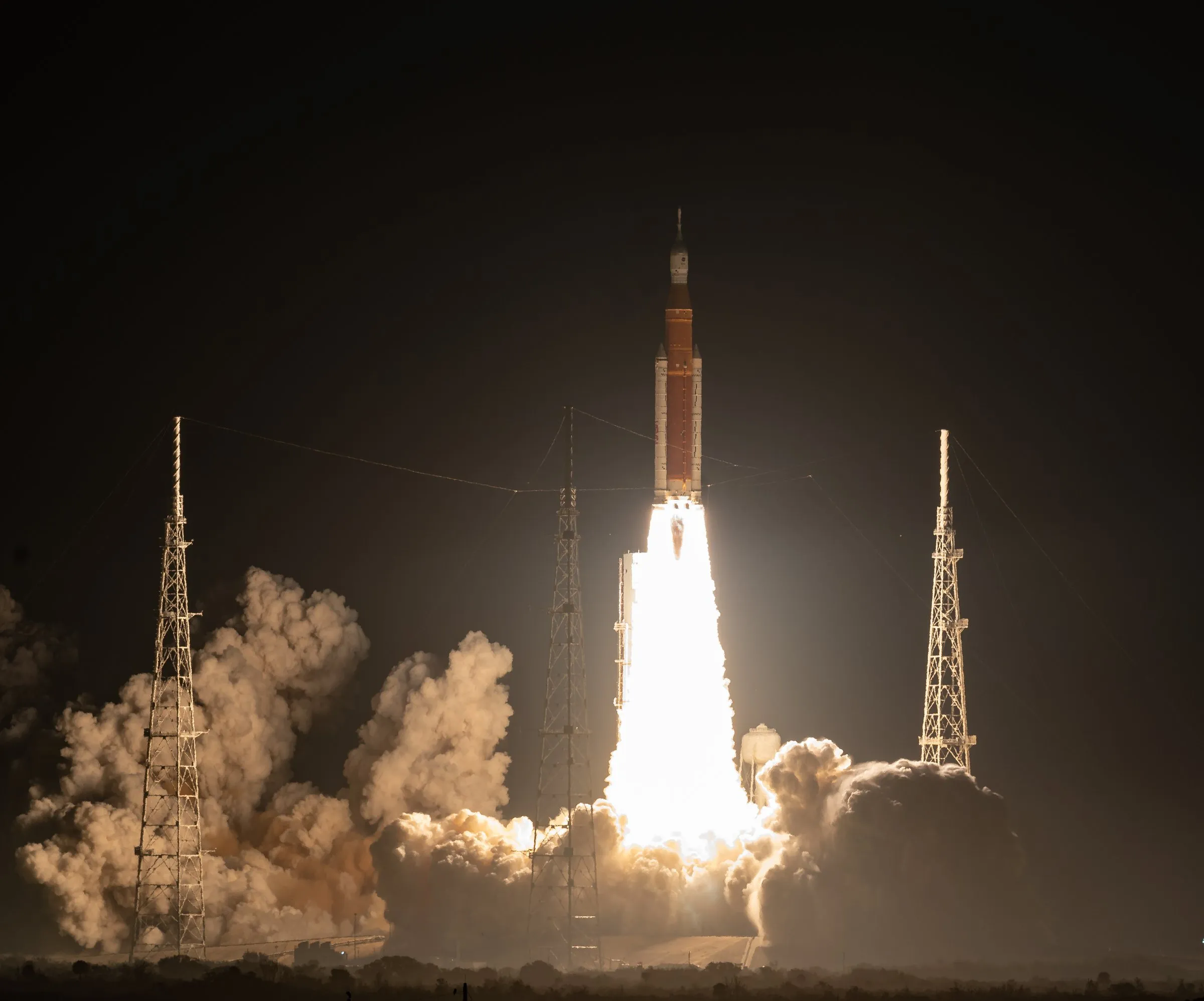
Fast enough, and a thrown object never comes back.
Look
Throw a ball upwards and it comes back down. Throw it faster, it goes higher before falling back. Is there a speed so fast that it never comes back?
Yes. It is called the escape speed (or escape velocity). Go at least that fast, with nothing slowing you down, and gravity can never pull you back.
| World | Escape speed from the surface |
|---|---|
| Moon | 2.4 km/s |
| Mars | 5.0 km/s |
| Earth | 11.2 km/s |
| Jupiter | 59.5 km/s |
| Sun | 617.6 km/s |
The Moon’s escape speed is less than a quarter of Earth’s. That is one reason why the Moon could be a useful place to launch things into space from.
In the cannon tool, the Moon is loaded. Try speeds below and above the escape speed shown in the readout.
Understand
Escape happens when the body’s kinetic energy is enough to climb out of the gravitational “well” completely. Setting kinetic energy equal to the energy needed to reach infinity:
½ v² = μ / r ⇒ v_escape = √(2μ / r)
Compare with the circular speed √(μ/r): escape speed is always √2 ≈ 1.414 times the circular speed at the same distance.
Two important facts:
- It does not depend on your mass. A pebble and a spaceship need the same speed. (The spaceship needs much more energy, of course.)
- It depends on where you start. Farther out, r is bigger and escape is easier. From the height of geostationary orbit, Earth’s escape speed is only about 4.3 km/s.
Rockets never actually fire up to 11.2 km/s at the ground. They climb steadily while their engines keep pushing. Escape speed is the speed needed for an unpowered object, like the cannonball.
Master
In terms of specific orbital energy ε = v²/2 − μ/r, escape means ε ≥ 0. At exactly ε = 0 the path is a parabola and the speed tends to zero at infinity. Faster than that, the path is a hyperbola and the object keeps a leftover speed far away, the hyperbolic excess speed v∞:
v² = v∞² + v_escape², C₃ = v∞²
Mission planners quote launch energy as C₃ (km²/s²). For a Mars transfer, v∞ at departure is about 2.9 km/s, so C₃ ≈ 8.7 km²/s².
This relation hides one of the most useful effects in spaceflight, the Oberth effect: a burn made deep in a gravity well, where you are already moving fast, buys more v∞ than the same burn made far away. From a 200 km parking orbit around Earth (circular speed 7.78 km/s, escape speed 11.0 km/s), reaching v∞ = 2.9 km/s needs only about 3.6 km/s of engine burn, not 3.2 + 2.9 = 6.1 km/s. The Delta-v Map uses this for every departure from low Earth orbit.
تاقی بکەەوە
On the Moon, fire at a speed just below the escape speed shown in the readout, then just above. Compare the two paths. Then try the same on Earth and Mars.
باشە ، تاقیکردنەوە ئەو شوێنەیە کە فێربوون تیایدا دەوەستێت
تاقیکردنەوە خێرا
3 پرسیاری خێرا. وەڵامێک هەڵبژێرە بۆ ئەوەی ببینیت ئایا ڕاستت کردوە
-
Earth's escape speed from the surface is about:
- A 7.9 km/s
- B 11.2 km/s
- C 29.8 km/s
- D 617 km/s
وەڵامەکە نیشان بدە
B. 11.2 km/s
-
Escape speed is how many times the circular orbit speed at the same distance?
- A 2
- B √2 (about 1.41)
- C 1/2
- D π
وەڵامەکە نیشان بدە
B. √2 (about 1.41)
-
Does escape speed depend on the mass of the object being launched?
- A Yes, heavier objects need more
- B Yes, lighter objects need more
- C No, only on the planet's mass and the starting distance
- D Only in an atmosphere
وەڵامەکە نیشان بدە
C. No, only on the planet's mass and the starting distance
کۆتایی دێڕ
- یاریکردن لەگەڵ پەیوەندیدارەکان
- وانەکە بخوێنەوە
- تاقیکردنەوەکەت ئەنجام دا
- تاقیکردنەوەکەت ئەنجامدا
نیشانەی وانەکە دابنێ تەواو بۆ ئەوەی بیپارێزیت بۆ پێشکەوتنی خۆت لەسەر ئەم ئامێرە.
وانەکە تەواو بوو. زۆر باشە!
پاش Why an orbit is a fallوشەکان لەم وانەیەدا
سەرچاوە
- NASA JPL, Basics of Space Flight, Chapter 3: Gravity and Mechanics
- NASA NSSDCA Planetary Fact Sheet (escape velocities)
- JPL SSD: Planetary Physical Parameters
- NASA NSSDCA Sun Fact Sheet
ئەم وانەیە بە مۆڵەتی CC BY-SA 4.0 دراوە.