
Ocean and water pollution
Every river is a conveyor belt. What we spill on the land today reaches the sea tomorrow, and the sea never sends it back.
Water is the planet’s great solvent. It dissolves minerals from rock, carries nutrients to forests and fish, and cleans itself as it moves. For most of history that was enough: people poured waste into rivers and nature diluted it. At today’s scale, with more than eight billion people and industrial farming on every continent, dilution stopped working long ago. What we spill on the land reaches the sea.
How water becomes polluted
Pollution arrives in two ways. Point sources come out of a pipe: a sewage outfall, a factory drain, a mine. They are easy to find and, with permits and treatment, easy to fix. Diffuse sources come from everywhere at once: fertiliser and manure washing off fields, oil and tyre dust washing off roads, pesticides drifting from crops. They are harder, because no single pipe can be closed.
The main pollutants are:
- Nutrients. Nitrogen and phosphorus from fertilisers, manure and sewage. In water they feed algae, which bloom, die and rot, using up the oxygen fish need.
- Pathogens. Bacteria, viruses and parasites from untreated sewage and animal waste. They cause cholera, dysentery, typhoid and diarrhoeal disease.
- Chemicals. Heavy metals such as mercury and lead, industrial solvents, pesticides, pharmaceuticals and the so-called forever chemicals (PFAS), which barely break down at all.
- Sediment and heat. Soil from erosion clouds rivers and smothers reefs; warm water from power stations lowers oxygen further.
Who is affected
Everyone drinks downstream of someone. According to the World Health Organization, at least 1.7 billion people used a drinking-water source contaminated with faeces in 2022, and 2.2 billion still lacked safely managed drinking water. The burden falls hardest on children: unsafe water, sanitation and hygiene remain a leading cause of diarrhoeal deaths among the youngest.
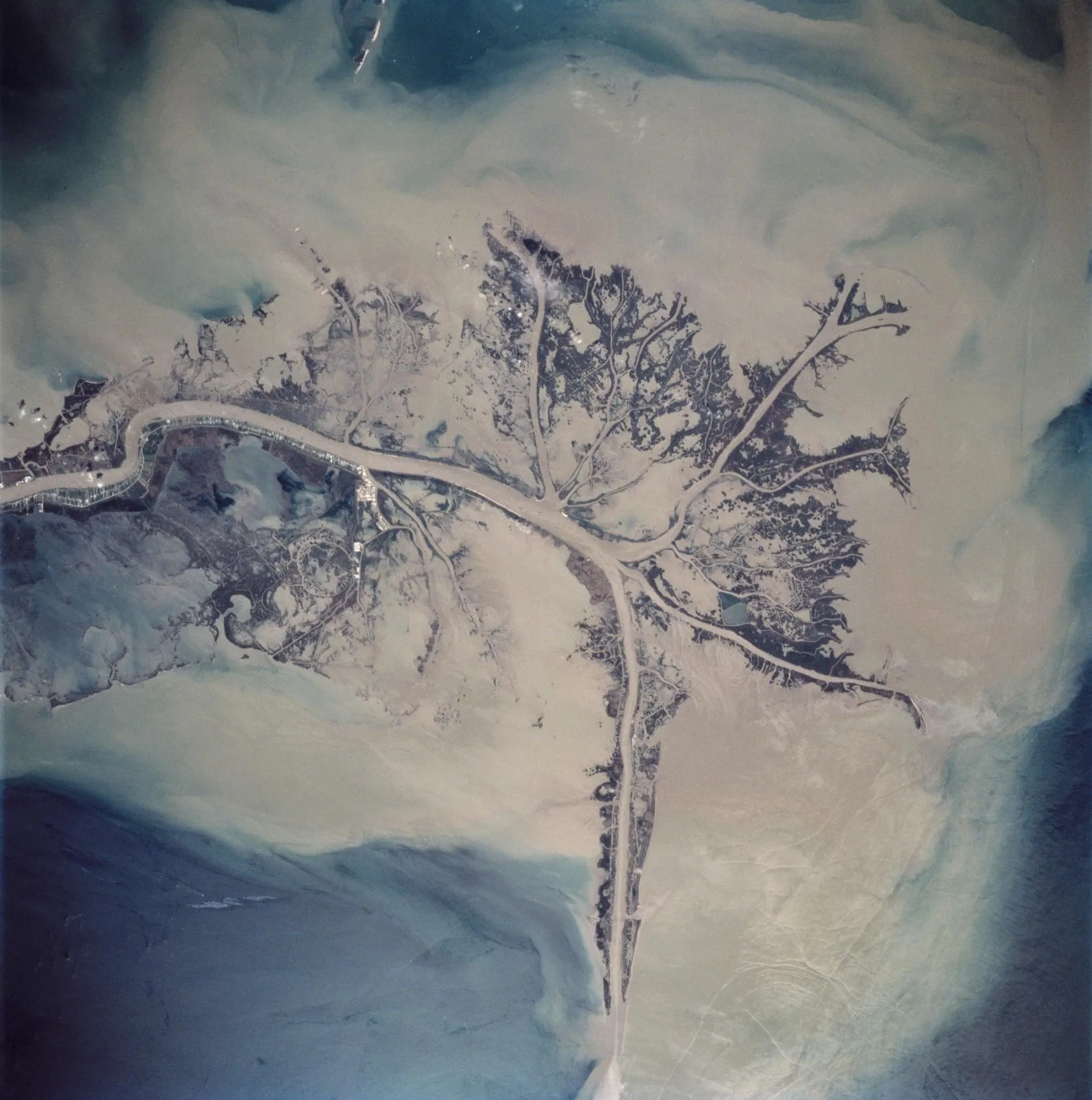
Ecosystems pay too. Where nutrient-rich rivers meet the sea, oxygen can fall so low that fish and shellfish suffocate. These dead zones now number in the hundreds; one of the largest forms every summer in the Gulf of Mexico, fed by the Mississippi. Around the world, the open ocean has lost oxygen as well, and low-oxygen coastal sites have multiplied since the middle of the twentieth century (Breitburg et al., 2018).
A dead zone is a crime scene with thousands of suspects and no single weapon.
What actually works
The good news is that water pollution is one of the problems humanity has already solved, in places, many times over. The Thames in London was declared biologically dead in the 1950s; seals and seahorses live in it today. The Rhine, once called the sewer of Europe, hosts salmon again. The tools are known:
- Treat the sewage. Collecting and treating wastewater is the single most effective public-health measure in history. Where treatment plants are built and maintained, waterborne disease collapses.
- Feed crops, not rivers. Precision fertiliser use, cover crops, and buffer strips of trees and grass along riverbanks can cut nutrient runoff dramatically, and save farmers money on fertiliser.
- Permit, monitor, publish. Industrial discharges fall when permits set limits, monitoring is continuous and results are public. Transparency works because nobody wants to be the name on the map.
- Restore wetlands. Wetlands are the planet’s water filters, trapping sediment and removing nitrogen for free.
- Price pollution. Charging for discharges, and paying farmers for clean-water practices, turns clean water into something the market rewards.
How you can help
- Never flush it. Medicines, wet wipes, fats and chemicals do not belong in the toilet or the sink. Return old medicines to a pharmacy.
- Use less fertiliser and pesticide at home, and never before rain. A lawn needs far less than the bag suggests.
- Keep drains clean. Street drains usually go straight to the nearest river, untreated. Oil, paint and car-wash soap should never go down them.
- Plant a buffer. If you own land near water, a strip of native plants along the bank filters runoff before it arrives.
- Ask questions locally. Find your water utility’s quality report and your region’s sewage overflow data. Ask your representatives how often untreated sewage is released, and what the plan is to stop it.
- Support farmers who protect water, and ask shops where their food comes from.
- Join the effort. Translate this explainer or help map local data through the contribution board.
Sources and further reading
- World Health Organization, Drinking-water fact sheet (2023)
- UN-Water, Progress on wastewater treatment, 2024 update
- Diaz and Rosenberg (2008), Spreading dead zones and consequences for marine ecosystems, Science 321
- Breitburg et al. (2018), Declining oxygen in the global ocean and coastal waters, Science 359
- U.S. EPA, Nutrient pollution
- UN-Water, Water quality and wastewater