
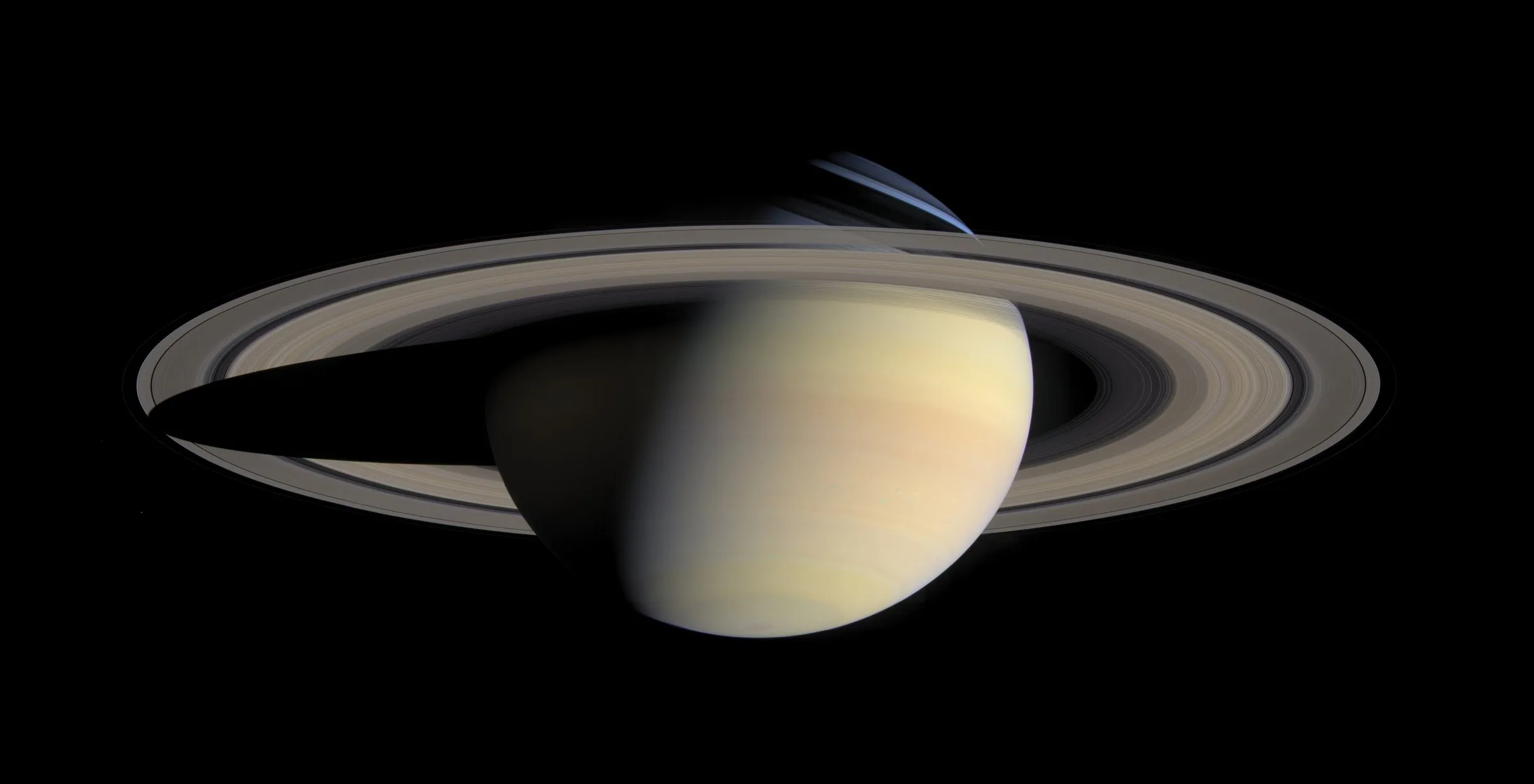
This lesson was drafted by a Local Solar System Foundation team member and could be improved by a qualified reviewer. Are you qualified in this subject?ផ្ដល់យោបល់កែសម្រួល
ក្នុង 1977 យានអវកាស Voyager ពីរបានចាកចេញពីផែនដីនៅលើផ្លូវដែលប្រើការតម្រឹមកម្រនៃភពព្រហស្បតិ៍, ភពសៅរ៍, Uranus និង Neptune ដែលកើតឡើងម្តងក្នុងមួយ 175 ឆ្នាំឬដូច្នេះ. Each planet bent their path and flung them onward faster. Without those free boosts, Voyager 2 could never have reached Neptune in twelve years.
The planet does not give energy away. It lends you its motion.
មើល
Picture a tennis ball thrown at the front of a moving train. It bounces back faster than it was thrown, because the train was moving towards it. A gravity assist is the same idea, with gravity instead of a collision:
- Seen from the planet, the spacecraft falls in, swings round and climbs out at exactly the same speed it came in with. Only the direction changes.
- Seen from the Sun, the planet itself is moving at many km/s. Add that motion to the spacecraft’s before and after the flyby: because the direction changed, the total speed can be much larger after.
Passing behind the planet, in the planet’s wake, adds speed. ឆ្លងកាត់ in front យកវាចេញ;that is how Messenger slowed down to reach Mercury.
យល់
In the example, the spacecraft approaches Jupiter at v∞ = 7.5 km/s and passes 5 Jupiter radii from the centre. អ៊ីពែបូលកោងទិសរបស់វាតាម
δ =2arcsin( 1/ e), e = 1 + r_ p v∞² / μ
ជាមួយ μ_Jupiter = 1.267 × 10⁸ km³/s², e = 1.16 និងការវិលគឺប្រហែល 119 ដឺក្រេ ។ Adding Jupiter’s orbital velocity (13.1 km/s):
- Before: about 7.6 km/s relative to the Sun.
- After: about 19.9 km/s relative to the Sun.
យានអវកាសបានទទួលលើសពី 12 km / s ដោយមិនចាំបាច់ប្រើម៉ាស៊ីន។ ភពព្រះច័ន្ទ, 10²⁴ ដងធ្ងន់ជាង, បានបាត់បង់ចលនាដូចគ្នានិងបានថយចុះដោយចំនួនតិចតួចណាស់ដែលមិនធ្លាប់មានដើម្បីវាស់វែង។
មេ
ការផ្លាស់ប្តូរដែលអាចធ្វើបានធំបំផុតនៃល្បឿន heliocentric គឺ 2 v∞ sin(δ/2) ដែលត្រូវបានសម្រេចនៅពេលដែលល្បឿនទាក់ទងចូល និង ចេញ ត្រូវបានដាក់នៅក្នុងភាពស៊ីម៉ងត៍អំពីល្បឿនរបស់ភព ។ The closer the pass (smaller r_p) and the more massive the planet, the larger δ can be, down to the limit set by the planet’s atmosphere or radius.
Gravity assists are a transfer of orbital energy in the three-body problem: in the planet’s frame energy is conserved;in the Sun’s frame the spacecraft’s energy changes by Δε = v_planet · Δv_rel. Mission designers chain them (Cassini: Venus, Venus, Earth, Jupiter) and add small powered flybys where a burn at closest approach profits from the Oberth effect.
សាកល្បងវា
In the vector diagram, the outgoing arrow relative to Jupiter has the same length as the incoming one.Draw it on paper: add Jupiter's 13.1 km/s arrow to both.Which result is longer, and why does passing behind the planet (not in front of it) help?
អស្ចារ្យ. ការប្រឈមមុខគឺជាកន្លែងដែលការរៀនត្រូវបានចង ។
សំណួររហ័ស
3 quick questions.Pick an answer to see if you are right.
-
Relative to Jupiter, a spacecraft that flies past leaves with:
- A ល្បឿនច្រើនជាងវាមកដល់
- B ល្បឿនដូចគ្នា ក្នុងទិសដៅថ្មី
- C ល្បឿនតិច
- D គ្មានល្បឿន
បង្ហាញចម្លើយ
B. ល្បឿនដូចគ្នា ក្នុងទិសដៅថ្មី
-
Where does the extra speed (relative to the Sun) come from?
- A ពីម៉ាស៊ីនយានអវកាស
- B ពីចលនារបស់ភពព្រះច័ន្ទជុំវិញព្រះអាទិត្យ ភពព្រះច័ន្ទបន្ថយដោយចំនួនតូចមិនអាចវាស់បាន
- C ពីខ្យល់ព្រះអាទិត្យ
- D វាជារូបភាពក្លែងក្លាយ
បង្ហាញចម្លើយ
B. ពីចលនារបស់ភពព្រះច័ន្ទជុំវិញព្រះអាទិត្យ ភពព្រះច័ន្ទបន្ថយដោយចំនួនតូចមិនអាចវាស់បាន
-
To gain speed, the spacecraft should pass:
- A ខាងមុខភព (មុនការផ្លាស់ទីរបស់វា)
- B ខាងក្រោយភព (តាមចលនារបស់វា)
- C កាត់តាមចំណុចកណ្តាលរបស់វា
- D វាមិនធ្វើឲ្យមានភាពខុសគ្នា
បង្ហាញចម្លើយ
B. ខាងក្រោយភព (តាមចលនារបស់វា)
បន្ទាត់បញ្ចប់
- អានមេរៀន
- បានធ្វើការប្រកួត
- បានធ្វើការសាកល្បង
Mark the lesson complete to save it to your progress on this device.
Lesson complete.ល្អណាស់!
ឡើងលើបន្ទាប់ Lagrange points: balance in the skyពាក្យក្នុងមេរៀននេះ
ប្រភព
- NASA JPL, Basics of Space Flight, Chapter 4: Gravity assist
- NASA JPL, A Gravity Assist Primer
- NASA, Voyager mission: planetary tour
- NASA NSSDCA, Jupiter Fact Sheet (mean orbital velocity 13.07 km/s)
មេរៀននេះមានអាជ្ញាបណ្ណ CC BY-SA 4.0.