
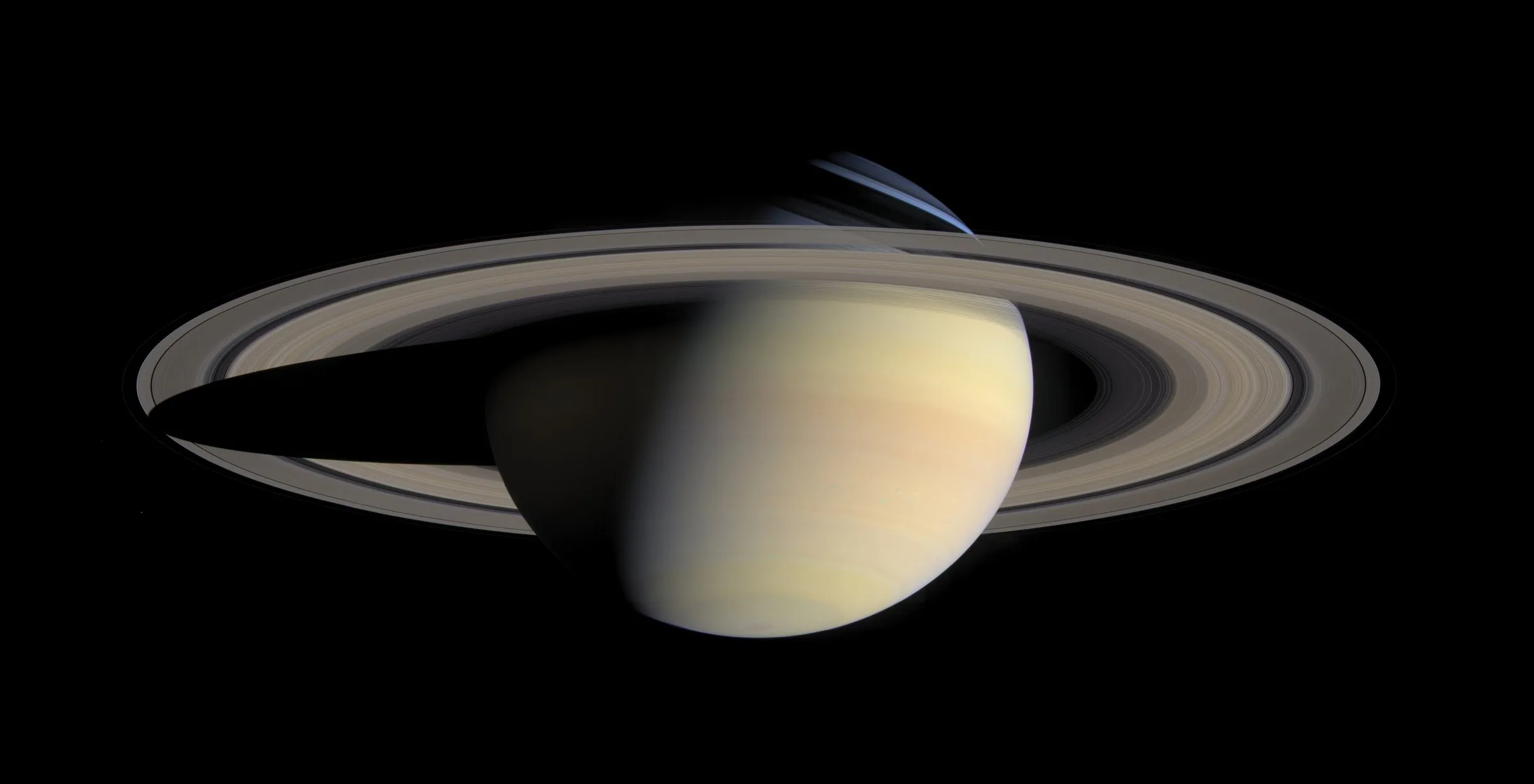
ეს გაკვეთილი დაწერა Local Solar System Foundation- ის გუნდის წევრმა და მას შეუძლია გააუმჯობესოს კვალიფიციურმა რედაქტორმა. Are you qualified in this subject? რედაქტირების შეთავაზება
1977 წელს ორი კოსმოსური ხომალდი Voyager დედამიწას დატოვა მარშრუტზე, რომელიც იყენებს იაპონიის, სატურნის, ურანის და ნეპტუნის იშვიათი გასწორებას, რაც ხდება ყოველ 175 წელიწადში ერთხელ ან ასე. Each planet bent their path and flung them onward faster. Without those free boosts, Voyager 2 could never have reached Neptune in twelve years.
The planet does not give energy away. It lends you its motion.
Look
Picture a tennis ball thrown at the front of a moving train. It bounces back faster than it was thrown, because the train was moving towards it. A gravity assist is the same idea, with gravity instead of a collision:
- Seen from the planet, the spacecraft falls in, swings round and climbs out at exactly the same speed it came in with. Only the direction changes.
- Seen from the Sun, the planet itself is moving at many km/s. Add that motion to the spacecraft’s before and after the flyby: because the direction changed, the total speed can be much larger after.
Passing behind the planet, in the planet’s wake, adds speed. in front-ის გავლა მას იღებს; that is how Messenger slowed down to reach Mercury.
Understand
In the example, the spacecraft approaches Jupiter at v∞ = 7.5 km/s and passes 5 Jupiter radii from the centre. The hyperbola bends its direction by
δ = 2 arcsin( 1/ e), e = 1 + r_ p v∞² / μ
With μ_Jupiter = 1.267 × 10⁸ km³/s², e = 1.16 and the turn is about 119 degrees. იუპიტერის ორბიტალური სიჩქარის დამატება (13.1 კმ/წმ):
- Before: about 7.6 km/s relative to the Sun.
- After: about 19.9 km/s relative to the Sun.
The spacecraft gained over 12 km/s without firing an engine. Jupiter, 10²⁴ times heavier, lost the same momentum and slowed by an amount far too small ever to measure.
Master
The largest possible change of heliocentric speed is 2 v∞ sin(δ/2), reached when the incoming and outgoing relative velocities are placed symmetrically about the planet’s velocity. The closer the pass (smaller r_p) and the more massive the planet, the larger δ can be, down to the limit set by the planet’s atmosphere or radius.
Gravity assists are a transfer of orbital energy in the three-body problem: in the planet’s frame energy is conserved; in the Sun’s frame the spacecraft’s energy changes by Δε = v_planet · Δv_rel. Mission designers chain them (Cassini: Venus, Venus, Earth, Jupiter) and add small powered flybys where a burn at closest approach profits from the Oberth effect.
Try it
In the vector diagram, the outgoing arrow relative to Jupiter has the same length as the incoming one. Draw it on paper: add Jupiter's 13.1 km/s arrow to both. Which result is longer, and why does passing behind the planet (not in front of it) help?
Great. Challenges are where the learning sticks.
Quick quiz
3 სწრაფი კითხვები. აირჩიეთ პასუხი, რომ ნახოთ მართალი ხართ თუ არა.
-
Relative to Jupiter, a spacecraft that flies past leaves with:
- A More speed than it arrived with
- B The same speed, in a new direction
- C ნაკლები სიჩქარე
- D No speed
პასუხის ჩვენება
B. The same speed, in a new direction
-
Where does the extra speed (relative to the Sun) come from?
- A From the spacecraft's engines
- B From Jupiter's own motion around the Sun; Jupiter slows by an immeasurably tiny amount
- C From solar wind
- D It is an illusion
პასუხის ჩვენება
B. From Jupiter's own motion around the Sun; Jupiter slows by an immeasurably tiny amount
-
To gain speed, the spacecraft should pass:
- A პლანეტასთან ახლოს
- B პლანეტა
- C Straight through its centre
- D It makes no difference
პასუხის ჩვენება
B. პლანეტა
ბოლო ხაზი
- Read the lesson
- Did the challenge
- Took the quiz
გაკვეთილის დასრულების შენიშვნა, რომ ის ამ მოწყობილობაზე თქვენი პროგრესის ჩანაწერში შეინახოთ.
Lesson complete. Well done!
შემდეგი ლაგრანჟის წერტილები: ბალანსი ცაშიამ გაკვეთილის სიტყვები
წყაროები
- NASA JPL, Basics of Space Flight, Chapter 4: Gravity assist
- NASA JPL, A Gravity Assist Primer
- NASA, Voyager mission: planetary tour
- NASA NSSDCA, Jupiter Fact Sheet (mean orbital velocity 13.07 km/s)
ეს გაკვეთილი ლიცენზირებულია CC BY-SA 4.0.