
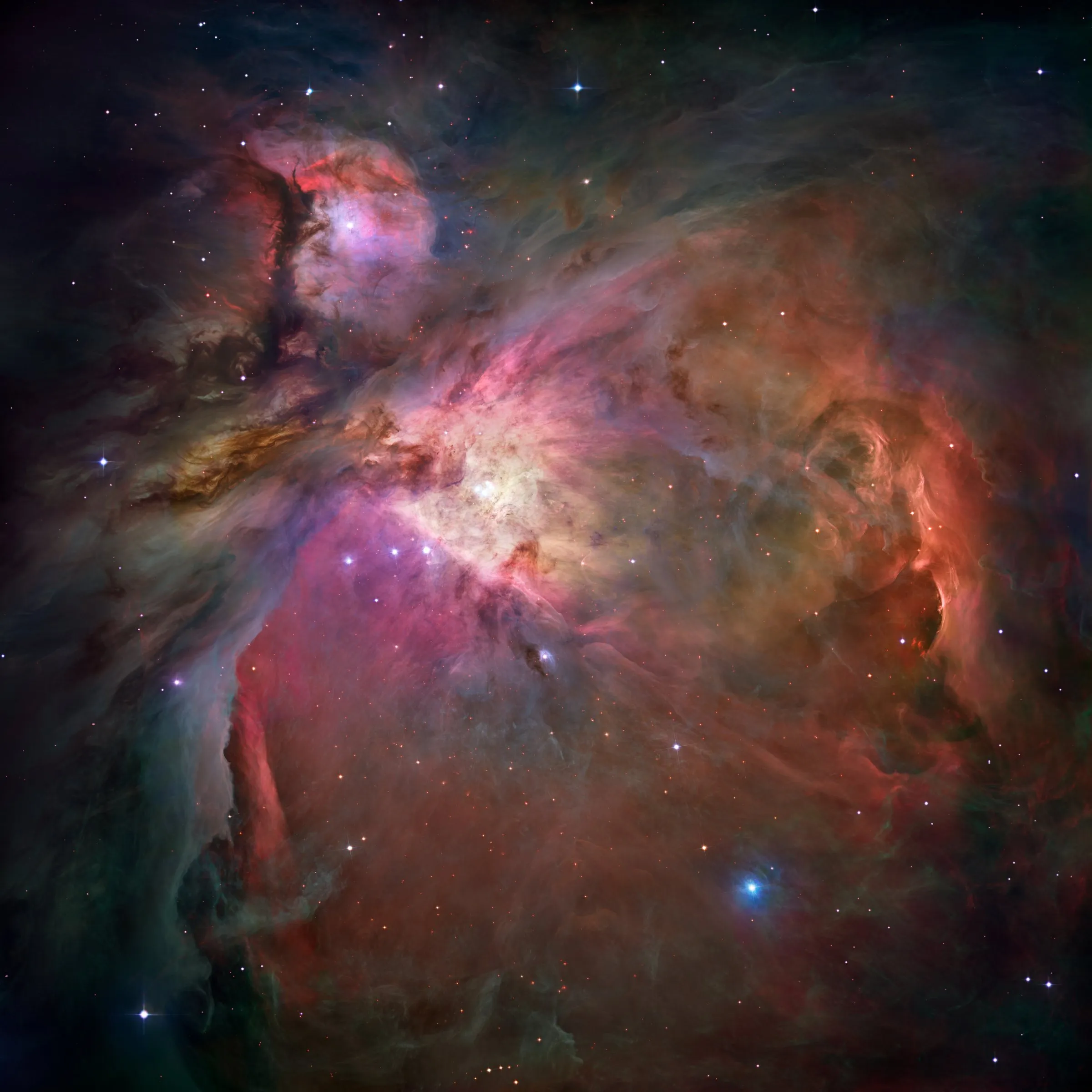
NASA, ESA, M. Robberto ( Space Telescope Science Institute/ESA) and the Hubble Space Telescope Orion Treasury Project Team (CC BY 4.0)
- აპოასპისი
-
ცენტრალური სხეულისგან ყველაზე შორეული წერტილი, მანძილზე a( 1 + e). Around the Sun it is called aphelion, around Earth apogee.
ფორმულაr_a = a (1 + e)ხილვა: Periapsis
- პერიაპიქსი (ω)
-
ადგუტი, რომელიც ორბიტალურ ჭრილშია გამოთვლილი ასვლიდან წერტილისგან პერიაპსსის მიმართულებით.
ფორმულაϖ = Ω + ωსად:
ϖlongitude of periapsis;Ωმდებარეობახილვა: ზრდის კვანძის გრძედი (Ω), Periapsis
- ასტრონომიული ერთეული (au)
-
გრძელობის ერთეული, რომელიც განსაზღვრულია როგორც ზუსტად 149,597,870,700 მეტრი, დაახლოებით დედამიწისა და მზის საშუალო მანძილი. 2012 წლის 2 იანვარს გამოვიდა მისი მეორე ალბომი „B.O.D“.
ხილვა: Light-time, სინათლის წელი
- ღერძის დახრა (დახრა)
-
ღერძის კუთხე ორბიტალურ ჭრილში. Earth’s is about 23.44°, which causes the seasons. 98°-ზეა.
ხილვა: დეკლარაცია, კალენდარი, Equinox
- ბურტლერი
-
A nine-class scale of night-sky darkness introduced by John E. Bortle in Sky & Telescope (2001), კლასი 1-დან (გამაჯანსაღებელი ღია ადგილი, ვარსკვლავები 7.6-8.0 მაჩვენებლით) კლას 9-მდე (შიდა ქალაქი, მაჩვენებელი 4.0 საუკეთესო).
ხილვა: მაგნიტუდა, Light pollution
- ოორბიტა
-
The speed needed for a circular orbit at distance r. Just above Earth’s surface it is about 7.9 km/s.
ფორმულაv_c = √(μ / r)სად:
μგრავიტაციული პარამეტრები;rცენტრიხილვა: სიჩქარე, Vis-viva equation
- Constellation
-
One of 88 officially defined regions of the sky (IAU, 1922 to 1930), named after a traditional star pattern such as Orion. Stars in a constellation are usually at very different distances.
ხილვა: მაგნიტუდა
- დეკლარაცია
-
ცენტრალური აზია The Sun’s declination swings between +23.44° and −23.44° over the year.
ფორმულაsin δ = sin ε · sin λსად:
δმზე;εელექტრონული ფოსტა;λლოკაციახილვა: ღერძის დახრა (დახრა), კალენდარი
- დელტა
-
Change in velocity, in km/s. It is the currency of spaceflight: every manoeuvre costs delta-v, and a rocket’s propellant sets how much it has.
ფორმულაΔv = v_e ln(m₀ / m_f)სად:
v_eელექტრონული ფოსტა;m₀, m_fწყვილიხილვა: Hohmann transfer, ზედმეტი ეფექტები
- პლანეტა
-
A body that orbits the Sun and is nearly round, but has not cleared its orbital neighbourhood and is not a moon (IAU 2006). Examples: Ceres, Pluto, Eris, Haumea, Makemake.
ხილვა: პლანეტა, Kuiper belt
- ჩაძირვა
-
When one body passes into the shadow of another. Solar eclipse: the Moon’s shadow falls on Earth (at new Moon). Lunar eclipse: the Moon passes through Earth’s shadow (at full Moon).
ხილვა: კვანძი, ულტრაიისფერი
- ეკლიპტიკა
-
The plane of Earth’s orbit around the Sun, and the Sun’s apparent yearly path across the sky. It is the usual reference plane for orbits of solar-system bodies. It is tilted about 23.44° to Earth’s equator.
ხილვა: ღერძის დახრა (დახრა), დახრა (i), კვანძი
- ელიფსი
-
A closed curve, the set of points whose distances to two fixed points (foci) add up to a constant. Bound orbits are ellipses with the central body at one focus (Kepler’s first law). ოფიციალური საიტი
ფორმულაr = a(1 − e²) / (1 + e cos ν)სად:
aშუა დიდი ღერძები;eექსცენტრიულობა;νმართალი ანომალიახილვა: ექსცენტრიულობა, შუა დიდი ღერძები (a)
- Equinox
-
The moment when the Sun crosses the celestial equator (declination 0°), around 20 March and 22 September. Day and night are about equal everywhere.
ხილვა: კალენდარი, დეკლარაცია
- სიჩქარე
-
The minimum speed at which an unpowered body leaves a gravitating body for good. It is √2 times the circular speed at the same distance. 11,2 კმ/სთ.
ფორმულაv_esc = √(2μ / r)ხილვა: ოორბიტა, სპეციფიკური
- თავისუფალი დაცემა
-
Motion under gravity alone. Astronauts in orbit feel weightless because they and their spacecraft are in free fall together, not because gravity is absent.
ხილვა: ოორბიტა, გრავიტაცია
- გრავიტაციული პარამეტრები
-
გრავიტაციული კონსტანტის და სხეულის მასის პროდუქტი, μ = GM. It is measured far more precisely than G or M alone. Earth: 398,600.4 km³/s²; Sun: 1.32712 × 10¹¹ km³/s².
ფორმულაμ = G Mხილვა: გრავიტაცია, Vis-viva equation
- გრავიტაცია
-
The attraction between masses. In Newton’s description the force is proportional to both masses and inversely proportional to the square of their distance.
ფორმულაF = G M m / r²სად:
G6.67430 × 10⁻¹¹ m³ kg⁻¹ s⁻² (CODATA 2018);M, mthe two masses;rცენტრალური - Hohmann transfer
-
The minimum-energy two-burn transfer between two circular, coplanar orbits, along half of an ellipse touching both.
ფორმულაa_t = (r₁ + r₂) / 2ხილვა: დელტა, Vis-viva equation
- დახრა (i)
-
ორტიკა 90-იან წლებში სოფელი დამოუკიდებელი იყო.
ხილვა: ზრდის კვანძის გრძედი (Ω), რეტროგრადული
- კეპლერის მესამე კანონი
-
The square of the orbital period is proportional to the cube of the semi-major axis. Around the Sun, with T in years and a in au, T² = a³.
ფორმულაT² / a³ = 4π² / μსად:
Tოორბიტა;aშუა დიდი ღერძები;μG( M + m)ხილვა: ოორბიტა, შუა დიდი ღერძები (a)
- Kuiper belt
-
A region of icy bodies beyond Neptune, from about 30 to 50 au from the Sun. Pluto, Haumea and Makemake orbit there.
ხილვა: Main asteroid belt, პლანეტა
- Light pollution
-
Excessive or misdirected artificial light, especially sky glow that hides stars. It also affects wildlife and wastes energy.
ხილვა: ბურტლერი
- Light-time
-
The time light needs to travel a given distance. Sunlight takes about 8 minutes 19 seconds to reach Earth. Commands to spacecraft are delayed by the light-time.
ფორმულაt = d / cსად:
dმანძილი;cspeed of light, 299,792.458 km/sხილვა: ასტრონომიული ერთეული (au)
- სინათლის წელი
-
The distance light travels in vacuum in one Julian year (365.25 days): about 9.46 trillion km, or 63,241 au. It is a distance, not a time.
ფორმულა1 ly = c × 365.25 × 86,400 sსად:
cspeed of light, 299,792.458 km/sხილვა: ასტრონომიული ერთეული (au), Light-time
- ზრდის კვანძის გრძედი (Ω)
-
კუთხე, რომელიც აღწერის ჭრილში აღწერის მიმართულებიდან იმ წერტილამდეა გამოთვლილი, სადაც ორბიტა ჩრდილოეთით მიმავალ ჭრილს გადაკვეთს.
ხილვა: კვანძი, დახრა (i), პერიაპიქსი (ω)
- მაგნიტუდა
-
ლოგარიმული სიკაშკაშის მასალა, სადაც უფრო პატარა ციფრები უფრო მკვეთრია. Five magnitudes are exactly a factor of 100 in brightness.
ფორმულაm₁ − m₂ = −2.5 log₁₀(F₁ / F₂)სად:
mმაგნიტუდა;Fკონტაქტიხილვა: ბურტლერი
- Main asteroid belt
-
The region between the orbits of Mars and Jupiter, roughly 2.2 to 3.3 au from the Sun, where most known asteroids orbit. Despite its reputation it is mostly empty space; its largest body is the dwarf planet Ceres.
ხილვა: Kuiper belt, პლანეტა
- საშუალო ანომალია (M)
-
360°-იანი ორბიტა. The actual position follows from Kepler’s equation.
ფორმულაM = E − e sin Eსად:
Eექსცენტრიულობა;eექსცენტრიულობახილვა: ექსცენტრიულობა
- კვანძი
-
ერთი ორი წერტილი, სადაც ორბიტა გადაკვეთს რეფერენციულ ჭრილს. The Moon’s nodes lie on the ecliptic; ჩასასვლელები ხდება მხოლოდ მაშინ, როდესაც ახალი ან სავსე მთვარე ჩნდება კვანძის ახლოს.
ხილვა: ზრდის კვანძის გრძედი (Ω), ჩაძირვა
- ზედმეტი ეფექტები
-
A burn made where a spacecraft moves fastest (deep in a gravity well) changes its orbital energy the most. Departing from low orbit therefore costs less than the leftover speed you want far away.
ფორმულაΔv = √(v∞² + v_esc²) − v_cსად:
v∞ჰიპერბოლიური სიჩქარე;v_escსწრაფი;v_cწვის სიჩქარე - ოორბიტა
-
The path of a body moving under the gravity of another. In the two-body case it is a conic section: an ellipse (closed), a parabola or a hyperbola (open).
- ოორბიტა
-
The time taken to complete one orbit. The sidereal period is measured against the stars; the synodic period is measured relative to another moving body, such as the Sun seen from Earth.
ფორმულაT = 2π √(a³/μ)სად:
aშუა დიდი ღერძები;μცენტრალურიხილვა: კეპლერის მესამე კანონი, იანვარი
- Periapsis
-
ცენტრალურ სხეულთან ყველაზე ახლოს მდებარე ობიექტი, მანძილი a( 1 − e). Around the Sun it is called perihelion, around Earth perigee.
ფორმულაr_p = a (1 − e) - პერიმეტრი
-
The point of an orbit around the Sun closest to the Sun. Earth passes it in early January at about 147.1 million km. The farthest point is aphelion.
- პლანეტა
-
By the 2006 IAU definition, a body that orbits the Sun, is massive enough to be nearly round under its own gravity, and has cleared the neighbourhood around its orbit. The solar system has eight.
- რეტროგრადული
-
Moving or rotating in the opposite direction to most bodies in the system. Venus rotates retrograde; Triton and Halley’s Comet orbit retrograde (inclination above 90°).
- შუა დიდი ღერძები (a)
-
Half of the longest diameter of an ellipse. It sets the orbit’s size, its energy and its period.
ფორმულაa = (r_p + r_a) / 2სად:
r_pპერიმეტრი;r_aაპოპტისის მანძილიხილვა: კეპლერის მესამე კანონი, ელიფსი
- კვირა
-
The time a body takes to rotate once relative to the distant stars. For Earth: 23 h 56 min 4.09 s.
ხილვა: კვირა
- აპრილი
-
დრო, რაც მთვარემ დედამიწის ორბიტაზე ერთხელ უნდა დატოვოს ვარსკვლავების მიმართ: 27.322 დღეები.
ხილვა: იანვარი
- კვირა
-
დრო ერთი საათის შემდეგ მეორე, ანუ ერთი ბრუნვა მზესთან მიმართებით. It differs from the sidereal day because the body also moves along its orbit.
ფორმულა1/P_solar = 1/P_rot − 1/P_orbსად:
P_rotნეგატიური;P_orbოორბიტახილვა: კვირა, რეტროგრადული
- კალენდარი
-
The moment when the Sun reaches its farthest north (around 21 June) or south (around 21 December) declination. It gives the longest and shortest days.
ხილვა: Equinox, დეკლარაცია
- სპეციფიკური
-
Orbital energy per unit mass. ნეგატიური შეზღუდული (ელიპტიკური) ორბიტებისთვის, ნული პარაბოლური გაქცევისთვის, დადებითი ჰიპერბოლური.
ფორმულაε = v²/2 − μ/r = −μ / (2a)ხილვა: Vis-viva equation, სიჩქარე
- იანვარი
-
დრო ორ იდენტურ მთვარის ფაზას შორის, მაგ. ახალი მთვარედან ახალი მთვარემდე: 29.531 დღეები საშუალოდ.
ფორმულა1/P_syn = 1/P_sid − 1/P_yearსად:
P_sidsidereal month, 27.322 days;P_yearსიდერალური წელი, 365.256 დღეებიხილვა: აპრილი
- ულტრაიისფერი
-
Umbra — ცისარტყელას ცენტრალური ნაწილი, სადაც სინათლის წყარო სრულადაა დაფარული; penumbra — გარე ნაწილი, სადაც ის მხოლოდ ნაწილობრივა დაფარული.
ხილვა: ჩაძირვა
- Vis-viva equation
-
Gives the orbital speed at any distance from the orbit’s size alone. It expresses conservation of energy.
ფორმულაv = √(μ (2/r − 1/a))სად:
μგრავიტაციული პარამეტრები;rმიმდინარე მანძილი;aშუა დიდი ღერძებიხილვა: სპეციფიკური, ოორბიტა
ინსტრუმენტები და გაკვეთილები მხოლოდ სწავლის მიზნით იყენებენ გამარტივებულ მოდელებს. ისინი არ უნდა გამოიყენებოდეს ნავიგაციაში, მისიების გეგმვაში ან სხვა ოპერაციულ გადაწყვეტილებებში. სერტიფიკატები უფასოა და არააკრედიტებულია. წაიკითხეთ განათლების შეტყობინება