

The Fan Wall
One giant rotor, or a hundred thousand tiny ones? We are testing whether a wall of small fans, each the size of the one cooling your computer, can turn city wind into electricity. Here is the maths, including the parts that do not work yet.
Every wind turbine you have ever seen follows the same logic: build one rotor as large as possible, put it as high as possible, and let the enormous blades sweep the sky. It works brilliantly. It also needs cranes, roads, open land, years of permits, and it kills birds. We want to test the opposite idea.
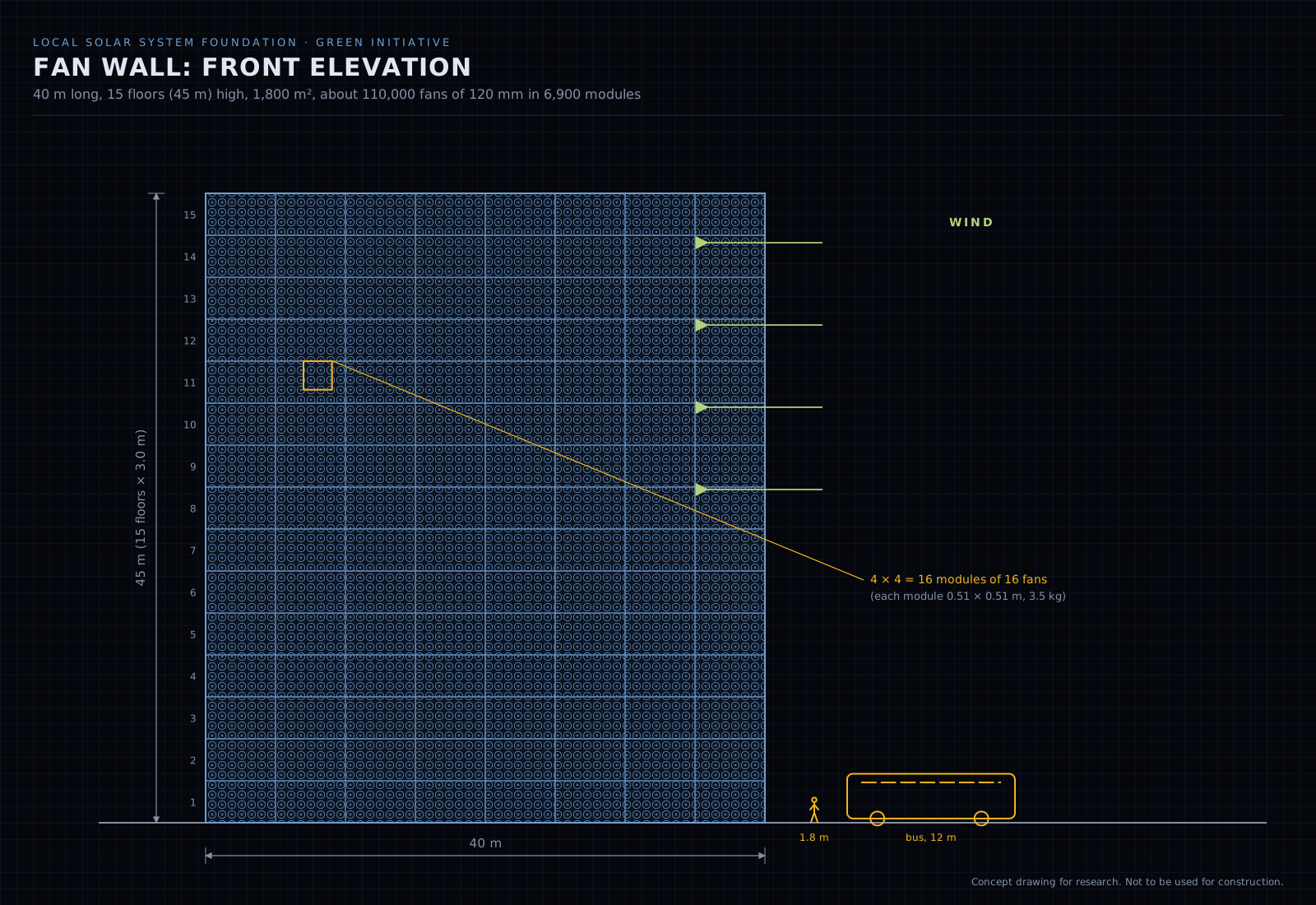
The idea
Take the small axial fan that cools a computer. Run it backwards: let the wind turn the rotor, and the brushless motor inside becomes a tiny generator. Put sixteen of them in a module the size of a pizza box, give each one a shaped funnel that speeds up the air, and cover a wall with thousands of modules.
If one fan breaks, the wall loses one hundred-thousandth of its output, and anyone with a screwdriver can replace it. The modules ship in ordinary parcels. They can sit on a rooftop edge, climb a building corner or replace the panels of a highway sound barrier.
Where it could shine
Birds and bats. Large turbines are a real problem for wildlife: an estimated 140,000 to 328,000 birds die each year at monopole turbines in the contiguous United States alone (Loss, Will and Marra, 2013). A 150 m rotor turning at 10 rpm moves its blade tips at π × 150 m × 10 / 60 s ≈ 79 m/s. A 120 mm fan behind a 10 mm mesh turns its tips at walking pace. Nobody has measured bird interaction with meshed micro-fan walls yet, so measuring it is part of our programme.
Siting. Wind speeds up where it is squeezed: over a roof edge, around a building corner, along a street canyon. A giant rotor cannot follow those zones. A modular array can cover exactly them.
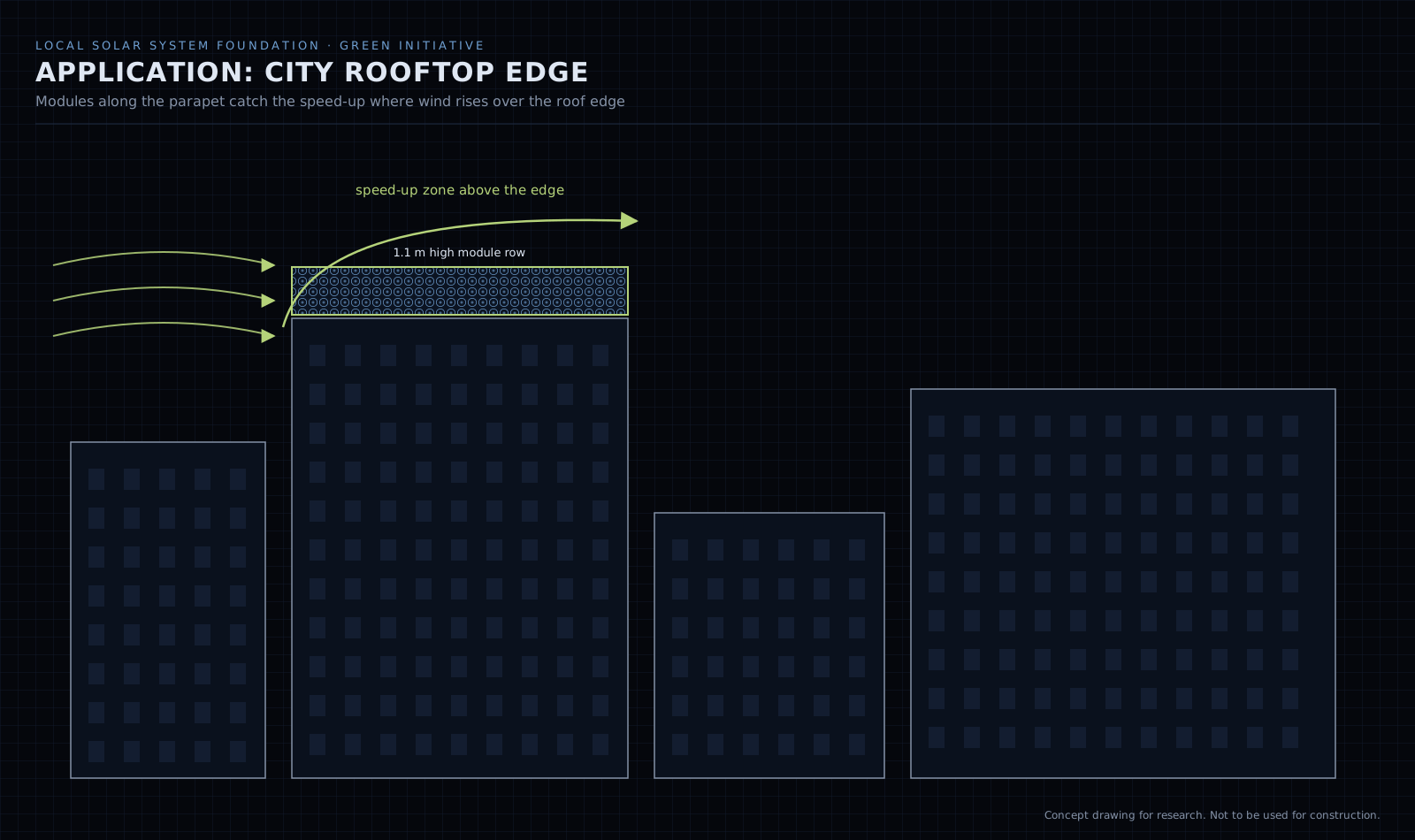
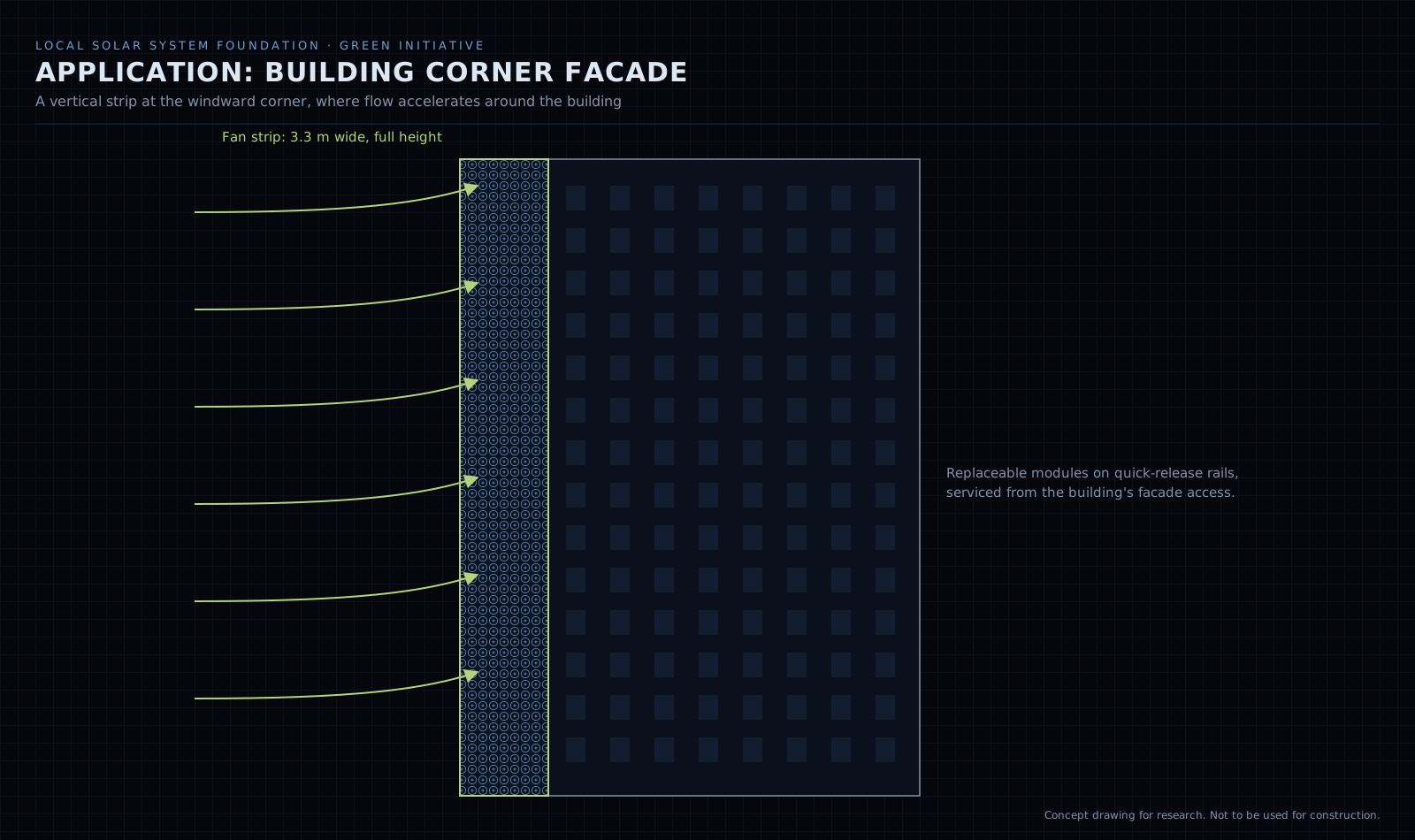
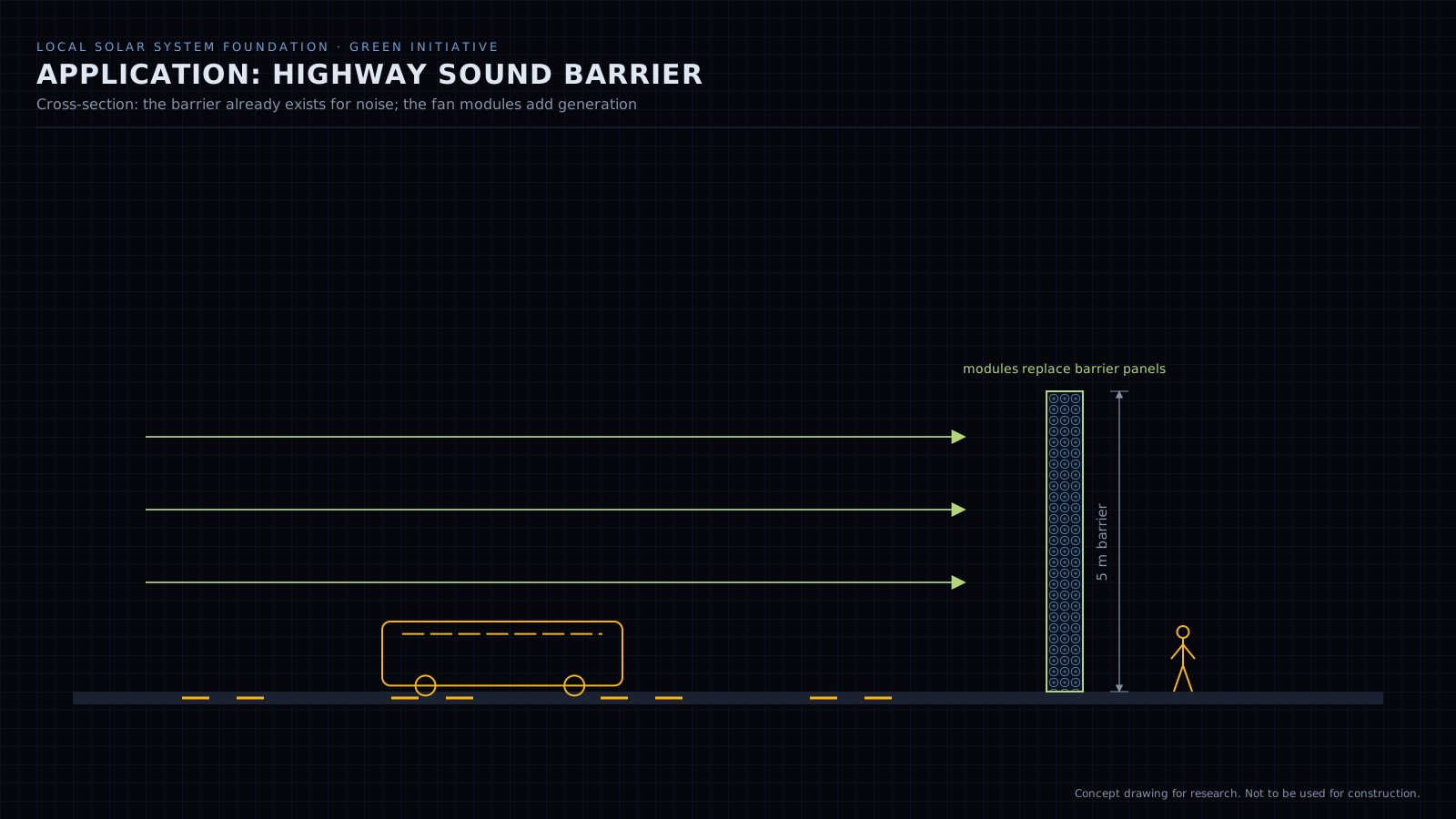
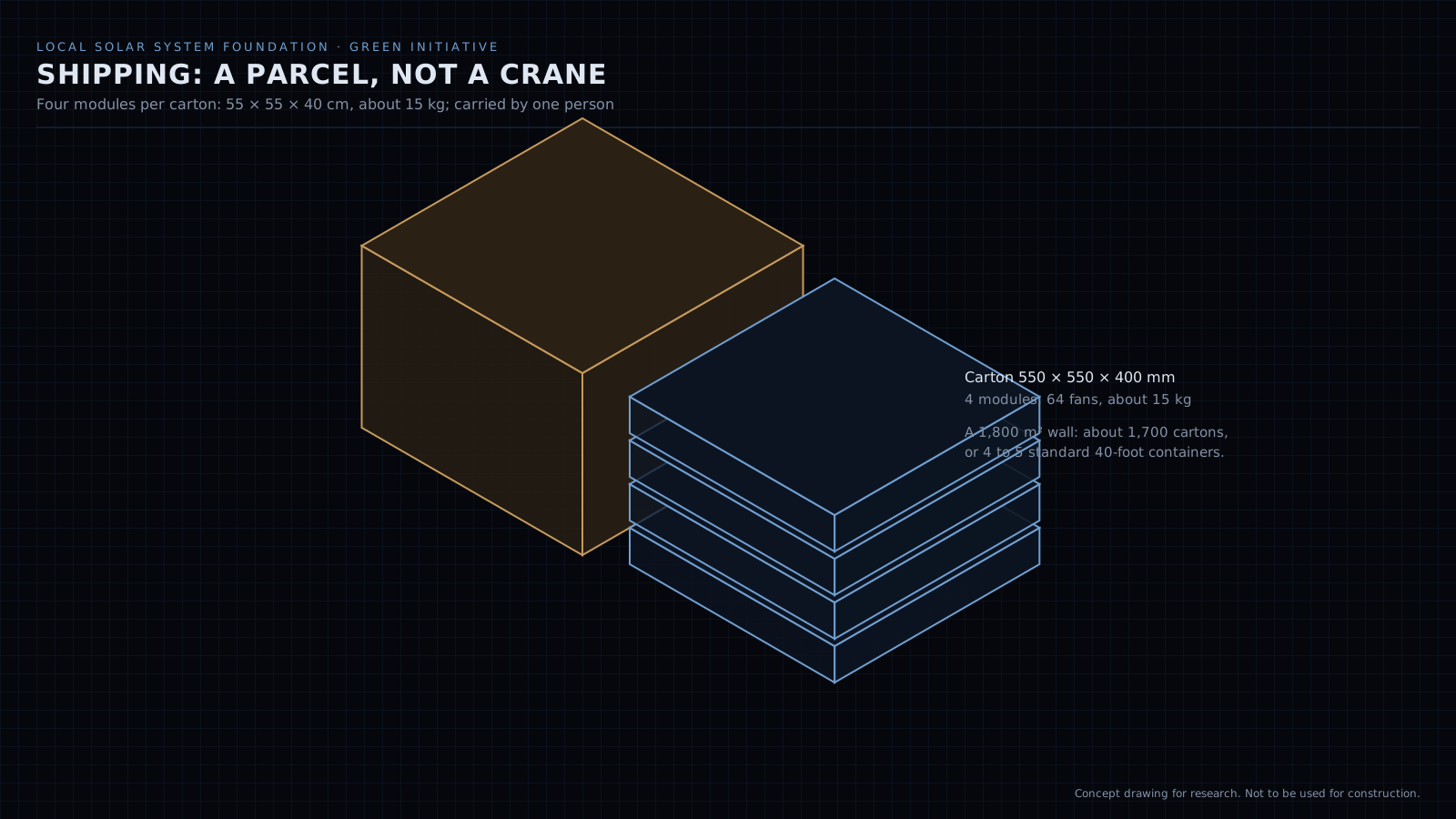
Logistics and maintenance. No crane, no specialist, no special transport. A whole 1,800 m² wall fits in about 1,700 cartons, four or five shipping containers.
Wind and sun together. Wind often blows at night and in winter, when solar panels are weak. On the same building, the two can complement each other.
The physics, with the maths
The power carried by wind through an area A is P = ½ ρ A v³, where ρ = 1.225 kg/m³ is the density of air and v the wind speed. The cube is everything: at 6 m/s one square metre carries ½ × 1.225 × 6³ ≈ 132 W; at 12 m/s it carries 1,058 W, eight times more.
No rotor can catch all of it, because the air must keep moving out of the way. The Betz limit says an open rotor can extract at most 16/27 ≈ 59% of the power flowing through it.
A tiny rotor is not a small big rotor. The physics changes.
Here is the first honest problem. A 120 mm fan blade has a chord of about 2 cm. At 6 m/s its Reynolds number is Re = v × c / ν ≈ 6 × 0.02 / 0.000015 ≈ 8,000, a regime where blades lose most of their lift. A 2 cm rotor designed as a turbine at Imperial College reached a power coefficient of about 9% (Howey, Bansal and Holmes, 2011). Computer fans are shaped to push air, not to be pushed by it. We therefore assume a rotor efficiency of 5% (pessimistic), 10% (central) or 20% (optimistic), and an electrical chain from fan to grid of 40, 55 or 70%.
Ducts can help. A diffuser with a broad brim, the “wind lens” developed at Kyushu University, multiplied the power of a rotor of the same diameter by about 2 to 5 (Ohya and Karasudani, 2010). But a duct takes frontal space: extracting much more than about half the power crossing the device’s frontal area has not been demonstrated (Dighe et al., 2018). Our model caps it there.
With the central assumptions the whole wall makes 7 kW at 6 m/s, 34 kW at 10 m/s and 114 kW at 15 m/s. Fan size barely changes the power, since all sizes cover about 55% of the wall with spinning blades; it changes the parts count and the cost. Ducts only win if they more than double each rotor’s output, because they leave room for fewer fans.
How much energy in a year
Wind at a site is never constant. We model three sites with a standard (Rayleigh) wind distribution: a city rooftop averaging 4 m/s, a highway barrier at 4.5 m/s and an exposed coast at 6.5 m/s. Real urban wind is weak: the UK Carbon Trust found few building sites reaching even 5 m/s (Carbon Trust, 2008), and 26 building-mounted micro turbines in the Warwick Wind Trials averaged a capacity factor of 0.85% (Encraft, 2009).
For scale, one ordinary 3 MW onshore turbine running at a 35% capacity factor produces 3 MW × 8,760 h × 0.35 ≈ 9.2 GWh a year: as much as about 65 coastal fan walls.
What it would cost
We estimated every part per square metre: waterproof fans at $3 to $8 each in volume, frames and mesh, electronics, and mounting on an existing building. The whole wall comes to $0.76 million to $2.43 million (central $1.38 million) without ducts. Spread over 20 years at a 7% discount rate, with maintenance, that gives the cost of each kilowatt-hour.
The honest reading: built from today’s computer fans, the Fan Wall costs about $1.20 per kWh on a windy coast and about $5 in a city in the central case. Residential rooftop solar costs $0.12 to $0.28, utility-scale wind $0.03 to $0.07 (Lazard LCOE+, June 2024; IRENA, 2024). As a power plant, the concept does not compete today.
What would have to be true
Research exists to change numbers like these. On a coastal site with ducted modules and a 65% electrical chain, the cost per kWh depends on two things we can work on: how well each ducted rotor converts wind (its effective efficiency) and what a square metre of wall costs installed.
| Effective ducted rotor efficiency | $200 per m² | $400 per m² | $800 per m² |
|---|---|---|---|
| 10% | $0.60 | $1.21 | $2.41 |
| 20% | $0.30 | $0.60 | $1.21 |
| 30% | $0.20 | $0.40 | $0.80 |
| 40% | $0.15 | $0.30 | $0.60 |
The research programme
| Phase | What we do | What we measure | Estimated cost |
|---|---|---|---|
| 0. Desk study | Computer simulation of duct shapes, blade designs and electrical layout | Predicted efficiency and losses | $15k to $30k |
| 1. Bench tests | 20 off-the-shelf and 20 custom rotors in a wind tunnel from 3 to 15 m/s | Efficiency curves, start-up speed, noise | $30k to $60k |
| 2. One module | A 16-fan module with ducts and power electronics | Module efficiency, one year outdoors | $25k to $50k |
| 3. 10 m² pilot | An instrumented rooftop panel with a wildlife camera | Energy, array losses, availability, birds and bats | $60k to $120k |
| 4. Full wall design | Structure, certification, final cost model | Installed cost per m², cost per kWh | $50k to $100k |
Phases 0 to 3 need roughly $130,000 to $260,000. A full wall only makes sense if the pilot confirms the hypothesis. All research is paid from the Foundation’s Treasury, which funds everything the project needs, from laboratories and suppliers to servers and people; donations cannot be reserved for one programme. The full technical report, the model and its data are open: model data and model code.
How you can help
- Bring your expertise. We need people who know small-rotor aerodynamics, wind tunnels, power electronics, structural engineering or bird monitoring. Offer a task.
- Offer a rooftop. A windy flat roof with safe access could host the 10 m² pilot. Tell us where it is and how exposed it feels.
- Share wind data. If you run a weather station on a roof, a coast or a bridge, a year of wind measurements helps us choose the pilot site.
- Test at home. A cheap waterproof fan, a bridge rectifier and a multimeter on a windy balcony make a fine science project. Measure voltage and current at different winds and send us the numbers.
- Support the Foundation. Donations go to the Treasury and keep all our research, including this one, moving.
Sources
- Howey, D.A., Bansal, A. and Holmes, A.S. (2011). Design and performance of a centimetre-scale shrouded wind turbine for energy harvesting. Smart Materials and Structures 20, 085021.
- Ohya, Y. and Karasudani, T. (2010). A shrouded wind turbine generating high output power with wind-lens technology. Energies 3(4), 634-649.
- Dighe, V.V., de Oliveira, G., Avallone, F. and van Bussel, G.J.W. (2018). Ducted wind turbine optimization and sensitivity to rotor position. Wind Energy Science 3, 221-229.
- Carbon Trust (2008). Small-scale wind energy: policy insights and practical guidance.
- Encraft (2009). Warwick Wind Trials final report.
- Pacific Northwest National Laboratory (2024). Distributed Wind Market Report, 2024 edition: small wind averaged $7,370 per kW installed and a 13% capacity factor in 2023.
- Lazard (June 2024). Levelized Cost of Energy+.
- IRENA (2024). Renewable Power Generation Costs in 2023.
- Odyssee-Mure. Electricity consumption per dwelling, EU.
- US Energy Information Administration (2022). Average residential electricity use.
- Loss, S.R., Will, T. and Marra, P.P. (2013). Estimates of bird collision mortality at wind facilities in the contiguous United States. Biological Conservation 168, 201-209.