
Air quality
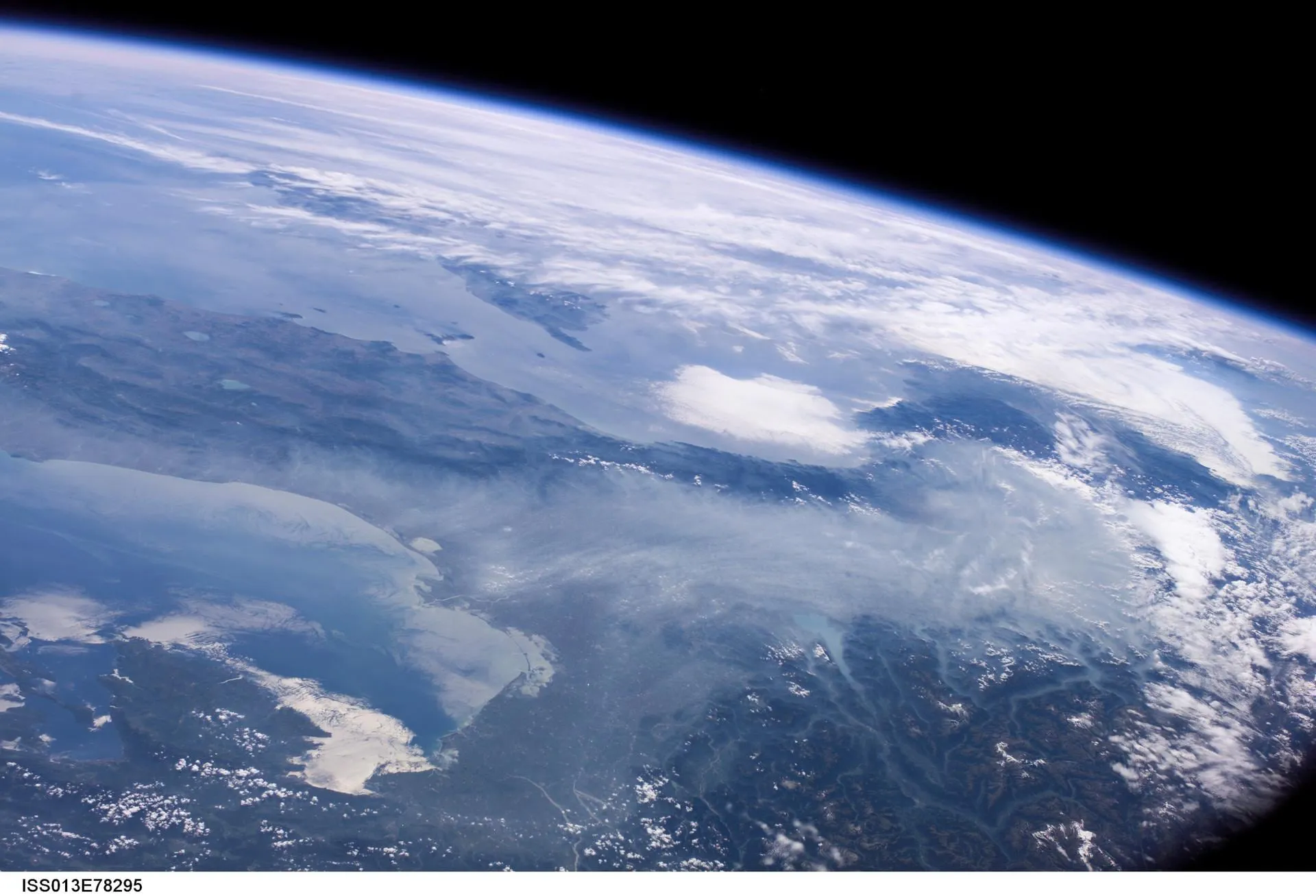
We share one atmosphere. What rises from a chimney on one continent settles into lungs and seas on the others.
NASA
Every day each of us breathes about eleven thousand litres of air. We cannot choose which air, and we cannot filter it with our eyes: the most dangerous pollution is invisible. The atmosphere is also the ocean’s partner. Much of what we put into the air ends up in the sea, changing its chemistry in ways that were measured long before they were understood.
What is in the air
- Fine particles (PM2.5) are specks smaller than 2.5 micrometres, from burning fuel, wood, crops and waste, and from dust and chemical reactions in the air. They are small enough to pass deep into the lungs and into the bloodstream.
- Coarse particles (PM10) come from dust, construction and road wear. They lodge in the nose and airways.
- Nitrogen dioxide comes mostly from vehicles and power stations, and helps form ozone and particles.
- Ground-level ozone is created when sunlight cooks other pollutants. It inflames the lungs and damages crops.
- Sulphur dioxide comes from burning coal and heavy fuel oil, including in ships.
- Household smoke from cooking and heating with wood, coal, dung or kerosene is one of the largest exposures of all, mostly borne by women and children.
Public health
The World Health Organization estimates that the combined effects of outdoor and household air pollution are associated with 6.7 million premature deaths every year, through strokes, heart disease, lung cancer, chronic lung disease and infections. In 2019, 99 percent of the world’s population lived in places where the WHO’s air quality guideline levels were not met. In 2021 the WHO halved its guideline for yearly average PM2.5, from 10 to 5 micrograms per cubic metre, because the evidence showed harm at lower levels than previously thought.
The air changes the ocean
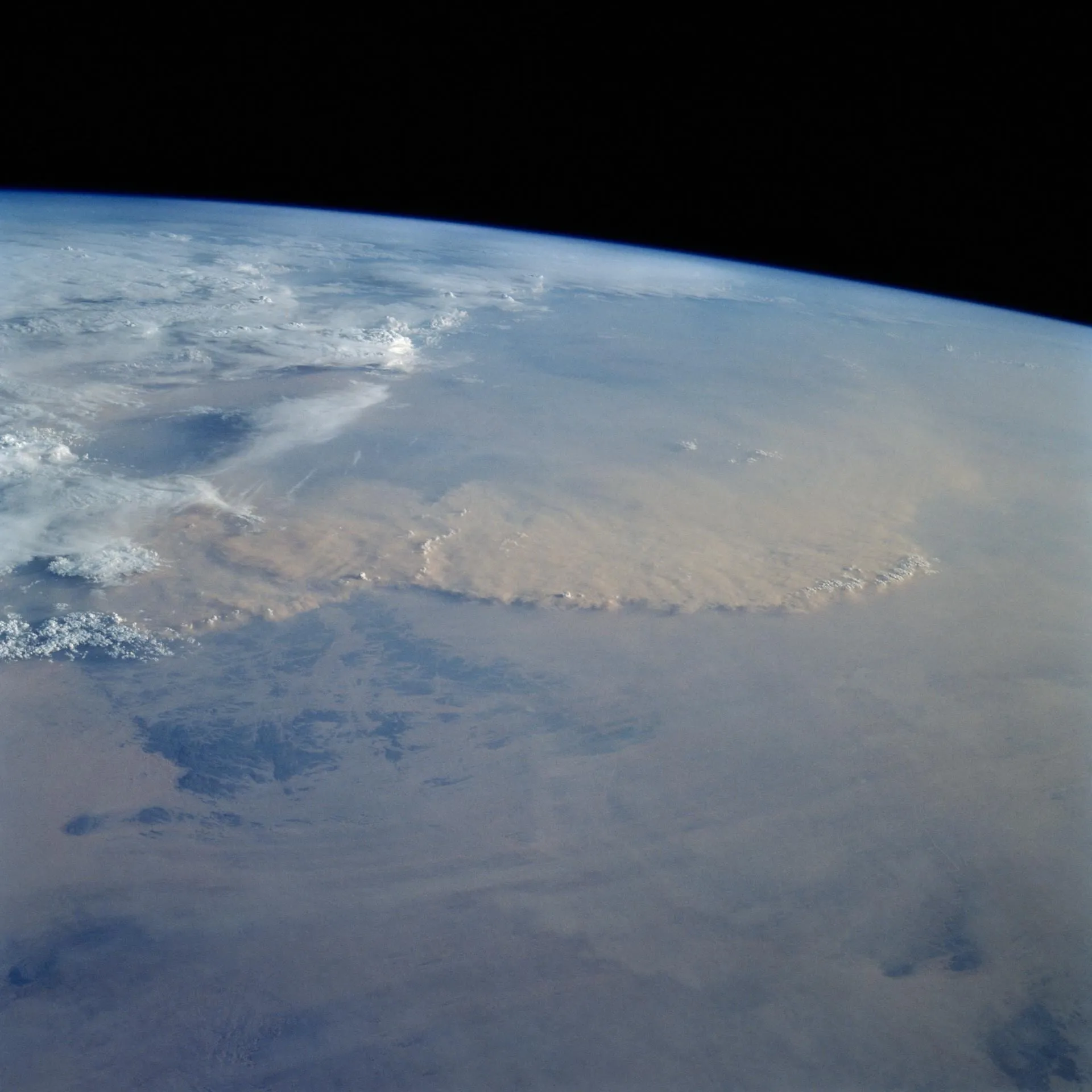
The ocean has absorbed roughly a quarter of the carbon dioxide humanity has emitted. That has slowed climate change, at a price: dissolved CO2 forms carbonic acid, and the surface ocean has become about 30 percent more acidic since the industrial revolution, a fall of about 0.1 pH units. More acidic water makes it harder for corals, oysters, mussels and some plankton to build their shells and skeletons, and it reaches the base of the ocean food web.
Other air pollutants rain into the sea as well. Nitrogen from exhausts and fertilisers adds to the nutrient load that feeds dead zones. Mercury from burning coal and from small-scale gold mining settles into the ocean, where microbes turn it into methylmercury, which builds up in large fish such as tuna and swordfish, and in the people who eat them (UNEP Global Mercury Assessment 2018).
The ocean has been quietly cleaning our air for two centuries. The bill is arriving in its chemistry.
What works
Air pollution is falling fast wherever the right rules meet the right technology. Across Europe and North America, sulphur dioxide emissions fell by more than 80 percent after scrubbers and cleaner fuels were required. In 2020, the International Maritime Organization cut the sulphur limit in ships’ fuel from 3.5 to 0.5 percent. Clean cooking, electric transport, and wind and solar power remove the source instead of cleaning up after it.
How you can help
- Check the air where you live. Many cities publish real-time air quality; low-cost sensors let communities map their own streets. Share what you find.
- Burn less. Avoid burning garden waste, plastics or treated wood; if you heat with wood, use dry, seasoned wood in a modern stove.
- Walk, cycle, share or go electric for short trips, and switch off idling engines, especially near schools.
- Ask for clean streets. Support low-traffic neighbourhoods, school streets and clean-air zones in your area; write to local representatives about monitoring near schools and hospitals.
- Choose clean power where your supplier allows it, and support clean cooking programmes for families who still cook over open fires.
- Help us explain it. Translate this page or build a local air map through the contribution board.
Sources and further reading
- World Health Organization, Ambient (outdoor) air quality and health
- World Health Organization (2021), WHO global air quality guidelines
- NOAA PMEL Carbon Program, What is ocean acidification?
- Dore et al. (2009), Physical and biogeochemical modulation of ocean acidification in the central North Pacific, PNAS 106
- NOAA Global Monitoring Laboratory, Trends in atmospheric carbon dioxide
- UNEP (2019), Global Mercury Assessment 2018
- International Maritime Organization, IMO 2020: cutting sulphur oxide emissions