
ეს გაკვეთილი დაწერა Local Solar System Foundation- ის გუნდის წევრმა და მას შეუძლია გააუმჯობესოს კვალიფიციურმა რედაქტორმა. Are you qualified in this subject? რედაქტირების შეთავაზება
მთვარის ფაზები და ჩასვენებები
სრული გვერდის გახსნაWhat is this? The Moon makes no light of its own. The Sun always lights one half of it, and as the Moon travels round Earth, about once every 29.5 days, we see more or less of that lit half. Those changing shapes are the phases.
How to use it: გადაატრიალეთ "დღიდან დღემდე" სლაიდერი ან დააჭირეთ ჩაწერას. დიდი ხედის ქვემოთ არის მითითებული დედამიწა და მთვარე ზემოდან; პატარა სურათზე მოცემულია მთვარე ისე, როგორც თქვენ მას დედამიწიდან ნახავთ.
The Moon tonight
შემდეგი სავსე მთვარე: შემდეგი ახალი მთვარე:
ზედა ხედიდან
ხედვა დედამიწიდან
Seen from the southern hemisphere the Moon is upside down compared with the northern view, so the lit side is flipped.
Try this
- ავზიდეთ სანამ მთვარე არ მოხვდება დედამიწასა და მზეს შორის.შენიშვნა: That is new Moon. The lit half faces away from us, so we see nothing; the Moon is in the daytime sky, lost in the Sun's glare.
- Keep going about 15 days, to full Moon.შენიშვნა: Now Earth is between the Sun and the Moon and we see the whole lit half. A full Moon rises as the Sun sets and is up all night.
- Press Play and watch the message under the numbers at each new and full Moon.შენიშვნა: თვეების უმეტესობაში არ ხდება ჩასვენება: მთვარის ტრასაზე არის დახრა დაახლოებით 5°, ამიტომ ის ჩვეულებრივად გადადის ცეცხლთან ზემოთ ან ქვემოთ. ჩასვენებები ხდება მხოლოდ "ჩასვენების სეზონებში", დაახლოებით ყოველ ექვს თვეში ერთხელ.
- Tick "I live in the southern hemisphere".შენიშვნა: The picture turns upside down. From Australia or Argentina the waxing Moon is lit on the left, not the right.
The ideas behind it
Why do we see phases?
ნათება
წყაროები: მთვარის ფაზა J. Meeus- ისგან, Astronomical Algorithms (2nd edition, 1998), თავი 47 - დან 48- მდე; ჩასასვლელები 54- დან. შემდეგი ახალი და სრული მთვარეების თარიღები გამოითვლება იგივე ფორმულებიდან და არის ზუსტი დაახლოებით ნახევარი დღის განმავლობაში.
How much of the Moon's sunlit half we can see from Earth. It changes from nothing (new Moon) to all of it (full Moon) and back in about 29.5 days.
Waxing means growing: a little more is lit each night, from new Moon to full Moon. Waning means shrinking: from full Moon back to new Moon.
A crescent Moon is less than half lit, a thin curved sliver. A gibbous Moon is more than half lit but not yet full.
50% - ს შემთხვევაში მთვარე ნახევრადაა დაფარული, ხოლო 100% - ს შემთხვევაში მთვარე სრულია.
რიცხვი დღეების შემდეგ ბოლო ახალი მთვარე. A full cycle of phases takes about 29.5 days.
ლექსიკონი →When one body blocks another's light. In a solar eclipse the Moon blocks the Sun; in a lunar eclipse the Moon passes through Earth's shadow and turns dark or coppery red.
ლექსიკონი →ერთი ორი წერტილი, სადაც მთვარის დახრილი ტრასები გადაკვეთს დედამიწის მზის გარშემო ტრასების ფართობს. ჩაბნელება შეიძლება მოხდეს მხოლოდ მაშინ, როდესაც ახალი ან სრული მთვარე მოდის კვანძთან ახლოს.
ლექსიკონი →მონაცემთა ცხრილი (ტექსტი ალტერნატივა)
| თარიღი | ფაზა | განათებული |
|---|---|---|
| 12 ნოე | ოფშორული | 11,4 % |
| 13 ნოე | ოფშორული | 18,1 % |
| 14 ნოე | ოფშორული | 25,8 % |
| 15 ნოე | პირველი კვარტალი | 34,5 % |
| 16 ნოე | პირველი კვარტალი | 43,8 % |
| 17 ნოე | პირველი კვარტალი | 53,5 % |
| 18 ნოე | პირველი კვარტალი | 63,4 % |
| 19 ნოე | Waxing gibbous | 73 % |
| 20 ნოე | Waxing gibbous | 81,9 % |
| 21 ნოე | Waxing gibbous | 89,6 % |
| 22 ნოე | Waxing gibbous | 95,5 % |
| 23 ნოე | მთვარე | 99,1 % |
| 24 ნოე | მთვარე | 99,9 % |
| 25 ნოე | მთვარე | 97,9 % |
| 26 ნოე | Waning gibbous | 93 % |
| 27 ნოე | Waning gibbous | 85,6 % |
| 28 ნოე | Waning gibbous | 76,3 % |
| 29 ნოე | ბოლო კვარტალი | 65,8 % |
| 30 ნოე | ბოლო კვარტალი | 54,7 % |
| 1 დეკ | ბოლო კვარტალი | 43,8 % |
| 2 დეკ | ბოლო კვარტალი | 33,4 % |
| 3 დეკ | შუადღის ვარსკვლავი | 24 % |
| 4 დეკ | შუადღის ვარსკვლავი | 16 % |
| 5 დეკ | შუადღის ვარსკვლავი | 9,39 % |
| 6 დეკ | შუადღის ვარსკვლავი | 4,48 % |
| 7 დეკ | ახალი მთვარე | 1,34 % |
| 8 დეკ | ახალი მთვარე | 0,0391 % |
| 9 დეკ | ახალი მთვარე | 0,575 % |
| 10 დეკ | ახალი მთვარე | 2,89 % |
| 11 დეკ | ოფშორული | 6,89 % |
The Moon never changes shape. Half of it is always lit by the Sun; what changes is how much of that lit half faces you. Once you see why, eclipses stop being mysterious and start being predictable.
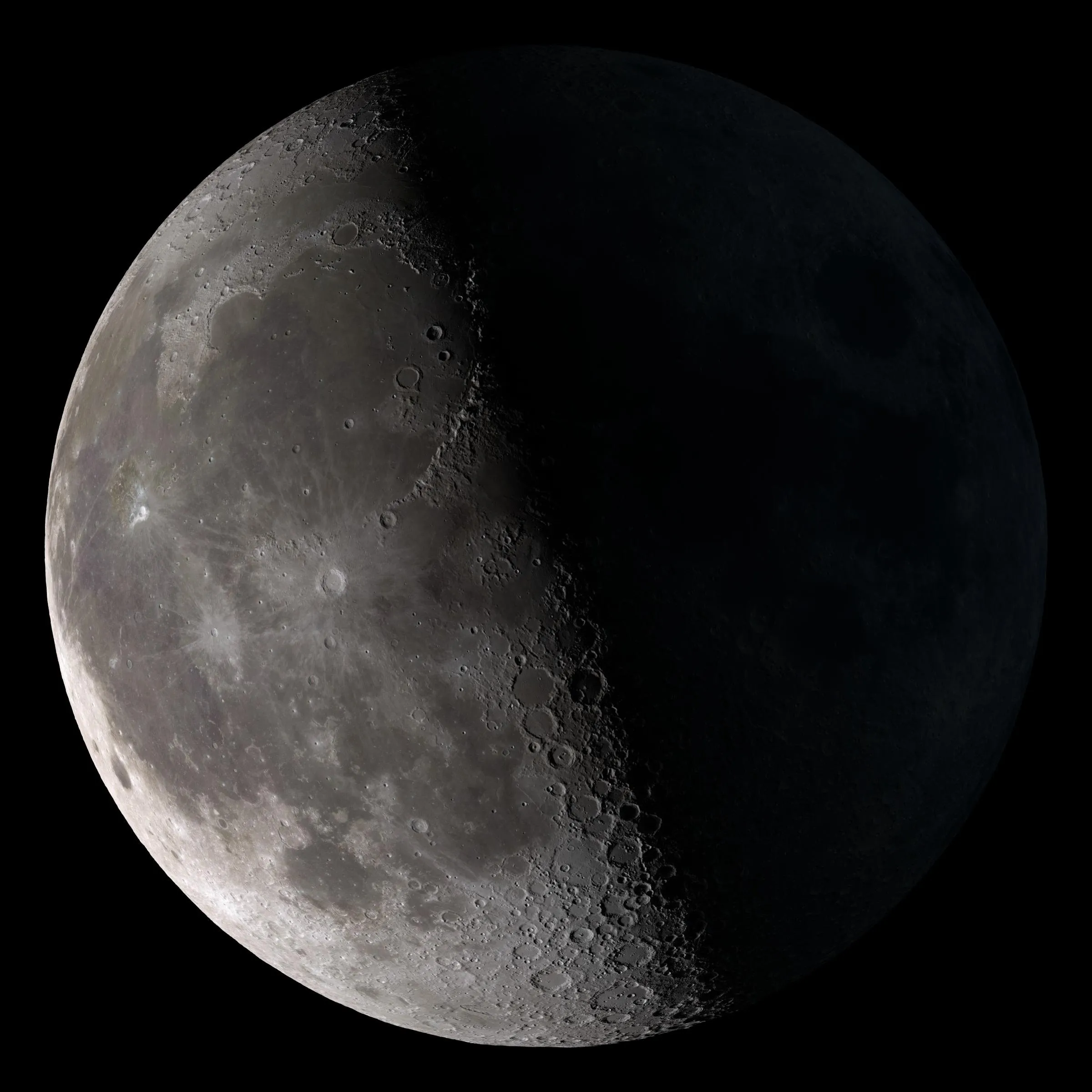
Half of the Moon is always in sunlight. The phases are just our point of view.
Look
The Moon does not make its own light. It shines because sunlight falls on it. At any moment, one half of the Moon is lit by the Sun and the other half is dark, just like Earth has day and night.
As the Moon goes around Earth, we see different amounts of its sunlit half:
- New Moon: მთვარე დედამიწასა და მზეს შორისაა. The lit half faces away from us, so we cannot see it.
- First quarter: we see half of the disc lit.
- Full Moon: დედამიწა მზესა და მთვარეს შორისაა. We see the whole lit half.
- Last quarter: half lit again, the other side.
აპლიკაციაში, მარცხენა სურათი მიდის ქვემოთ დედამიწაზე და მთვარეზე ზემოთ, მზის ჩასვლის შემდეგ კი მარცხნივ. The right picture shows what you see from Earth. Move the slider and watch both change together.
Sometimes the Sun, Earth and Moon line up exactly:
- A solar eclipse happens when the Moon’s shadow falls on Earth at new Moon.
- A lunar eclipse happens when Earth’s shadow falls on the Moon at full Moon.
Understand
The Moon goes once around Earth, measured against the stars, in 27.3 days (the sidereal month). But the phases repeat every 29.5 days (the synodic month). Why the difference? While the Moon goes around Earth, Earth moves about 1/12 of the way around the Sun. The Moon needs about two more days to catch up with the new Sun direction.
დისკის ის ნაწილი, რომელიც გამოსახულია განათებული დამოკიდებულია მზესა და მთვარის შორის კუთხეში, როგორც ეს დედამიწიდან ჩანს, რომელსაც ეწოდება ელონგირება:
| Elongation | ფაზა | რიცხვითი განაკვეთი |
|---|---|---|
| 0° | ახალი მთვარე | 0% |
| 90° | პირველი კვარტალი | 50% |
| 180° | მთვარე | 100% |
| 270° | ბოლო კვარტალი | 50% |
If the Moon went around exactly in the same plane as Earth goes around the Sun, we would get a solar eclipse every new Moon and a lunar eclipse every full Moon. But the Moon’s orbit is tilted by about 5.1 degrees. Usually the Moon passes a little above or below the Sun-Earth line, and nothing happens.
The two points where the Moon’s orbit crosses Earth’s orbital plane are called nodes. Eclipses can only happen when a new or full Moon falls close to a node. This happens in two “eclipse seasons” each year, about six months apart.
Master
ნათებული ნაწილი k მოდის ფაზის კუთხიდან i (მზე- მთვარე- დედამიწის კუთხიდან):
k = (1 + cos i) / 2
Because the Sun is about 390 times farther away than the Moon, i ≈ 180° − elongation. The tool computes i with Meeus’s series (Astronomical Algorithms, eq. 48.4), which corrects the mean elongation for the main periodic terms of the Moon’s and the Sun’s orbits. It places new and full Moons to within about half an hour of the precise times, plenty for learning.
1/P_syn = 1/P_sid − 1/P_year = 1/27.3217 − 1/365.256, რაც ნიშნავს 29.531 დღის განმავლობაში პლანეტის გარშემო ერთხელ ბრუნვას.
Whether an eclipse is possible depends on the Moon’s argument of latitude F, its angle from the ascending node. Meeus gives a quick screening rule: at a new or full Moon, if |sin F| > 0.36 (F more than about 21° from a node), there is no eclipse. The tool applies exactly this test. It is a necessary condition, not a prediction of the eclipse type or where it is visible: that needs the Moon’s distance, Earth’s shadow geometry and much more precise positions.
The nodes are not fixed. They drift backwards around the ecliptic once every 18.6 years, which is why eclipse seasons arrive about 19 days earlier each year, and part of why eclipses repeat in the famous 18-year saros cycle.
Try it
შემდეგი მთვარის პოვნა. თუ ის ახლოსაა კვანძთან (შეიძლება მოხდეს ჩაძირვა)? შემდეგ კი ახალი მთვარის პოვნა. შეამოწმეთ სიახლეები ან ვებ გვერდი, რომ ნახოთ არის თუ არა ამ თარიღზე რეალურად ჩაძირვა.
Great. Challenges are where the learning sticks.
Quick quiz
3 სწრაფი კითხვები. აირჩიეთ პასუხი, რომ ნახოთ მართალი ხართ თუ არა.
-
What causes the phases of the Moon?
- A Earth's shadow falling on the Moon
- B How much of the Moon's sunlit half we can see from Earth
- C Clouds on the Moon
- D The Moon changing its distance from Earth
პასუხის ჩვენება
B. How much of the Moon's sunlit half we can see from Earth Earth's shadow only reaches the Moon during a lunar eclipse. Phases are about viewing angle.
-
Why is there not a solar eclipse at every new Moon?
- A The Moon is too small
- B The Moon's orbit is tilted about 5 degrees, so it usually passes above or below the Sun
- C The Sun moves too fast
- D Solar eclipses only happen in summer
პასუხის ჩვენება
B. The Moon's orbit is tilted about 5 degrees, so it usually passes above or below the Sun
-
About how long is it from one full Moon to the next?
- A 27.3 days
- B 29.5 დღე
- C 30 days exactly
- D 365 დღე
პასუხის ჩვენება
B. 29.5 დღე 27.3 დღე არის ერთი ორბიტა ვარსკვლავების მიმართ; ფაზები იცვლება ყოველი 29.5 დღის შემდეგ, რადგან დედამიწა ამ დროის განმავლობაში მზის გარშემო მოძრაობს.
ბოლო ხაზი
- Played with the interactive
- Read the lesson
- Did the challenge
- Took the quiz
გაკვეთილის დასრულების შენიშვნა, რომ ის ამ მოწყობილობაზე თქვენი პროგრესის ჩანაწერში შეინახოთ.
Lesson complete. Well done!
შემდეგი The night sky and light pollutionამ გაკვეთილის სიტყვები
წყაროები
- J. Meeus, Astronomical Algorithms, 2nd ed., Willmann-Bell (1998), ISBN 0-943396-61-1, chapters 47, 48 and 54
- NASA NSSDCA Moon Fact Sheet
- NASA Eclipse Web Site (F. Espenak)
- U.S. Naval Observatory: Phases of the Moon
ეს გაკვეთილი ლიცენზირებულია CC BY-SA 4.0.