
Le ndatshana yabhalwa nguLocal Solar System ilungu leqembu le Foundation futhi ingathuthukiswa ngumbuyekezi oqeqeshiwe. Ingabe uqeqeshiwe kulolu daba? Sicela uhlela
Isikali sokuhamba
Vula ikhasi eligcweleKonke lapha kuyisikali sangempela: ubukhulu namabanga ngesilinganiso esifanayo. I-pixel ngayinye ongayisakaza ithatha 3,000 km.
Qhubeka uskrola. Isithombe ngasinye esikubonayo se-solar system sicindezela le nto engenalutho.
I-Mercury ihamba phambili, lapho ukukhanya kwelanga kunamandla kakhulu kunaleyo yeplanethi.
Ngakhoni. Udlule 16.8 isigidi km kusukela i-Mercury.
Ukukhanya kwelanga okudlula kuwe manje kushiye i-Sun 5 iminithi 5 sec ngaphambili.
Izwe lihamba phambili. Bona ukuthi ikhaya elincane livela kanjani.
i-Mars ihlala 58.8 isigidi km ngaphambili.
Umlayezo we-radiyo kusuka emhlabeni uthatha phakathi kwamaminithi angama-3 no-22 ukufinyelela kuMars, ngokuya ngokuthi amaplanethi amabili akhona kuphi.
Ungabeka 4,611 Earths ngakwesobunxele nakwesokudla endaweni odlule kuyo kusukela ku Iplanethi.
Uyi 14% yendlela kusuka ku i-Mars kuya ku i-Ceres.
Ngakhoni. Udlule 53.1 isigidi km kusukela i-Mars.
Ukukhanya kwelanga okudlula kuwe manje kushiye i-Sun 17 iminithi 6 sec ngaphambili.
i-Ceres ihlala 79.6 isigidi km ngaphambili.
You are inside the asteroid belt. Did you hit anything? On average the asteroids are about a million kilometres apart.
Ungabeka 12,497 Earths ngakwesobunxele nakwesokudla endaweni odlule kuyo kusukela ku i-Mars.
Uyi 17% yendlela kusuka ku i-Ceres kuya ku i-Jupiter.
Ngakhoni. Udlule 122 isigidi km kusukela i-Ceres.
Ukukhanya kwelanga okudlula kuwe manje kushiye i-Sun 33 iminithi 8 sec ngaphambili.
i-Jupiter ihlala 122 isigidi km ngaphambili.
Ungabeka 23,846 Earths ngakwesobunxele nakwesokudla endaweni odlule kuyo kusukela ku i-Ceres.
Uyi 10% yendlela kusuka ku i-Jupiter kuya ku i-Saturn.
Ngakhoni. Udlule 130 isigidi km kusukela i-Jupiter.
Ukukhanya kwelanga okudlula kuwe manje kushiye i-Sun 54 iminithi 5 sec ngaphambili.
i-Saturn ihlala 389 isigidi km ngaphambili.
I-Voyager 1 yathatha cishe amasonto angama-20 ukundiza kusuka eJupiter iye kuSaturn.
Ungabeka 30,529 Earths ngakwesobunxele nakwesokudla endaweni odlule kuyo kusukela ku i-Jupiter.
Uyi 70% yendlela kusuka ku i-Jupiter kuya ku i-Saturn.
Ngakhoni. Udlule 519 isigidi km kusukela i-Jupiter.
Ukukhanya kwelanga okudlula kuwe manje kushiye i-Sun 1 hora 16 iminithi ngaphambili.
i-Uranus ihlala 1.31 isigidi sezigidi km ngaphambili.
Ungabeka 20,605 Earths ngakwesobunxele nakwesokudla endaweni odlule kuyo kusukela ku i-Saturn.
Uyi 27% yendlela kusuka ku i-Saturn kuya ku i-Uranus.
Ngakhoni. Udlule 525 isigidi km kusukela i-Saturn.
I-Uranus ijikeleza kabili ngaphezu kwelanga njengeSaturn. Uma udlula kude, izoba mnyama kakhulu.
Ukukhanya kwelanga okudlula kuwe manje kushiye i-Sun 2 hr 3 iminithi ngaphambili.
i-Uranus ihlala 525 isigidi km ngaphambili.
Ungabeka 82,418 Earths ngakwesobunxele nakwesokudla endaweni odlule kuyo kusukela ku i-Saturn.
Uyi 82% yendlela kusuka ku i-Saturn kuya ku i-Uranus.
Ngakhoni. Udlule 1.31 isigidi sezigidi km kusukela i-Saturn.
Ukukhanya kwelanga okudlula kuwe manje kushiye i-Sun 2 hr 48 iminithi ngaphambili.
i-Neptune ihlala 1.33 isigidi sezigidi km ngaphambili.
Ungabeka 34,840 Earths ngakwesobunxele nakwesokudla endaweni odlule kuyo kusukela ku i-Uranus.
Uyi 36% yendlela kusuka ku i-Uranus kuya ku i-Neptune.
Ngakhoni. Udlule 740 isigidi km kusukela i-Uranus.
I-Voyager 2 idinga cishe iminyaka emithathu nengxenye ukudlula kule ndawo, kusuka ku-Uranus ngo-1986 kuya ku-Neptune ngo-1989.
Ukukhanya kwelanga okudlula kuwe manje kushiye i-Sun 3 hr 37 iminithi ngaphambili.
i-Neptune ihlala 444 isigidi km ngaphambili.
Ungabeka 104,519 Earths ngakwesobunxele nakwesokudla endaweni odlule kuyo kusukela ku i-Uranus.
Uyi 91% yendlela kusuka ku i-Uranus kuya ku i-Neptune.
Ngakhoni. Udlule 129 isigidi km kusukela i-Neptune.
Ukukhanya kwelanga okudlula kuwe manje kushiye i-Sun 4 hr 24 iminithi ngaphambili.
I-Kuiper belt: iringi lezinto ezibandayo zezwekazi elikhula ngokushesha okukhulu, ngemuva kwePluto, iNew Horizons yafika eduze kwazo.
i-Pluto ihlala 906 isigidi km ngaphambili.
Ungabeka 50,798 Earths ngakwesobunxele nakwesokudla endaweni odlule kuyo kusukela ku i-Neptune.
Uyi 55% yendlela kusuka ku i-Neptune kuya ku i-Pluto.
Ngakhoni. Udlule 906 isigidi km kusukela i-Neptune.
New Horizons, one of the fastest spacecraft ever launched, took nine and a half years to reach Pluto. Sunlight gets to Pluto's average distance in about five and a half hours.
Ukukhanya kwelanga okudlula kuwe manje kushiye i-Sun 5 hr 15 iminithi ngaphambili.
i-Pluto ihlala 129 isigidi km ngaphambili.
Chofoza phansi ngaphakathi kwefremu ukundiza ngaphandle, noma qala i-autopilot ngaphansi.
Isiphelo sendlela
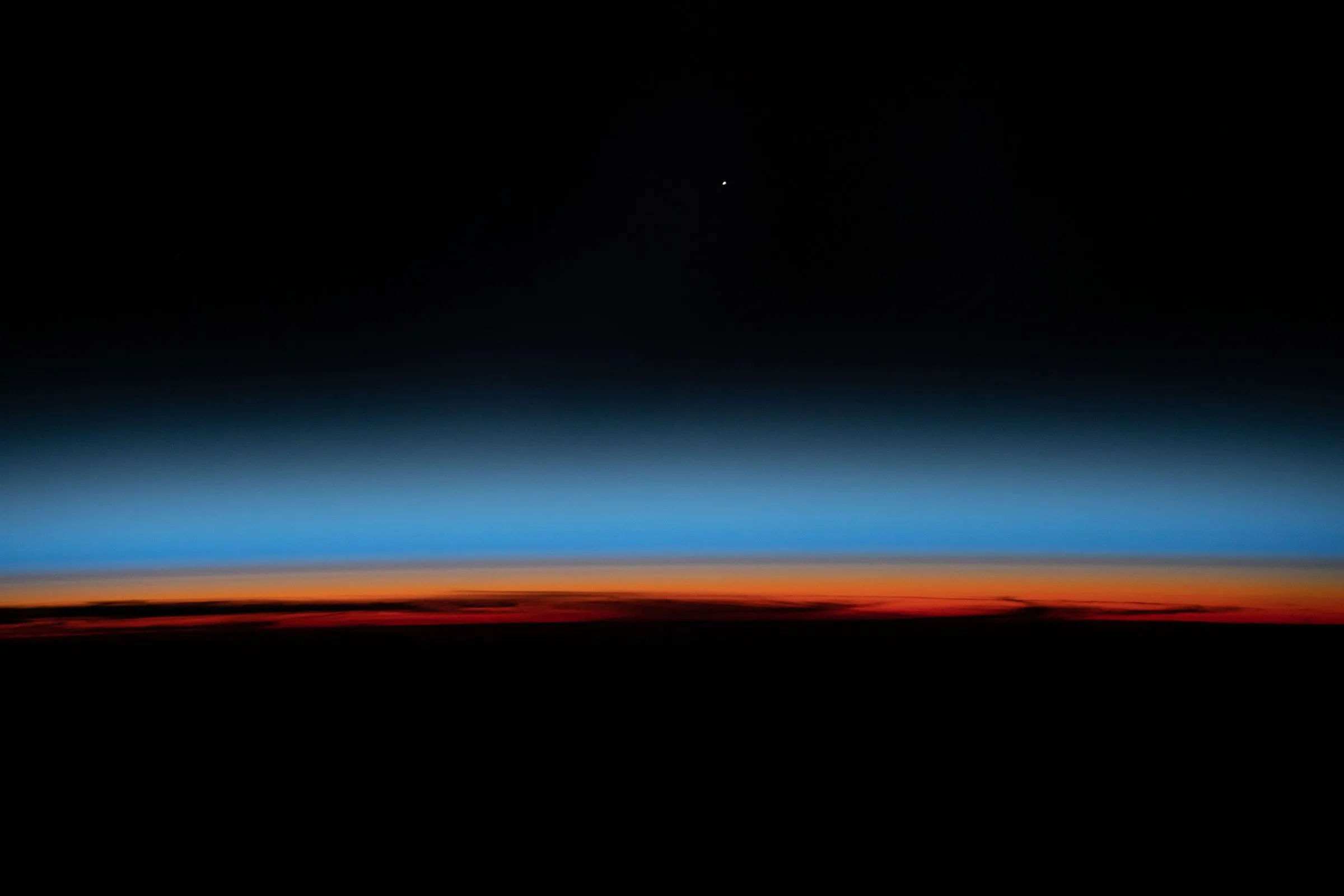
Bona emuva. Le nyoni ekhanyayo yilanga.
Ithebula ledatha (ukhetho lombhalo)
| Izwe | Ubukhulu | Ubukhulu be-radius: | Isikhathi sokuhamba kwelanga kusuka eMhlabeni | px |
|---|---|---|---|---|
| i-Mercury | 4,879 km | 0.387 au | 3 iminithi 13 sec | 19,303 |
| i-Venus | 12,104 km | 0.723 au | 6 iminithi 1 sekhondi | 36,070 |
| Iplanethi | 12,742 km | 1 au | 8 iminithi 19 sec | 49,866 |
| i-Mars | 6,779 km | 1.52 au | 12 iminithi 40 sec | 75,981 |
| i-Ceres | 939 km | 2.77 au | 23 iminithi 0 sekhondi | 137,907 |
| i-Jupiter | 139,822 km | 5.2 au | 43 iminithi 16 sec | 259,447 |
| i-Saturn | 116,464 km | 9.54 au | 1 hora 19 iminithi | 475,555 |
| i-Uranus | 50,724 km | 19.2 au | 2 hr 40 iminithi | 956,886 |
| i-Neptune | 49,244 km | 30.1 au | 4 hr 10 iminithi | 1,499,465 |
| i-Pluto | 2,377 km | 39.6 au | 5 hr 29 iminithi | 1,974,125 |
Almost every picture of the solar system lies. To fit on a page, the planets are squeezed together and blown up in size. Walk it at true scale and you discover the real star of the show: empty space.
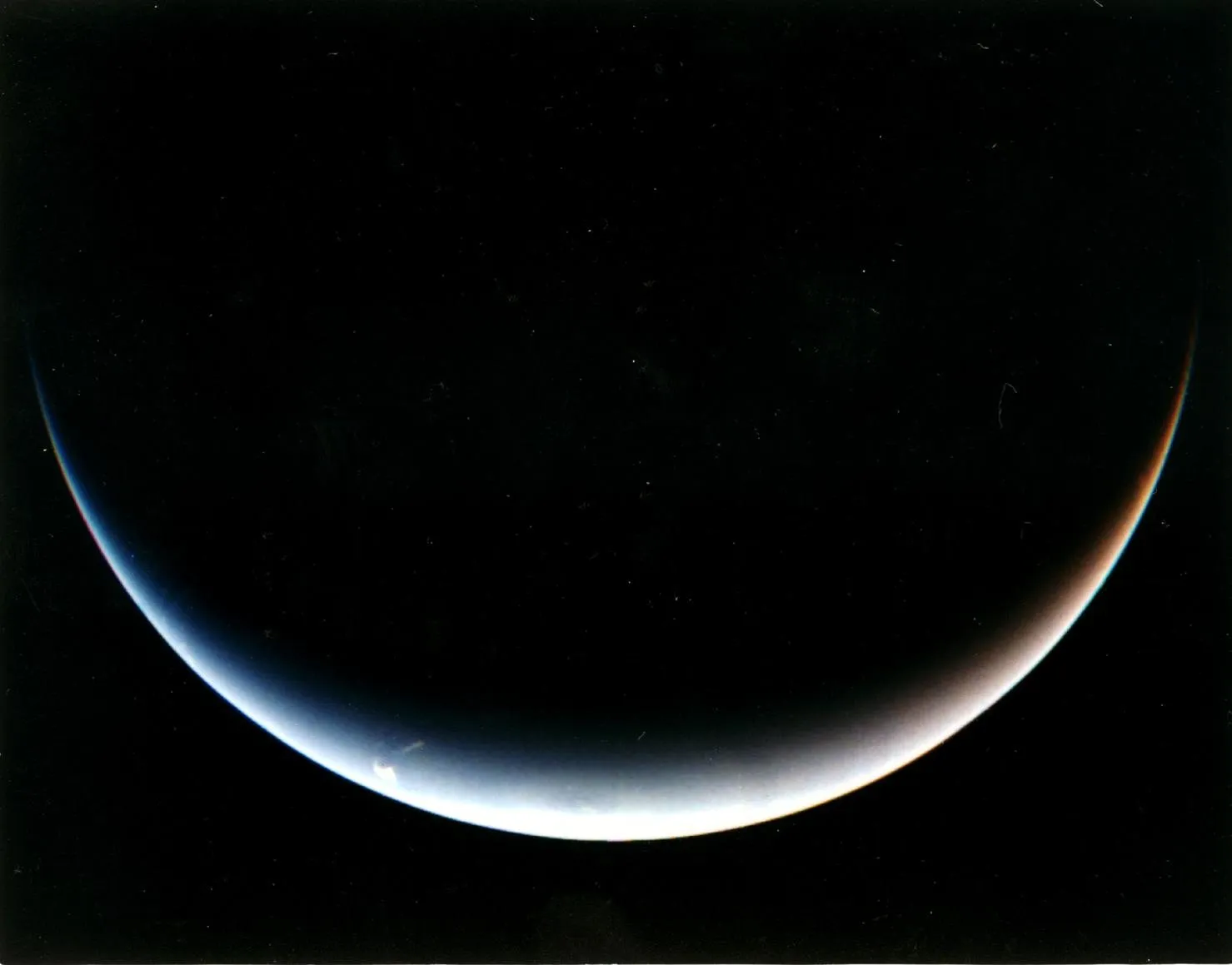
The solar system is mostly empty space, and that emptiness is the whole story.
Look
Most pictures of the solar system squeeze the planets together like beads on a string, and draw them far too big. They have to: at true scale, a page would be almost completely empty.
Guess first: if the Sun were a beach ball, how far away would Earth be? A step? A room? A street?
A street. With the Sun as a 1-metre ball, Earth is a 9 mm pea about 107 metres away: roughly the length of a football pitch. Keep that picture in mind as you travel.
The Scale Walk above is drawn at true scale: sizes and distances in the same proportion. Every pixel you scroll carries you 3,000 km. Scroll inside the frame, press Next world, or tap a planet on the journey map at the top.
- The journey map is to scale too. The white marker is you. Notice how the Sun and the four inner planets crowd together at the far left.
- The odometer counts kilometres and the time sunlight has needed to get where you are.
- When you stop near a world, the camera locks on and leans in (the zoom is shown next to the scale bar), and a card tells you where you are.
- Earth, a globe 12,742 km across, is almost 50,000 scrolled pixels from the Sun. Neptune is about 1.5 million pixels away.
Notice how much of the trip is just black, with only a few lines of narration drifting past. That is the real solar system: tiny worlds separated by enormous emptiness.
Understand
A scale model divides every length by the same number. Here the number is 3,000: 3,000 km of real space becomes 1 pixel.
| World | Real diameter | Diameter at 1 px = 3,000 km | Distance from Sun | At this scale |
|---|---|---|---|---|
| Sun | 1,391,400 km | 464 px | 0 | 0 |
| Earth | 12,742 km | 4 px | 149.6 million km | 49,866 px |
| Jupiter | 139,822 km | 47 px | 778.3 million km | 259,437 px |
| Neptune | 49,244 km | 16 px | 4,498 million km | 1,499,000 px |
A handy comparison uses the Sun as a 1-metre ball. Divide everything by the Sun’s diameter (1.39 million km):
- Earth is a 9 mm pea, 107 m away.
- Jupiter is a 10 cm grapefruit, 560 m away.
- Neptune is a 3.5 cm marble, 3.2 km away.
- The nearest star, Proxima Centauri, would be another ball about 29,000 km away: more than two thirds of the way around the real Earth.
Try the autopilot at 1×, the real speed of light. You move 100 pixels per second, which feels slow on screen. Real sunlight really does need 8 minutes to reach Earth and more than 4 hours to reach Neptune. The faster settings compress time, not distance: the autopilot still brakes and pauses at every world.
Guess first: scrolling with a mouse wheel, are you moving faster or slower than light?
Much faster. A brisk scroll carries you millions of kilometres per second, often ten or more times the speed of light; the speed readout under the odometer shows it. Even so, the outer planets take a long time to reach. That is how big the distances are.
Master
Two separate compressions distort normal diagrams: the size scale and the distance scale. The ratio of the Sun-Neptune distance (4.5 × 10⁹ km) to Earth’s diameter (1.27 × 10⁴ km) is about 350,000. A screen 1,000 pixels tall can resolve a range of about 1,000, so no single static image can show both the planets and their spacing. Interactive zoom, logarithmic axes or a scroll-length model like this one are the only honest options.
This is also why the orrery on this site offers two modes. Readable scale compresses distance with a square root (r_screen ∝ √r) and draws planets at fixed legible sizes. True scale is linear in both size and distance, so the planets shrink to sub-pixel dots.
The emptiness has consequences for spaceflight. Travelling between planets is not like driving between cities: the planets move, the distances are huge, and the energy cost depends far more on changes of speed than on distance. That idea, delta-v, is at the heart of the Navigator path.
A last scale fact: the asteroid belt, often drawn as a crowded field of rocks, is so sparse that spacecraft cross it without any special manoeuvres. The Kuiper belt beyond Neptune is emptier still.
Zama
Set the autopilot speed to 1× and press 'Travel at the speed of light'. Watch the light-time clock as you reach Earth: about 8 minutes 20 seconds. Before you look at the table, guess how long the same trip takes to Neptune, then check.
Iningi. Izinhlekelele zikhona lapho ukufunda kuqhubeka khona.
Umbuzo osheshayo
3 imibuzo esheshayo. Khetha impendulo ukuze ubone uma ulungile.
-
If the Sun were a ball 1 metre wide, about how big would Earth be?
- A A football
- B A grapefruit
- C About 9 millimetres, like a pea
- D About 1 millimetre
Bonisa impendulo
C. About 9 millimetres, like a pea The Sun is about 109 times wider than Earth, so 1 m ÷ 109 ≈ 9 mm.
-
At that same scale, how far away would Earth be from the 1-metre Sun?
- A About 1 metre
- B About 10 metres
- C About 107 metres
- D About 1 kilometre
Bonisa impendulo
C. About 107 metres 1 au is about 107.5 Sun diameters, so Earth would be a pea about the length of a football pitch away.
-
Why do most drawings of the solar system show the planets close together?
- A Because they really are close
- B Because at true scale the planets would be too small to see on the page
- C Because the drawings show the planets at their closest approach
- D Because of light pollution
Bonisa impendulo
B. Because at true scale the planets would be too small to see on the page
Ingxenye yelayini
- Idlala nge-interactive
- Funda isifundo
- Ukwenze kanjani isiphakamiso
- Uthathe isifundo
Phawula isifundo siqediwe ukuze uyigcine ekwenzeni kwakho kulolu hlelo.
Isifundo siqediwe. Kulungile!
Phezulu okulandelayo Days and years on each worldAmagama kule ncwadi
Amasu
- NASA NSSDCA Planetary Fact Sheet (diameters, distances)
- JPL SSD: Approximate Positions of the Planets (semi-major axes)
- NASA NSSDCA: Schoolyard Solar System scale model
Le ndatshana ilayisense CC BY-SA 4.0.