
Le ndatshana yabhalwa nguLocal Solar System ilungu leqembu le Foundation futhi ingathuthukiswa ngumbuyekezi oqeqeshiwe. Ingabe uqeqeshiwe kulolu daba? Sicela uhlela
Orrery
Vula ikhasi eligcweleIsikali sangempela: amabanga nama-ubukhulu ngesilinganiso esifanele. Amaplanethi ancane kakhulu kunama-pixels, ngakho enziwe njengezinhlamvu.
Thola ama-worlds amabili
| i-Venus | i-Jupiter |
|---|
Ithebula ledatha (ukhetho lombhalo)
| Izwe | Ubukhulu bendawo | Isikhathi sokuhamba kwelanga kusuka eMhlabeni | I-longitude ye-ecliptic |
|---|---|---|---|
| i-Mercury | 0.4659 au | 3 iminithi 52 sec | 264° |
| i-Venus | 0.7271 au | 6 iminithi 3 sec | 352° |
| Iplanethi | 1.002 au | 8 iminithi 20 sec | 6.31° |
| i-Mars | 1.557 au | 12 iminithi 57 sec | 84.7° |
| i-Jupiter | 5.304 au | 44 iminithi 7 sec | 131° |
| i-Saturn | 9.435 au | 1 hora 18 iminithi | 10.8° |
| i-Uranus | 19.44 au | 2 hr 42 iminithi | 62.6° |
| i-Neptune | 29.88 au | 4 hr 8 iminithi | 2.63° |
Izindawo zeplanethi zisebenzisa i-JPL's approximate formulas, ezifanele cishe amaminithi ambalwa e-arc phakathi kuka-3000 BC no-3000 AD.
On Venus, the planet spins so slowly that one turn takes longer than a trip around the Sun. A day is not the same thing everywhere, and neither is a year. Here is how to work out both, on any world.
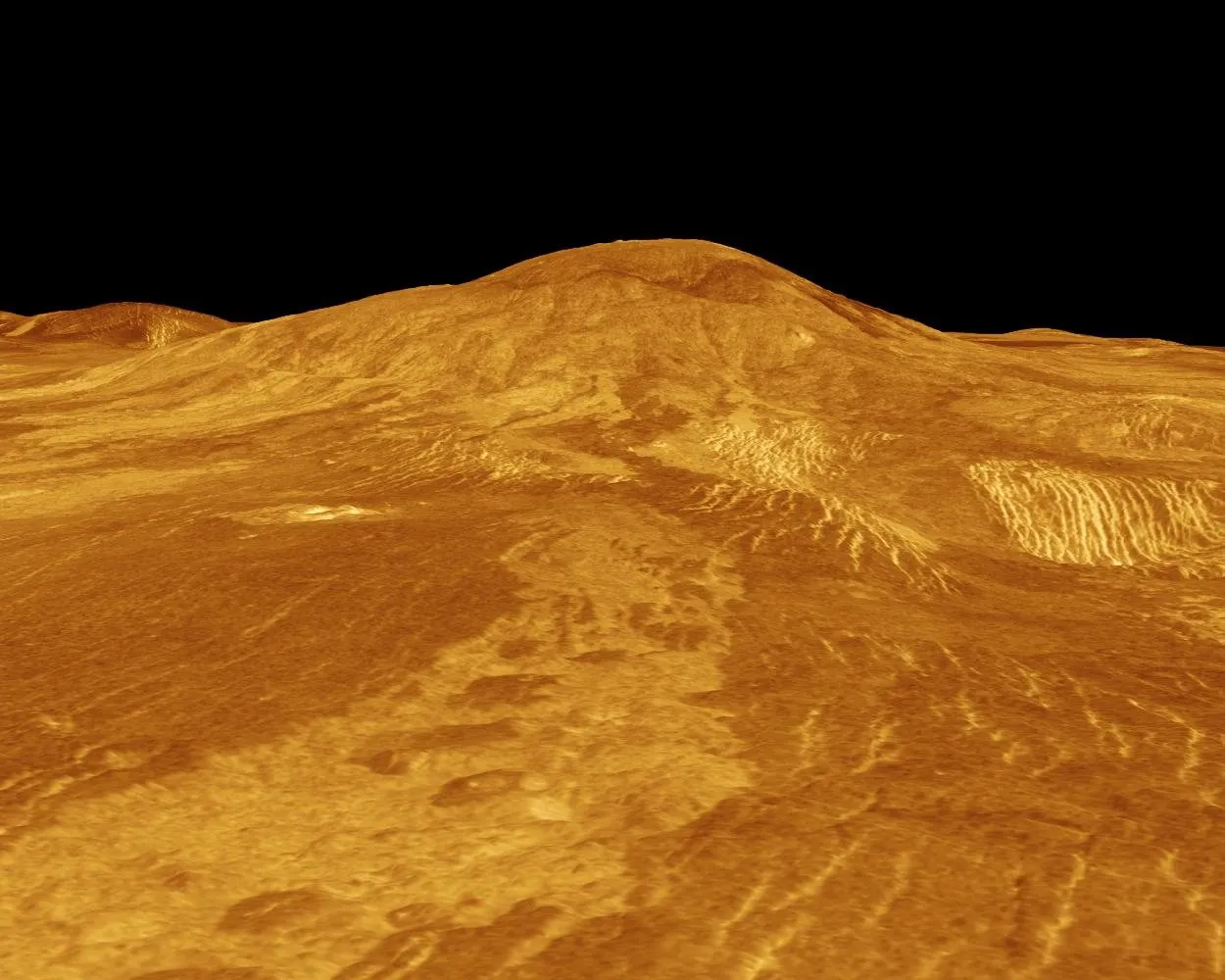
A day and a year are two different clocks, and every world sets them differently.
Look
A day is how long a world takes to spin once. A year is how long it takes to go once around the Sun. On Earth these are about 24 hours and 365 days. Other worlds are very different.
| World | Length of day | Length of year |
|---|---|---|
| Mercury | 176 Earth days | 88 Earth days |
| Venus | 117 Earth days | 225 Earth days |
| Earth | 24 hours | 365 days |
| Mars | 24 hours 40 minutes | 687 Earth days |
| Jupiter | 9.9 hours | 11.9 Earth years |
| Saturn | 10.7 hours | 29.4 Earth years |
| Uranus | 17.2 hours | 84 Earth years |
| Neptune | 16.1 hours | 164.8 Earth years |
Some surprises:
- On Mercury, one day (sunrise to sunrise) lasts two of its years.
- Venus spins backwards and very slowly.
- The giant planets spin fastest of all, even though they are the biggest.
- A Mars day is almost the same as ours, which is handy for rover teams on Earth.
Use the comparison panel under the orrery to compare any two worlds.
Understand
There are two kinds of day, and the difference matters.
- The sidereal day is one spin measured against the distant stars. Earth’s is 23 hours 56 minutes 4 seconds.
- The solar day is from one noon to the next. While Earth spins, it also moves about 1/365 of the way around its orbit, so it has to turn a little extra (about 1 degree) before the Sun is back overhead. That takes about 4 more minutes, giving 24 hours.
For most planets the two days are almost the same. For slow spinners they are wildly different. Mercury spins once every 58.6 Earth days, and its year is 88 days. The two motions combine so that one solar day lasts 176 Earth days: exactly two Mercury years. Mercury spins exactly three times for every two orbits, a lock caused by the Sun’s tides.
Venus spins backwards (retrograde), once every 243 Earth days. Because the spin and the orbit go opposite ways, they add up, and the solar day is shorter than the spin: about 117 Earth days.
Years get longer with distance for two reasons: the path is longer, and the planet moves more slowly. Earth moves at about 29.8 km/s; Neptune at about 5.4 km/s along a path 30 times longer.
Master
The solar day follows from the two angular speeds. With the sidereal rotation period P_rot (negative for retrograde) and the orbital period P_orb, both measured in the same direction:
1 / P_solar = 1 / P_rot − 1 / P_orb
Check Earth: 1/0.99727 − 1/365.256 = 1.00274 − 0.00274 = 1.00000 per day, so P_solar = 1 day.
Check Mercury: 1/58.646 − 1/87.969 = 0.017052 − 0.011368 = 0.005684, so P_solar = 175.9 days.
Check Venus (retrograde, P_rot = −243.018 days): 1/(−243.018) − 1/224.701 = −0.004115 − 0.004450 = −0.008565, so |P_solar| = 116.75 days. The minus sign tells you the Sun rises in the west on Venus.
Years follow Kepler’s third law: T² ∝ a³ for everything orbiting the Sun. With T in years and a in au, T = a^1.5. Neptune at a = 30.07 au gives T = 30.07^1.5 = 164.9 years, matching the observed 164.79. The small difference comes from rounding and from the planets’ tiny masses, which Newton’s version of the law includes.
Zama
Use the comparison panel to find the world with the longest day and the world with the shortest year among the planets. Then compare Venus's day with its year.
Iningi. Izinhlekelele zikhona lapho ukufunda kuqhubeka khona.
Umbuzo osheshayo
3 imibuzo esheshayo. Khetha impendulo ukuze ubone uma ulungile.
-
Which planet has the shortest day?
- A Mercury
- B Earth
- C Jupiter
- D Neptune
Bonisa impendulo
C. Jupiter Jupiter spins once in about 9.9 hours.
-
On Venus, which is longer?
- A The solar day (sunrise to sunrise)
- B The year
- C They are exactly the same
- D Venus has no day
Bonisa impendulo
B. The year Careful: Venus's year is 224.7 Earth days and its solar day is about 116.8 Earth days, so the year is longer. It is its rotation (243 days) that is longer than its year.
-
Why do planets farther from the Sun have longer years?
- A They spin more slowly
- B Their orbits are longer and they move more slowly
- C The Sun's light takes longer to reach them
- D They have more moons
Bonisa impendulo
B. Their orbits are longer and they move more slowly Both effects add up: a bigger circle and a slower speed. Kepler's third law puts numbers on it.
Ingxenye yelayini
- Idlala nge-interactive
- Funda isifundo
- Ukwenze kanjani isiphakamiso
- Uthathe isifundo
Phawula isifundo siqediwe ukuze uyigcine ekwenzeni kwakho kulolu hlelo.
Isifundo siqediwe. Kulungile!
Phezulu okulandelayo Why we have seasonsAmagama kule ncwadi
Amasu
- NASA NSSDCA Planetary Fact Sheet (length of day, orbital period)
- JPL SSD: Planetary Physical Parameters (sidereal rotation and orbital periods)
- NASA NSSDCA Planetary Fact Sheet Notes (definitions)
Le ndatshana ilayisense CC BY-SA 4.0.