
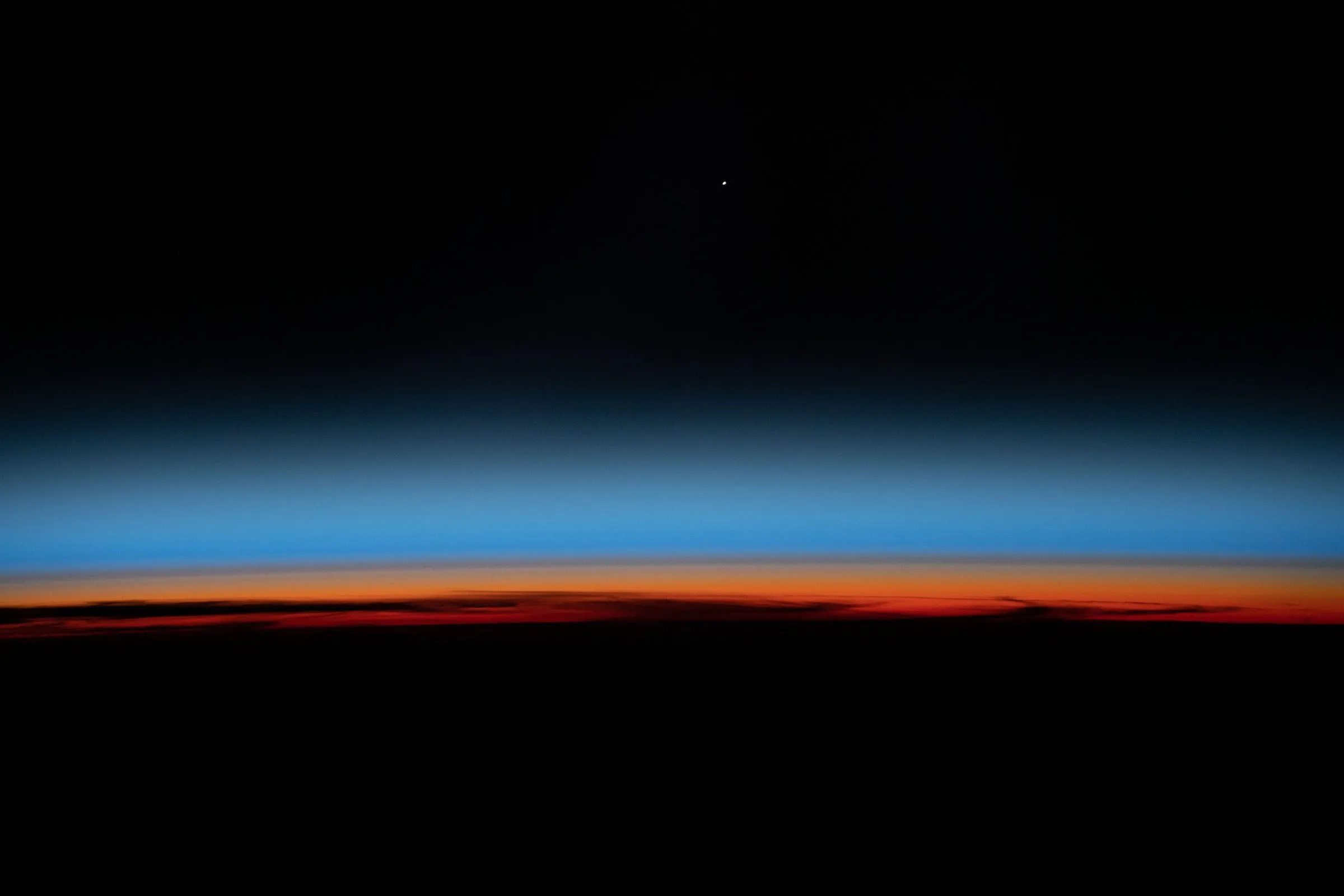
This lesson was drafted by a Local Solar System Foundation team member and could be improved by a qualified reviewer. in iyi Ikintu?
Na
Gufungura Ipaji yuzuyeni? Street lights, buildings and signs make the night sky glow, and that glow hides the fainter stars. This tool shows real stars from a star catalogue and how many disappear as the sky gets brighter, from a truly dark place to a city centre.
Gukoresha: i Iyisobanura Nka, Cyangwa Kurura i kimurika Igishushanyo. i Ikirere Reba Kuri Kureba.
ni
Pick the one that sounds like the sky where you live. Each picture shows the stars of Orion you could see at that level.
Star positions and brightness from the Yale Bright Star Catalogue. Your location is never stored.
iyi
- Start at level 1 (a truly dark site) and slowly drag to 9.Icyegeranyo: From about 9,000 stars across the whole sky, only about 400 are left in a city centre, and only half of the sky is above you at any time.
- Choose Orion and compare levels 4 and 8.Icyegeranyo: The famous shape survives, but the faint stars that fill it in, and the Milky Way behind it, vanish.
- i Ibikurikira > Bibonerana A, Gyayo Inyuma Kuva: na Itegereza 20 iminota ya: Kuri Guhindura....Icyegeranyo: Find the picture here that matches what you see: that is roughly your Bortle level. The pictures show the Orion area; any familiar group of stars works.
Ibitekerezo
What can anyone do?
Light pollution is the easiest pollution to fix: switch it off and it is gone. Point outdoor lights down and shield them, use warm-coloured bulbs, and turn off lights nobody needs.
Sources: star positions and brightness from the Yale Bright Star Catalogue (5th revised edition). Sky levels and faintest visible stars from J. E. Bortle, "Introducing the Bortle Dark-Sky Scale", Sky & Telescope, February 2001. Lighting advice: DarkSky International. Your location is never asked for or stored.
Artificial light that shines where it is not needed, especially up into the sky. It makes the whole night sky glow and hides the stars.
in i Inkoranyamagambo →A 1 to 9 scale of how dark the night sky is, published by the amateur astronomer John E. Bortle in 2001. Level 1 is the darkest sky on Earth; level 9 is a city centre.
in i Inkoranyamagambo →The scale astronomers use for brightness. Bigger numbers mean fainter: the brightest stars are around magnitude 0 or 1, and the faintest you can see from a truly dark site are about magnitude 7 to 8.
in i Inkoranyamagambo →Your eyes slowly become more sensitive in the dark. It takes 20 to 30 minutes, and one look at a bright screen or torch undoes much of it.
Ibyatanzwe imbonerahamwe# Umwandiko Igisubizo
| Icyiciro | Kigaragara | Kigaragara |
|---|---|---|
| 1 | 7.8 | 9.093+ |
| 2 | 7.3 | 9.082+ |
| 3 | 6.8 | 9.002+ |
| 4 | 6.3 | 7.008 |
| 5 | 5.8 | 4.103 |
| 6 | 5.3 | 2.319 |
| 7 | 4.8 | 1.267 |
| 8 | 4.3 | 718 |
| 9 | 3.8 | 409 |
For all of human history people looked up and saw the galaxy we live in. Today one person in three on Earth can no longer see the Milky Way from home. This lesson teaches you to read the sky, and to understand what we are losing.
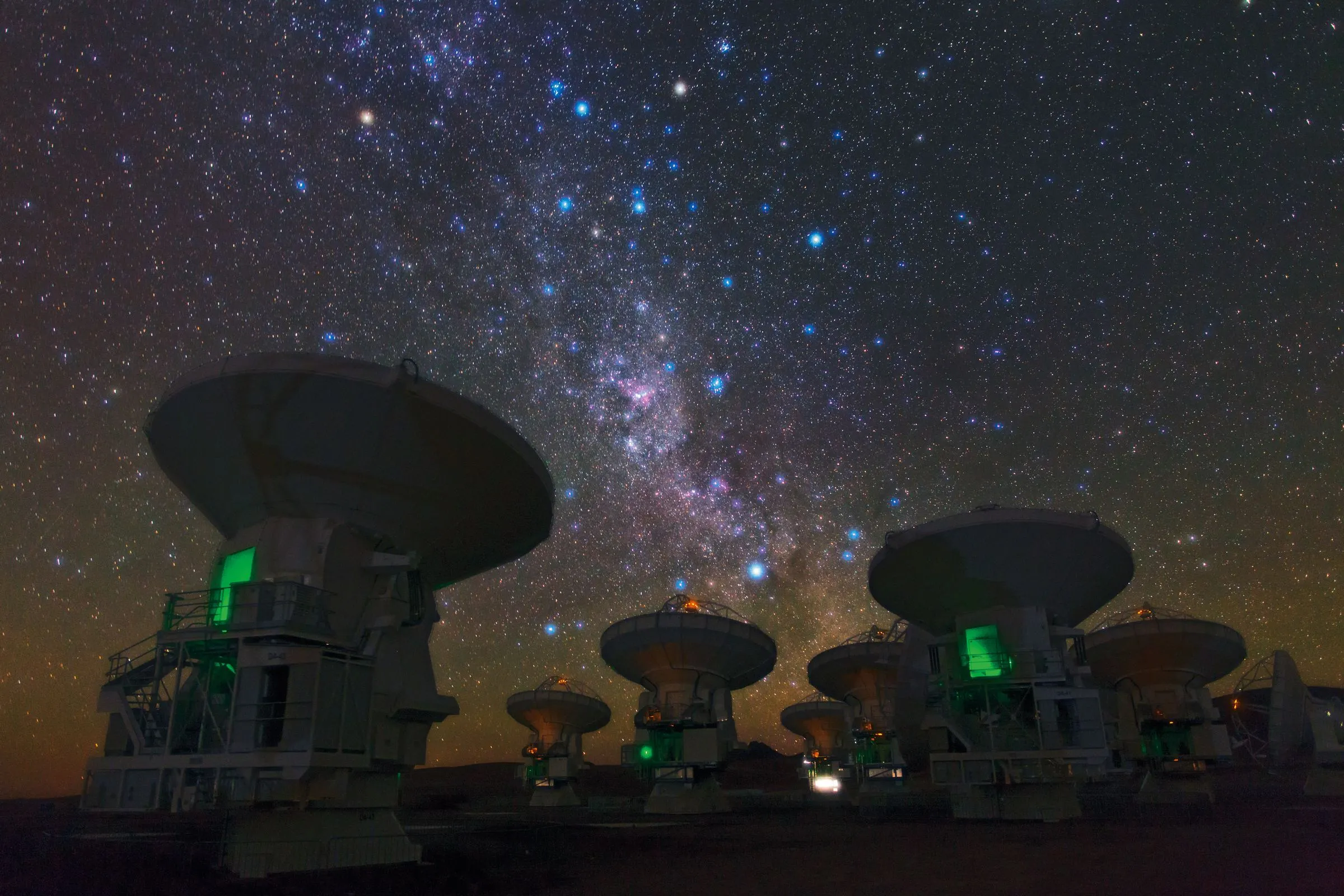
The sky is the oldest book there is. Light pollution is closing it.
Look
Look at the sky from a city and you might see a few dozen stars. From a truly dark place, far from any town, you can see thousands, and the Milky Way stretches across the sky like a cloud.
The difference is light pollution: artificial light that escapes upwards and makes the sky glow. That glow washes out the faint stars.
Drag the slider in the tool from 1 (a truly dark site) to 9 (inner city). The stars are real: they come from a catalogue of the 9,000 or so brightest stars in the sky. Watch how many disappear.
This is not only about stargazing. Night-time light also affects animals that navigate or hunt in the dark, and it wastes energy by lighting the sky instead of the ground. This connects to our Red Initiative and its Light Initiative for night-sky preservation.
Understand
Astronomers measure brightness with magnitudes. It is a backwards scale: bright stars have small numbers.
- Sirius, the brightest star at night, is about −1.5.
- The faintest stars most people can see from a dark site are about magnitude 6 to 7.
- In a city, the limit may be magnitude 4 or brighter.
The Bortle scale, published by the amateur astronomer John Bortle in 2001, sorts skies into nine classes. Each class comes with a typical faintest visible magnitude:
| Bortle class | Description | Faintest stars |
|---|---|---|
| 1 | Excellent dark site | 7.6 to 8.0 |
| 3 | Rural sky | 6.6 to 7.0 |
| 5 | Suburban sky | 5.6 to 6.0 |
| 7 | Suburban/urban transition | 4.6 to 5.0 |
| 9 | Inner-city sky | 4.0 at best |
Because there are many more faint stars than bright ones, each magnitude you lose hides a lot of them. In the Yale catalogue, about 5,000 stars are brighter than magnitude 6, but only about 500 are brighter than magnitude 4.
A 2016 world atlas found that more than 80% of people, and more than 99% of people in the United States and Europe, live under light-polluted skies.
Master
Magnitude is logarithmic. For two stars with fluxes F₁ and F₂:
m₁ − m₂ = −2.5 · log₁₀(F₁ / F₂)
A difference of 5 magnitudes is exactly a factor of 100 in flux, so one magnitude is a factor of 100^(1/5) ≈ 2.512.
Why do star counts rise so steeply? If stars were spread uniformly through space, all with the same luminosity, the number brighter than magnitude m would grow as 10^(0.6 m): about four times more stars for each fainter magnitude. The real Galaxy is not uniform, so the observed growth is smaller, around three times per magnitude near the naked-eye limit. You can check it with the catalogue counts in the tool’s data table.
Sky glow adds a background of its own brightness. A star is visible only if it stands out enough against that background, so a brighter sky raises the limiting magnitude. The Bortle limits are rough observer-based ranges, not a physical law, and your own result depends on your eyes, dark adaptation and the weather.
What works against light pollution, according to DarkSky International’s lighting principles: light only what needs light, only when it needs it, no brighter than necessary, pointing downwards with full shielding, and in warm colours (less blue light, which scatters more in the atmosphere).
Gushaka
Find your own home on the Bortle scale: go outside on a clear moonless night, let your eyes adapt for 20 minutes, and count how many stars you can see inside the rectangle of Orion (or the Southern Cross). Set the slider to match what you saw.
. i.
Igisubizo
3 Muhugura Ibibazo. Kuri NIBA ni i Iburyo:.
-
On the magnitude scale, which star is brighter?
- A A star of magnitude 1
- B A star of magnitude 6
- C They look the same
- D It depends on the colour
i
A. A star of magnitude 1 Smaller magnitudes are brighter. Each step of 5 magnitudes is a factor of 100 in brightness.
-
In a big city (Bortle class 8 or 9), roughly how many stars can you see in the whole sky?
- A Several hundred at most
- B About 5,000
- C About 10,000
- D Millions
i
A. Several hundred at most
-
Which of these helps reduce light pollution?
- A Brighter bulbs
- B Lights that point upwards
- C Shielded lights that point down, warm colours and timers
- D Blue-white lighting
i
C. Shielded lights that point down, warm colours and timers
Umurongo
- Na: i
- i
- i
- i
i Byuzuye Kuri Kubika Kuri Impinduka ku iyi APAREYE.
Byuzuye.
That was the last lesson in this path. See everything you have learned. Impinduka
in iyi
Inkomoko
- J. E. Bortle, 'Introducing the Bortle Dark-Sky Scale', Sky & Telescope, February 2001
- Yale Bright Star Catalogue, 5th revised ed. (Hoffleit & Warren 1991), CDS catalogue V/50
- F. Falchi et al., 'The new world atlas of artificial night sky brightness', Science Advances 2 (2016)
- DarkSky International: lighting principles
This lesson is licensed CC BY-SA 4.0.