
Night Sky and Light Pollution
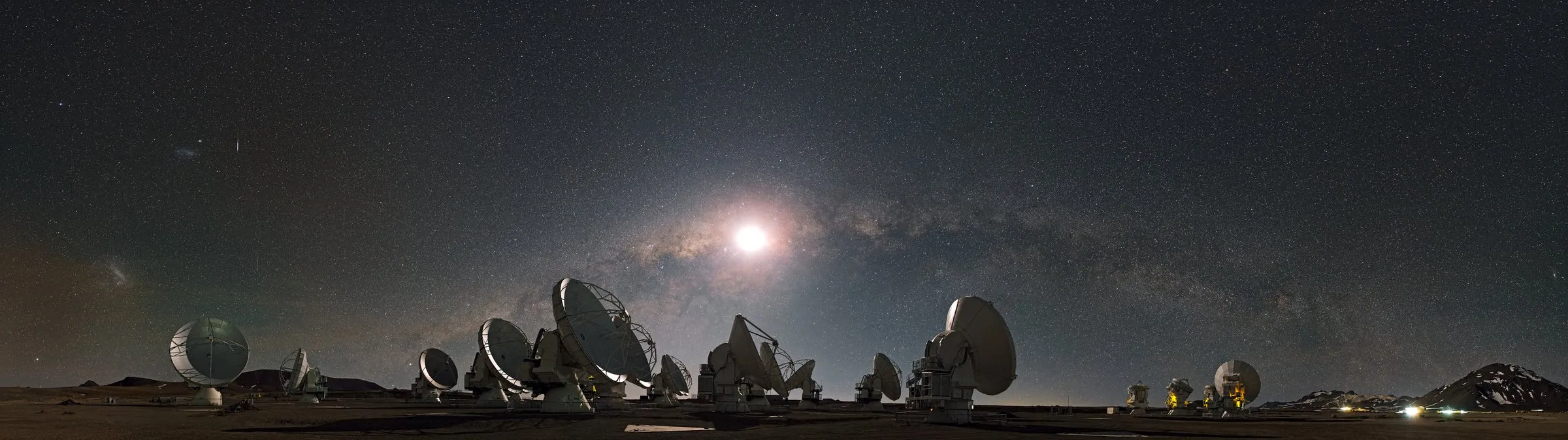
A real star catalogue. Drag the light pollution slider and watch the stars disappear.
ESO/S. Guisard (www.eso.org/~sguisard) (CC BY 4.0)
Night Sky and Light Pollution
What is this? Street lights, buildings and signs make the night sky glow, and that glow hides the fainter stars. This tool shows real stars from a star catalogue and how many disappear as the sky gets brighter, from a truly dark place to a city centre.
How to use it: Pick the description that sounds most like your sky, or drag the light pollution slider. Drag the sky view to look around.
How dark is your sky?
Pick the one that sounds like the sky where you live. Each picture shows the stars of Orion you could see at that level.
Star positions and brightness from the Yale Bright Star Catalogue. Your location is never stored.
Try this
- Start at level 1 (a truly dark site) and slowly drag to 9.Notice: From about 9,000 stars across the whole sky, only about 400 are left in a city centre, and only half of the sky is above you at any time.
- Choose Orion and compare levels 4 and 8.Notice: The famous shape survives, but the faint stars that fill it in, and the Milky Way behind it, vanish.
- On the next clear night without a Moon, go outside away from direct lights and wait 20 minutes for your eyes to adjust.Notice: Find the picture here that matches what you see: that is roughly your Bortle level. The pictures show the Orion area; any familiar group of stars works.
The ideas behind it
What can anyone do?
Light pollution is the easiest pollution to fix: switch it off and it is gone. Point outdoor lights down and shield them, use warm-coloured bulbs, and turn off lights nobody needs.
Sources: star positions and brightness from the Yale Bright Star Catalogue (5th revised edition). Sky levels and faintest visible stars from J. E. Bortle, "Introducing the Bortle Dark-Sky Scale", Sky & Telescope, February 2001. Lighting advice: DarkSky International. Your location is never asked for or stored.
Artificial light that shines where it is not needed, especially up into the sky. It makes the whole night sky glow and hides the stars.
More in the glossary →A 1 to 9 scale of how dark the night sky is, published by the amateur astronomer John E. Bortle in 2001. Level 1 is the darkest sky on Earth; level 9 is a city centre.
More in the glossary →The scale astronomers use for brightness. Bigger numbers mean fainter: the brightest stars are around magnitude 0 or 1, and the faintest you can see from a truly dark site are about magnitude 7 to 8.
More in the glossary →Your eyes slowly become more sensitive in the dark. It takes 20 to 30 minutes, and one look at a bright screen or torch undoes much of it.
Data table (text alternative)
| Bortle class | Faintest visible stars | Stars visible (whole sky, clear night) |
|---|---|---|
| 1 | 7.8 | 9,093+ |
| 2 | 7.3 | 9,082+ |
| 3 | 6.8 | 9,002+ |
| 4 | 6.3 | 7,008 |
| 5 | 5.8 | 4,103 |
| 6 | 5.3 | 2,319 |
| 7 | 4.8 | 1,267 |
| 8 | 4.3 | 718 |
| 9 | 3.8 | 409 |
Tools and lessons use simplified models for learning only. They must not be used for navigation, mission planning or any operational decision. Certificates are free and non-accredited. Read the educational content disclaimer