
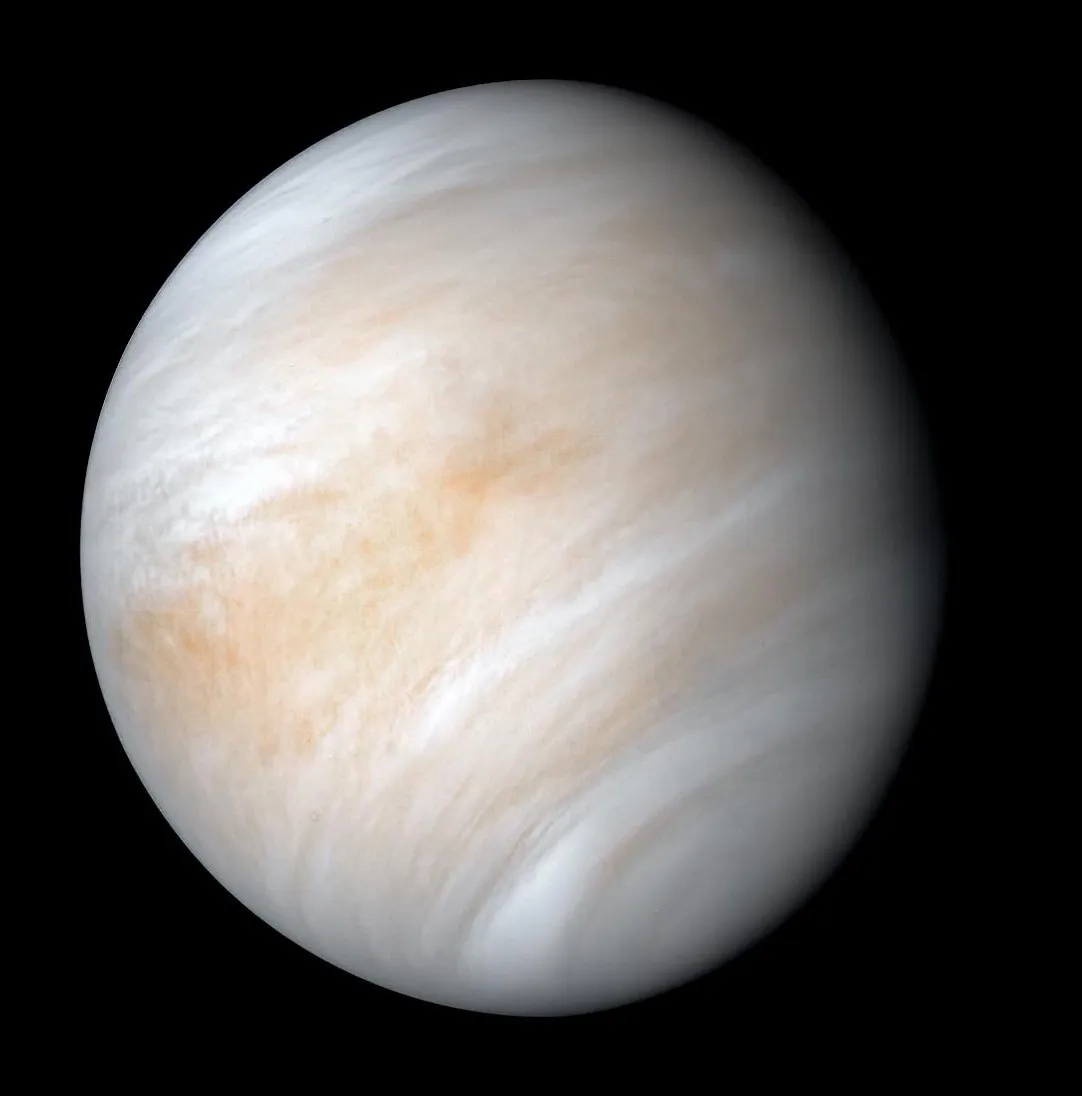
Venus
Earth's neighbour, similar in size, wrapped in a crushing carbon dioxide atmosphere.
NASA/JPL-Caltech
Earth’s twin in size, and the hottest planet in the solar system.
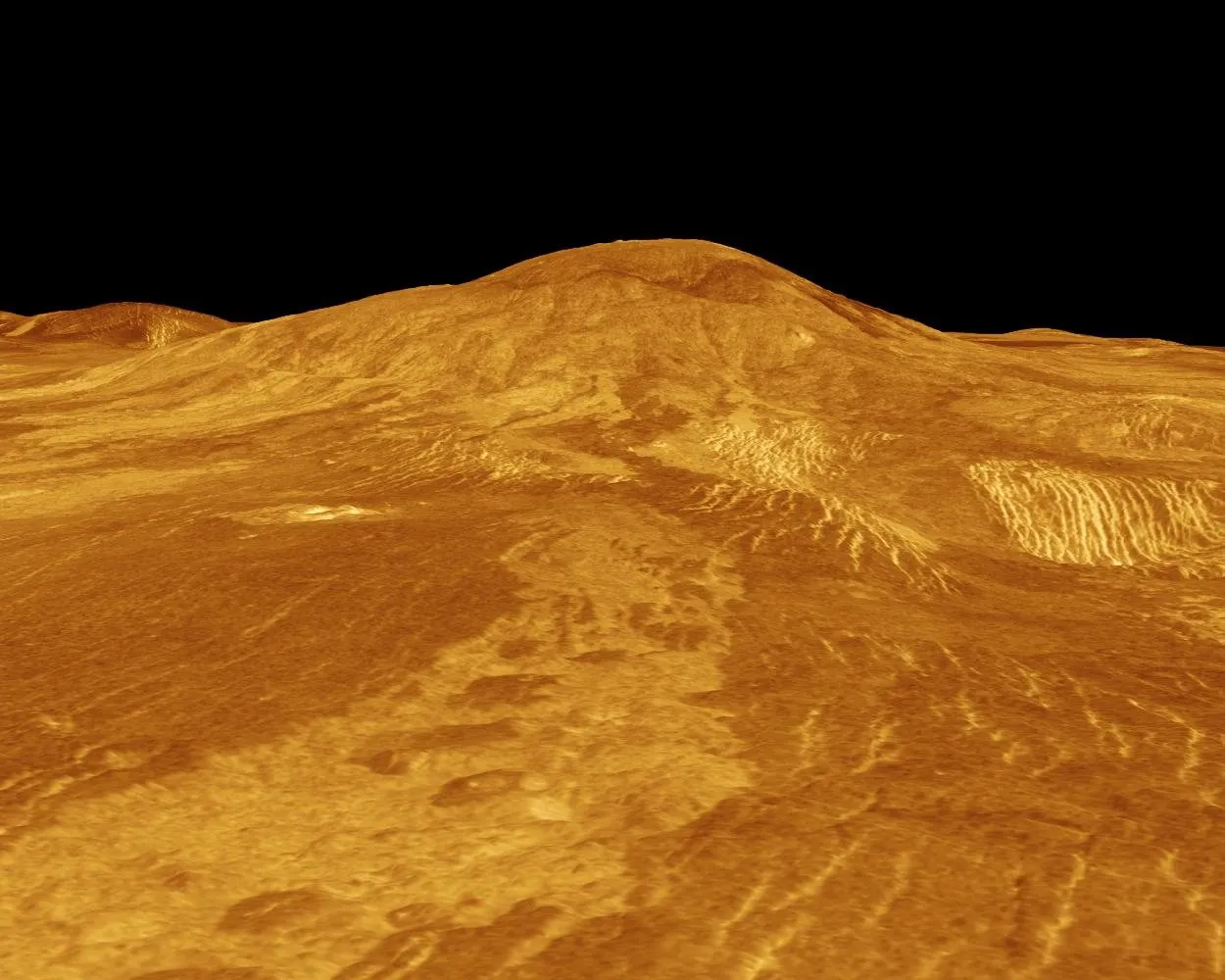
Venus is almost Earth’s twin in size and mass, but its thick carbon dioxide atmosphere creates a runaway greenhouse effect. The surface pressure is about 92 times Earth’s and the mean temperature about 464 °C, hotter than Mercury.
It rotates backwards (retrograde) and very slowly: one rotation takes 243 Earth days, longer than its 225-day year. Seen from Earth it is the brightest object in the night sky after the Moon.
Data sources
Tools and lessons use simplified models for learning only. They must not be used for navigation, mission planning or any operational decision. Certificates are free and non-accredited. Read the educational content disclaimer