
農業用太陽光発電
A hectare of farmland can grow wheat or make electricity.パネルを十分に高く上げれば、両方の大部分ができる。問題はどの作物を、どこで、どんな価格で。
Tobi Kellner (CC BY-SA 4.0)
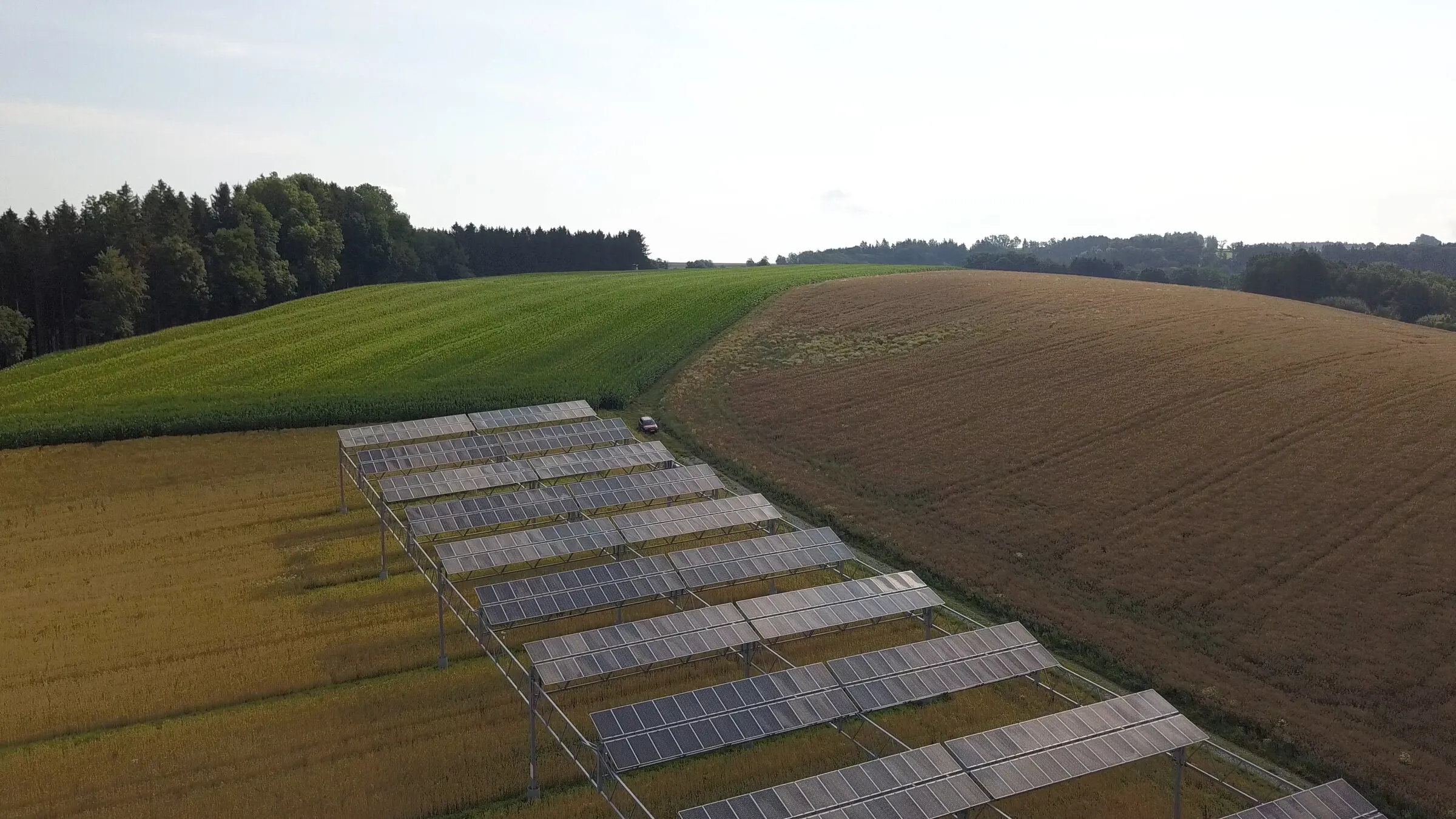
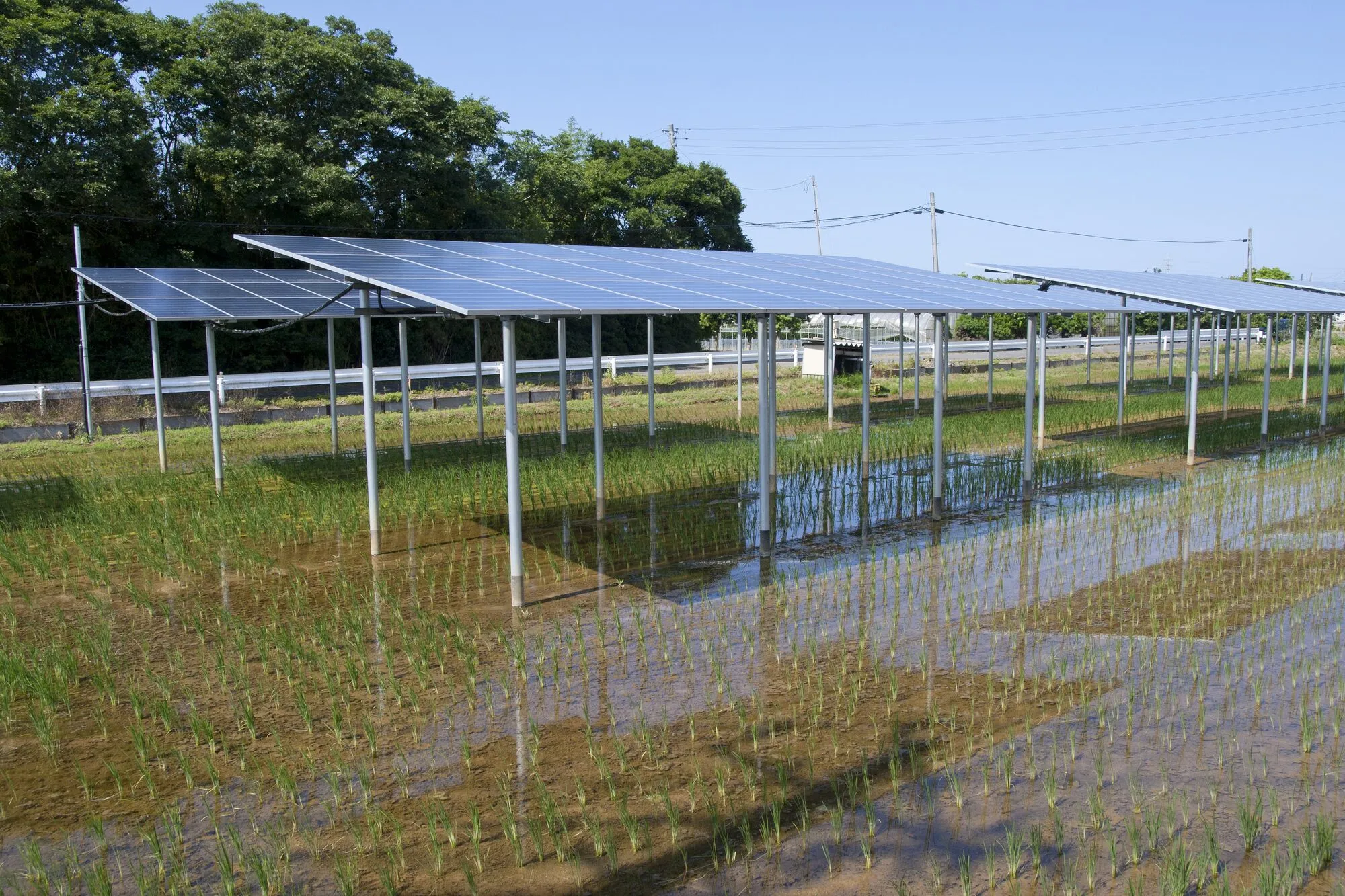
太陽光発電のためには土地が必要であり,開けた平坦な日当りの良い土地は農地であることも多い。 食料とエネルギーの間に 静かな対立が生じる 農業用太陽光発電(アグロフォトヴォルタイクス,ソーラーシェアリングとも呼ばれる)はこれを解消しようとしている:高い支柱にあるパネルや広く間隔のある列で,その下や間に作物や放牧がある。
The honest summary: agrivoltaics is proven to raise the total output of a hectare, often by 50 to 80%, but it always gives up some electricity compared with a normal solar farm, often gives up some crop yield compared with an open field, and costs more to build than either. 日陰が作物に有利な場所、土地があきらめるには貴重すぎる場所、または農業を続けることを規則が要求する場所で勝つ。
何だ?
There are three broad designs (Fraunhofer ISE, 2024):
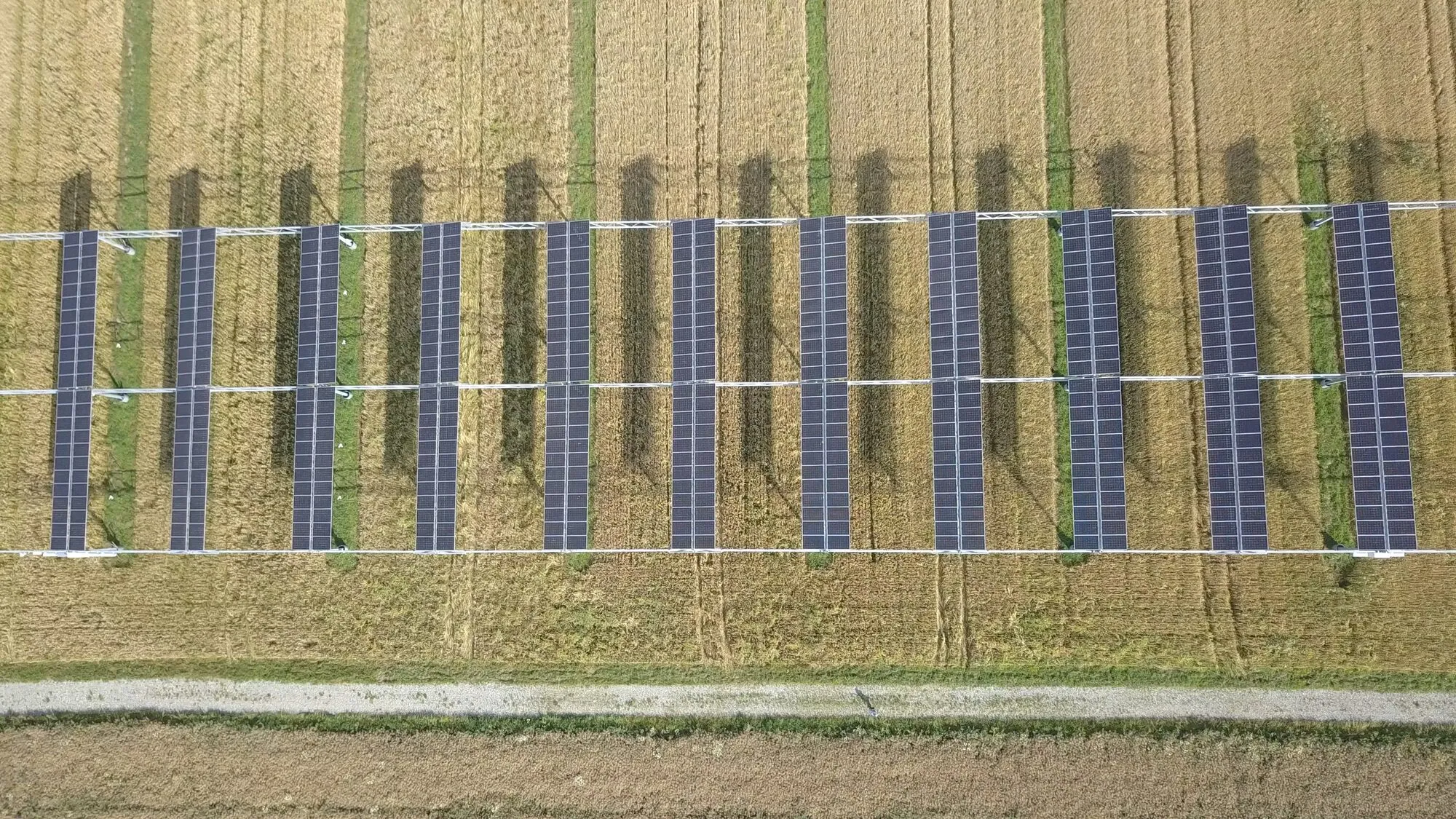
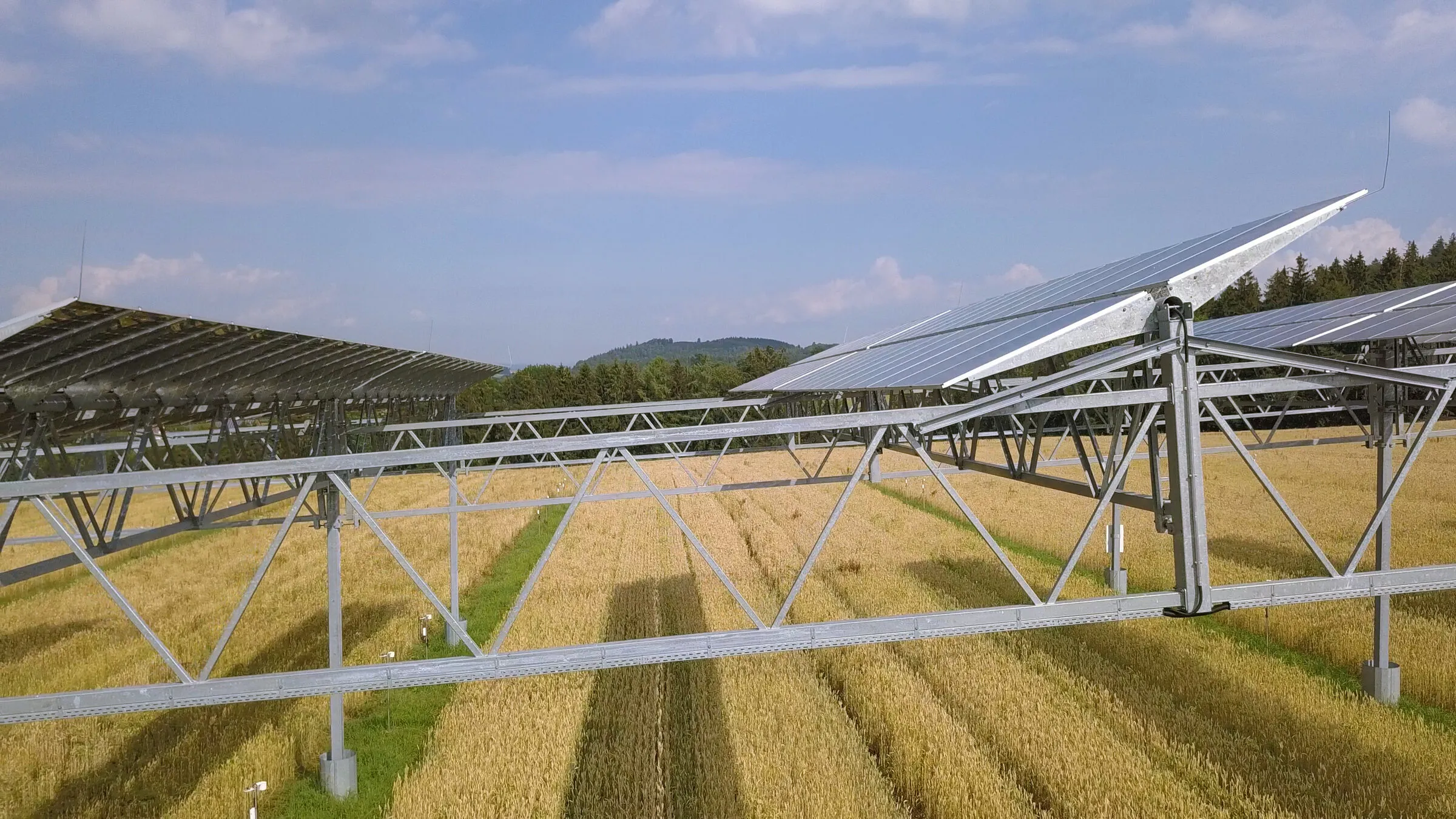
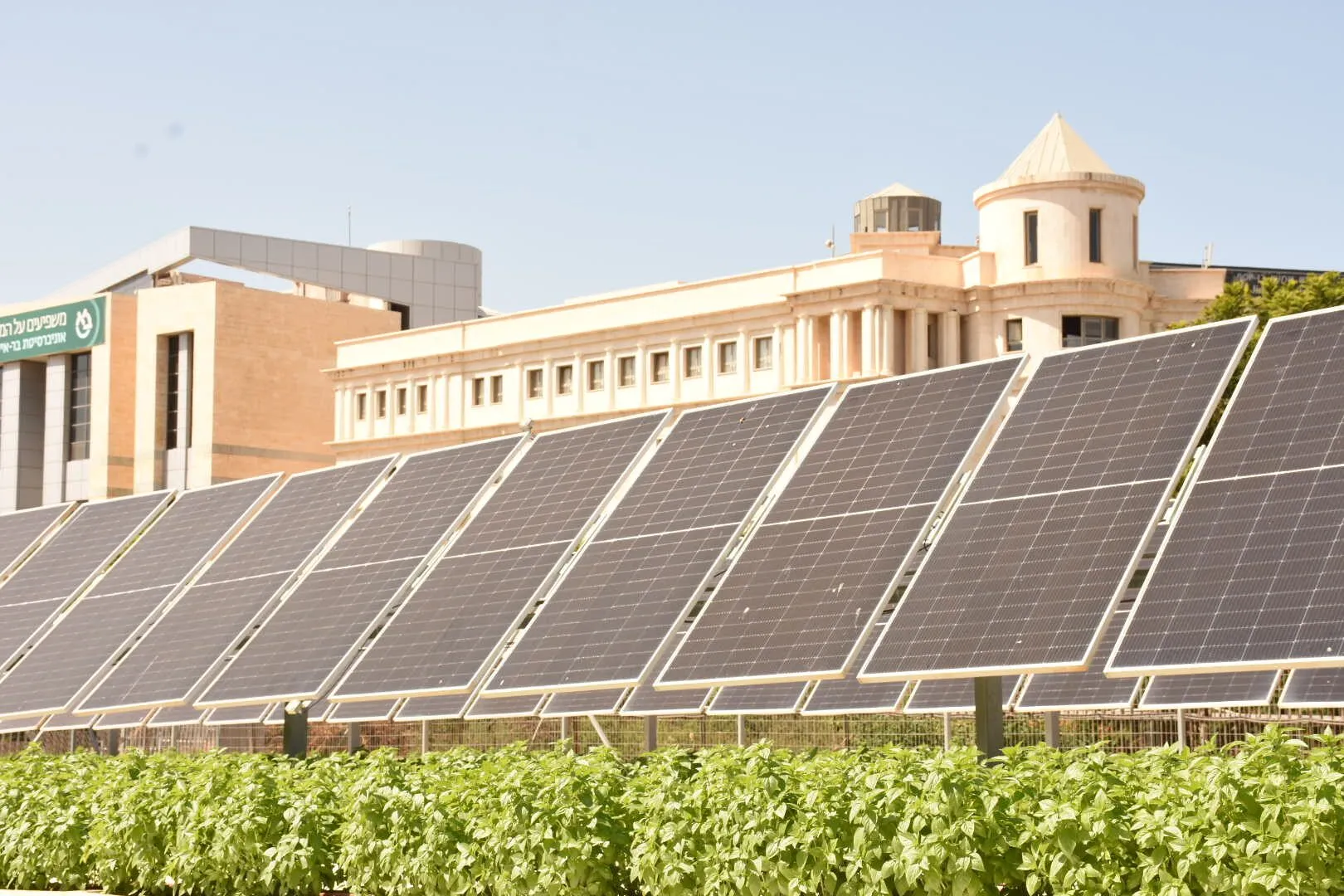
- Overhead (stilted) systems. Panels on a frame four to six metres high, so tractors and combine harvesters can pass underneath. 南ドイツのHeggelbachは最もよく研究された例である。
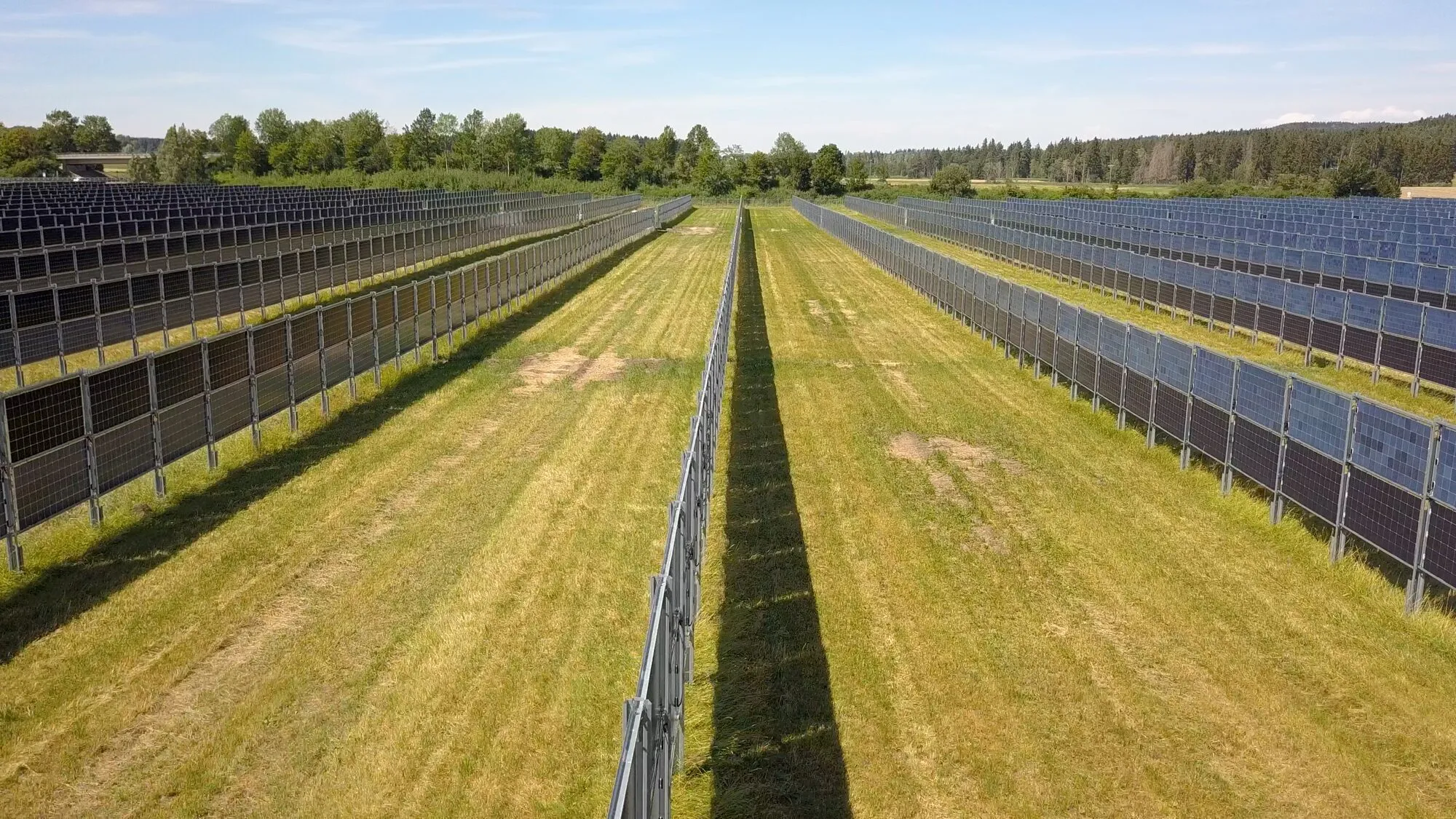
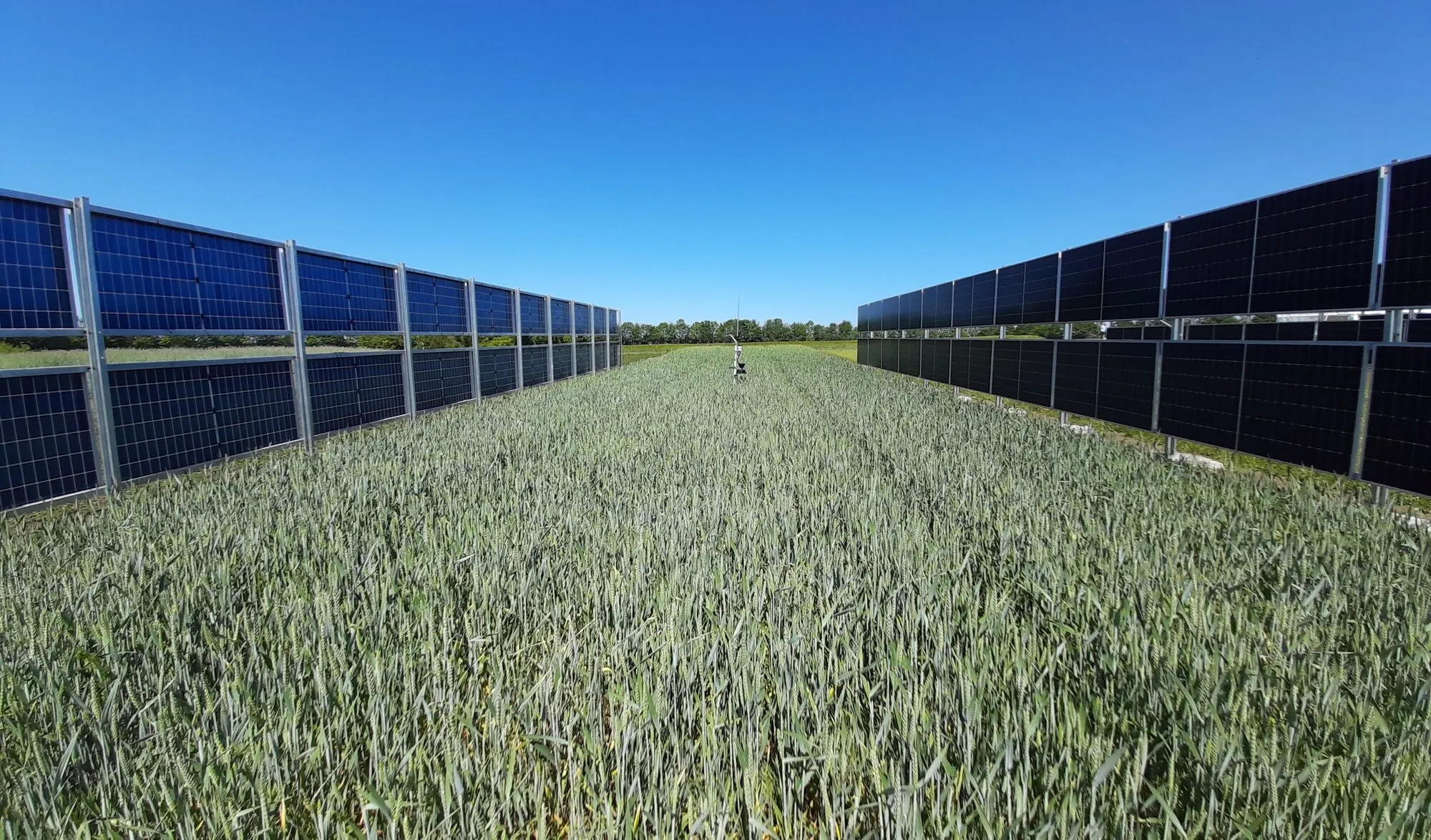
- 宇宙間システム 平面パネルの高さは,その間に広い農地帯を設けた。 東と西に向かう垂直,両面(二面)パネルは一つのバージョンである:ドイツのEppelborn‐Dirmingenでは2MWの垂直システムが少なくとも90%の土地を耕作可能に残している。
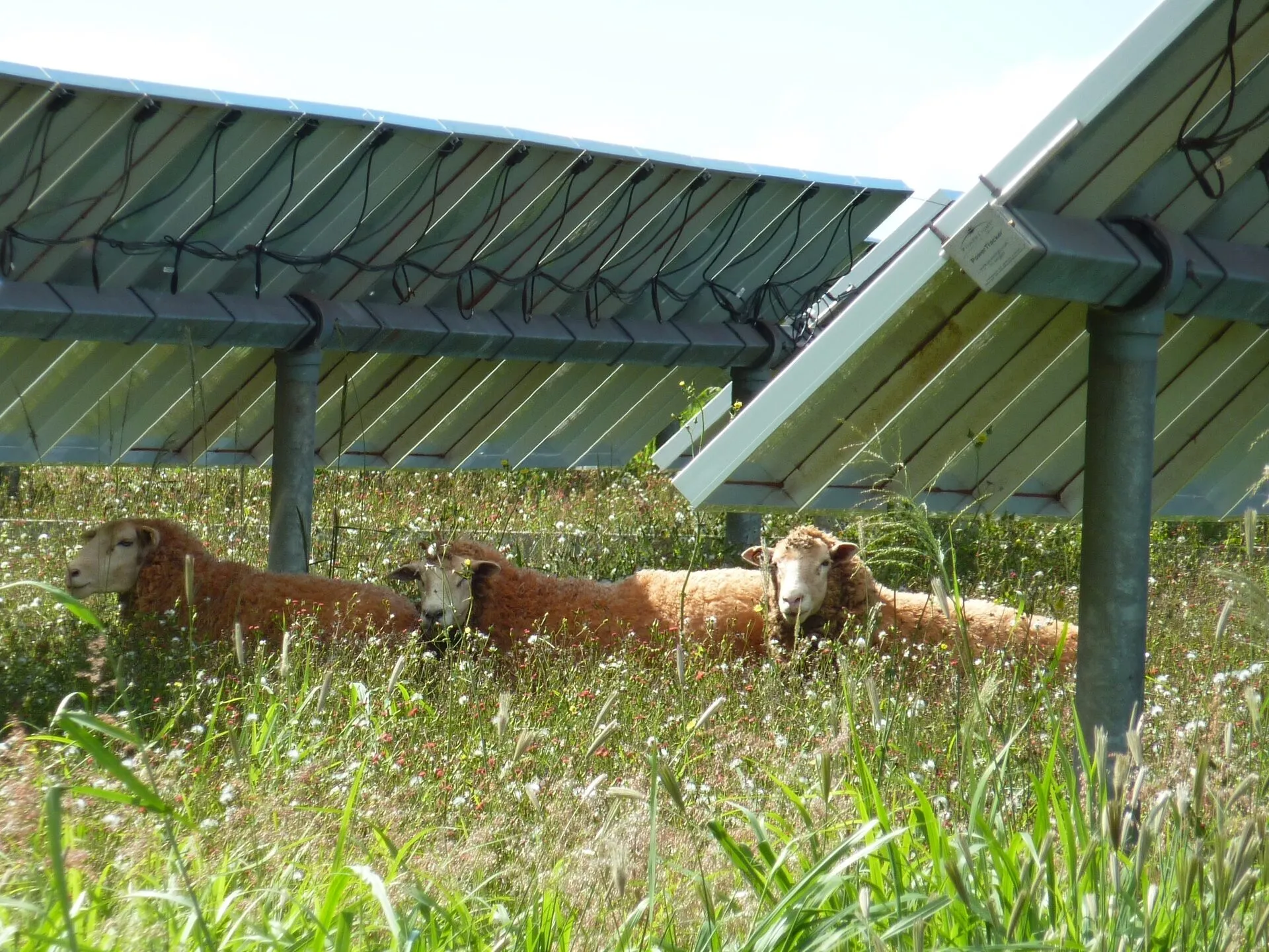
- 従来の太陽光発電農場における放牧と受粉者生息地について検討した。 ヒツジはパネル下で飼育されることが多く,ヘクタール当たりの農業価値は低く,専門家の中にはこれをアグリソーラーとは全く考えない者もいる。
これらの間には,果樹園やブドウ園,ベリー園などに太陽光パネルを設置したハウスがある(ここでは,ハグネットやプラスチックカバーに代わる)。
仕組み
Light is shared, not doubled. Sunlight on a field is a fixed budget: about 1,000 to 2,000 kWh per square metre a year in most farming regions. パネルはその一部を遮断し 作物は残りを得る 多くの作物は夏の日光を十分に利用できない。 葉の光合成は光により上昇し,光飽和点で平坦化する。 Shade-tolerant crops such as leafy vegetables, clover grass, many fruits and berries saturate early and lose little when part of the light is taken away (Fraunhofer ISE, 2024). 寒冷年におけるトウモロコシや小麦などの日食性作物はより多くの損失を受ける。
土地当量比。 共有フィールドを判断する標準的な方法は LER = Y_crop,shared / Y_crop,alone + Y_power,shared / Y_power,alone. 単純に言えば、普通の収穫分を加えて、普通の太陽光発電所で得られる電力の割合を計算する。 An LER of 1.0 means sharing is no better than splitting the land in two;1.6 means a shared hectare does the work of 1.6 separate ones. Modelling by Dupraz and colleagues predicted 1.35 to 1.73 for wheat and solar in southern France (Dupraz et al., 2011).
Shade changes the microclimate. Under panels the soil stays cooler in spring and summer, less water evaporates, and in hot, dry spells the crop can do better than in the open field (Barron-Gafford et al., 2019;Fraunhofer ISE, 2019). 植物の上空の湿った空気は,裸地のパネルよりもやや涼しく保つ。
Electricity per hectare falls. Rows must be spaced for light and machines, so fewer panels fit. At Heggelbach the installed capacity per hectare was about 25% lower than a conventional solar farm, but two-sided panels high off the ground caught extra reflected light, so the electricity per hectare was 83% of a normal farm’s.
限界
Theoretical. Sunlight is shared: every kilowatt-hour of light the panels take, the crop does not get. 農業用太陽光発電は,作物が受けた光を全て利用していない(あるいはそれにより損傷している)場合のみ分離土地利用を打ち負かすことができる。 太陽光発電の効率化を目的として,パネル密度が高いときに,両者の収穫量は減少する。
実用的だ
- 作物の選択 標準的なドイツの年における上部システムは,小麦,ジャガイモ,セロリの収量の18〜19%を費やした。 これは電気収入がそれを補い,収穫量が農家が市場価値と考えるもの(約80%)以上に保たれる場合のみ受け入れられる。
- Structure costs. Tall frames that span a combine harvester need more steel and deeper foundations: Fraunhofer estimates €372 per kWp for the mounting of overhead systems against €76 for ground-mounted solar (Fraunhofer ISE, 2024).
- 光と雨が不均一だ 日中に影と滴水線が移動し,作物は不均一に成長し,雨水は集めたり散布しなければパネルの端から線状に流れる。
- 農作業だ 支柱は道を妨げる;ヘッゲルバッハでは,その周りの帯が生産場所の8%を奪った。
- Rules and land. In many countries a field under panels loses its agricultural status or subsidies unless rules define what counts as real dual use, as Germany’s DIN SPEC 91434 standard and France’s dedicated agrivoltaics tenders do (Fraunhofer ISE, 2024).
実際のプロジェクト、測定
| プロジェクト | 何だ? | 測定されたものまたは報告されたもの | ソース |
|---|---|---|---|
| ドイツ・ヘッゲルバッハ(2016年以降) | 194 kWp of two-sided panels on 5 m supports over a third of a hectare;行 9.5 の間隔は m です。小麦 ジャガイモ セロリ クローブグラス | 2017年:クローバー−5.3%、その他作物−18〜−19%;土地利用効率160%。2018年(暑く乾燥):セロリ+12%、ジャガイモ+11%、コムギ+3%、クローバー−8%;土地利用効率186%。作物に当たる光量が30%低下した。電力消費は初年度1,266kWh/kW、2018年1,285kWh/kW(249,857kWh)であり、ドイツ平均約950kWhと比較しても低い。 | Fraunhofer ISE, 2017;2019 |
| バイオスフィア2実験場 | 乾燥気候下でのパネル下野菜作物と露地及び通常のソーラーアレイを比較した。 | 植物の乾燥ストレスを減少させ,ある作物に対して食糧生産を増加させた。 | ^ ガンバ大阪2019 |
| ドイツ・ゲルスドルフ(2021年) | 半透明パネルの有機リンゴ園における258kWpの効果を,ハリネットとプラスチックカバーと比較した。 | 光・作物保護・受容性に関する研究(成果進行中) | Fraunhofer ISE, 2024 |
| 中国のゴビ砂漠 | 700MWpのベリープランテーション、砂漠化を遅らせるためにも | 収量報告あり、独立作物データ公表なし | Fraunhofer ISE, 2024 |
| 日本、「ソーラーシェア」 | 2013年以降、3,000以上の小規模システムが補助金を受けている。 | 報告されたシステムの数 | Fraunhofer ISE, 2024 |
Two lessons stand out. まず,同じシステムはある年に160%の結果を与え,次の年には186%の結果を与えた。 第二に,世界最大のシステムは作物データを最も少なく公開している。 もっとも強い証拠は、まだ少数の研究サイトから来ている。
透明太陽光
一般的なパネルは光を空間的に分割し,一方のフィールドが日陰で,もう一方が日当たりしている。 色分けのために,パネルを色別に分割する方法がある。 植物は400nmの紫から700nmの深赤までの可視光で成長する。 Red light drives photosynthesis most efficiently for each particle of light, but blue and green light are used too (McCree, 1971). 地上の太陽光エネルギーの43%がこの帯域に入り,約5%は紫外線で52%は赤外線である。 ASTM G173参照スペクトル). 紫外線と赤外線のみを取り込むパネルは,原理的には作物が利用できる光のほとんど全てを残す。
Five approaches are being tried, at very different stages:
- 間隔セルを持つ半透明パネル(商用)。 ガラス上に通常のシリコンセルを並べて光が隙間から入るようにしたもので,表のGelsdorfリンゴ園ではこれを用いた。 The trade is simple: electricity falls in step with the area left without cells (Traverse et al., 2017). In a comparison of four commercial greenhouse types in Europe, the light inside over a year fell on average by 0.8% for each extra 1% of roof covered with panels, and a north-south layout and a checkerboard pattern spread the light more evenly (Cossu et al., 2018).
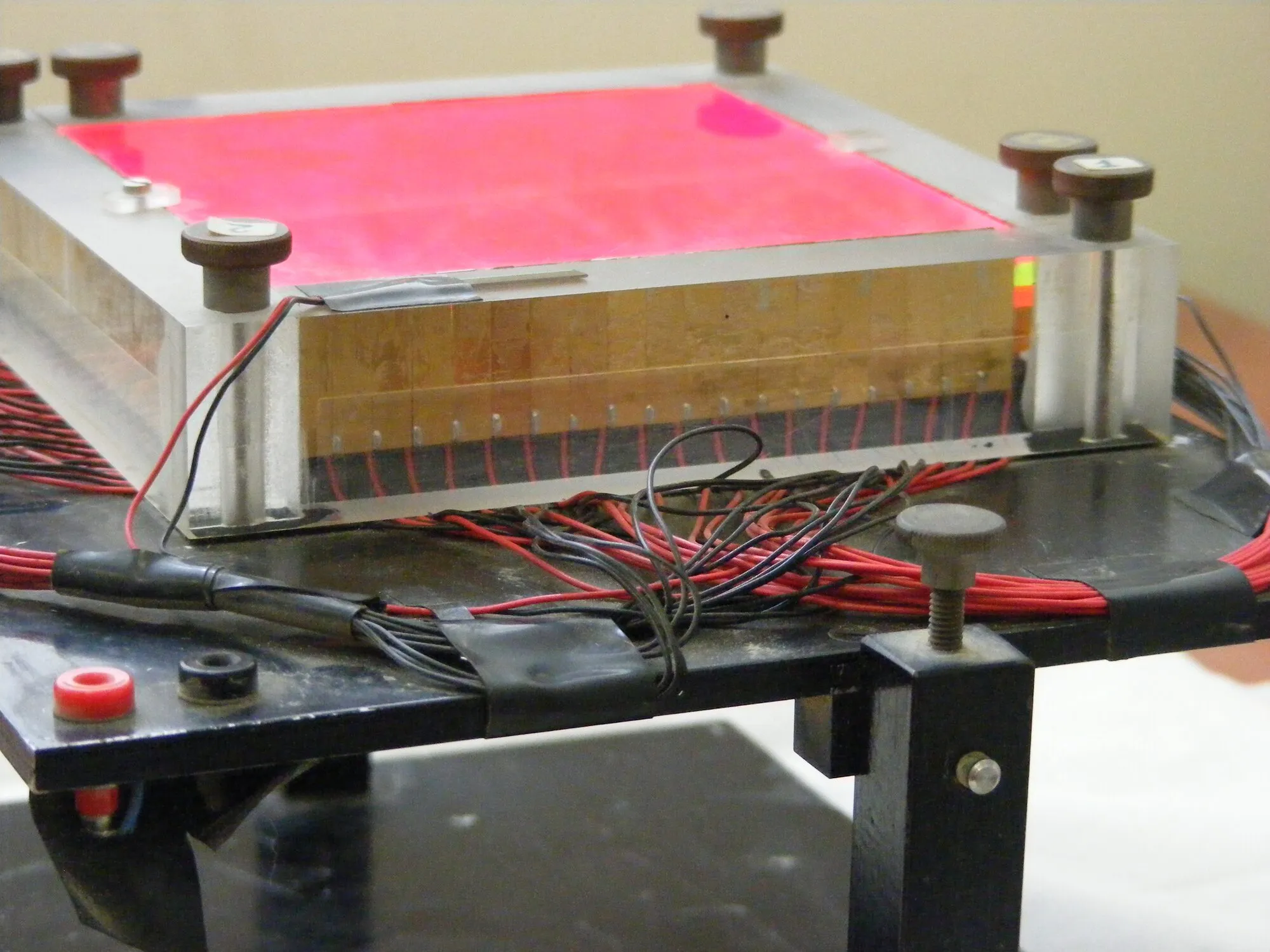
- カラー発光パネル(小型商業施設)。 ガラス中の染料は青と緑の光の一部を吸収し,シリコンセルのストリップに導き,残りは通過してガラスにマゼンタグローを与える。 In trials by the University of California, Santa Cruz, with a commercial grower, tomatoes under these panels showed little change in the number and weight of their fruit and used slightly less water (Loik et al., 2017). 製造者のソリカルチャーは、2012年に最初の商用発光太陽集光器を導入し、アメリカとカナダの温室にパネルを設置したと言う。単一栽培).
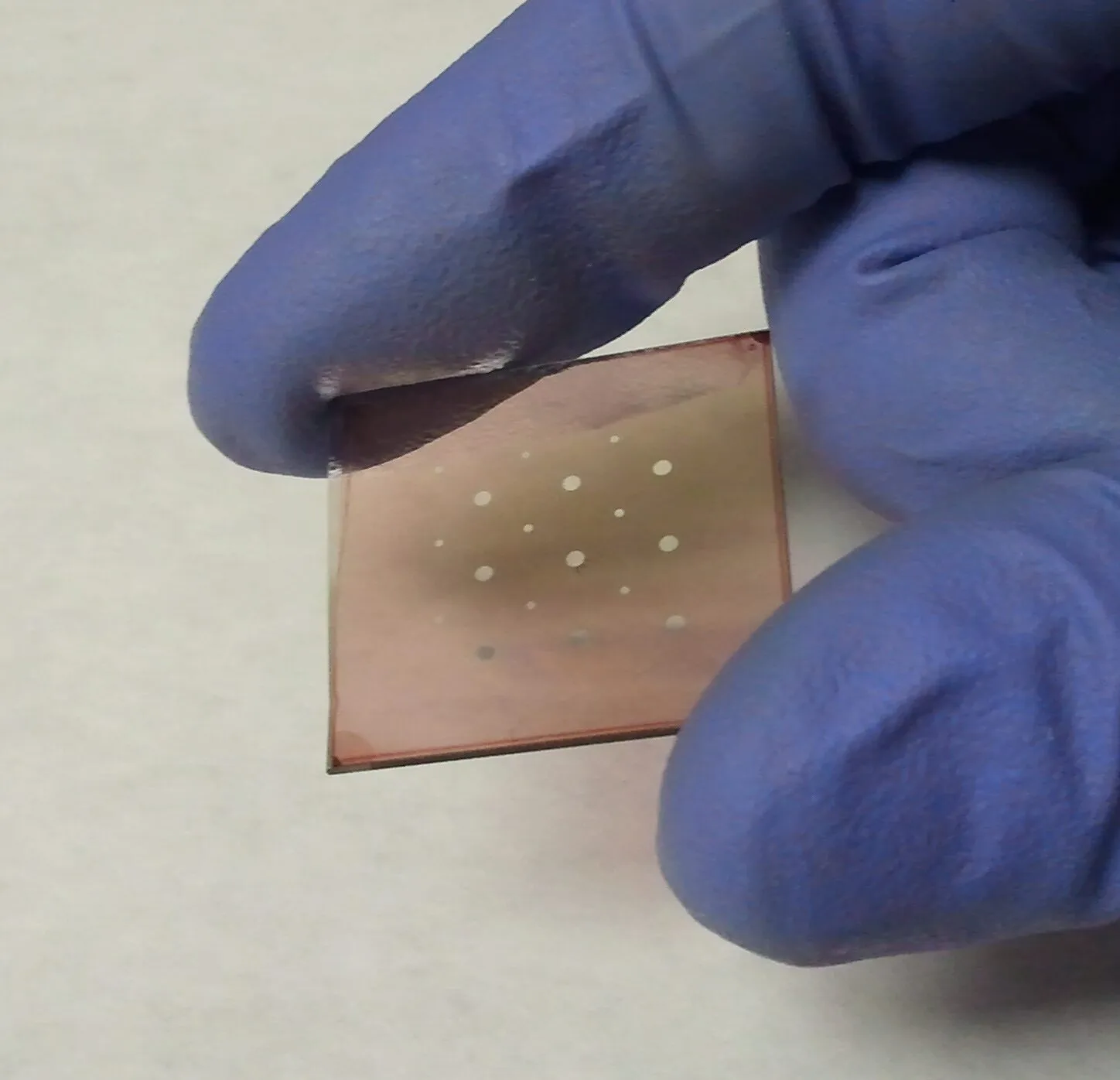
- 半透明有機太陽電池(実験室,パイロット)について述べた。 炭素系薄膜は主に深赤色と近赤外線光を吸収するように調整できる。 Researchers at North Carolina State University grew red leaf lettuce under filters made from three different organic cell materials and found no significant difference in fresh weight or chlorophyll (Ravishankar et al., 2021). Their energy model found that greenhouses roofed with such cells could make more energy in a year than they use in warm and moderate climates of the United States (Ravishankar et al., 2020). In the laboratory, a semi-transparent organic cell has reached 8.8% efficiency while letting 41% of visible light through (Bates et al., 2023). How long organic cells last outdoors is still the big open question (Traverse et al., 2017).
- 完全透明パネル(実験室,ファーストウィンドウ製品)。 これらは紫外線と近赤外線のみを吸収し,ほぼ透明ガラスのように見える。 The first, in 2011, turned 1.3% of sunlight into electricity while passing more than 65% of visible light (Lunt and Bulović, 2011). 例えば ユビキタス・エネルギー 窓の透明な太陽光保護塗料を作りましょう また,これらの作物に対する実験結果は未発表である。
- 電気を発生しない光シフトフィルム(商用)。 量子ドットフィルムは ユビクアッド紫外線と青色光を赤に変えます 600nmと660nmの光を放射するフィルム下で生育したレタスは,単純なフィルム下よりも13%と9%多い食用乾物質を得た。パリッシュらによる2021年の研究). これは 作物が最も少なく使う色を 捕らえるトリックと同じだから
その他の会社は、自分たちのクレームを持って農場にガラスを売っている。 ギリシャのBrite Solar社は,紫外線を赤色光に変換すると言うナノコーティングを持つ半透明パネルを提供しており,透明度は30%から80%まで選択できる。ブライト・ソーラー). Insolight in Switzerland sells a crop cover that it says sends about 20% of the light to electricity and keeps 80% for the plants at a 1.6 hectare plant nursery (Insolight). これらは会社の自身の数字であり、独立した試験ではありません。
これが何になるか カラー選択パネルは農業用太陽光発電の最も優雅なアイデアであり,これまでの作物成績は期待に応えており,レタスやトマトはその下でもなくても良く育ち,レタスは光シフトフィルム下ではよく育った。 電気が問題だ A panel that leaves the crop most of the visible light has to live on ultraviolet and infrared, and today’s transparent and organic cells turn only a few percent to under 10% of sunlight into power, while commercial silicon panels have climbed from about 17% to just under 25% in ten years (Fraunhofer ISE, Photovoltaics Report, 2026). 発光,有機,透明の温室パネルに対する独立した公表コストは見つからなかった。 For a grower, the test is the one this page keeps coming back to: one season of weighed harvests and metered electricity under the new glass, beside an identical house without it.
どれだけかかる?
| オプション | 電気代 | 年月日・出典 |
|---|---|---|
| 高架農業用太陽光発電(4m以上)ドイツ | about €0.08 per kWh on average (8.15 euro cents), about 50% above ground-mounted solar | 2024, フラウンホーファーISEガイドライン |
| インタースペース農業用太陽電池 | about €0.06 per kWh on average (6.03 euro cents), slightly above ground-mounted solar | 2024年同じ |
| 農業用太陽光発電 | 0.06から0.10ユーロ/kWh | 2024年同じ |
| 地上設置型太陽光発電所に対する追加設置費用,アメリカ合衆国 | $0.07 to $0.80 per W (highest for crops under tall structures) | 2020、NREL, Horowitz et al. |
| アメリカ合衆国の公共事業規模の太陽光発電 | $0.04 to $0.10キロワット時 | June 2026, Lazard LCOE+ version 19 |
| ベンチマーク:建物の屋上ソーラー | 0.19ドルです 中央 | 私たちの ファンウォールモデル |
| 商業用・コミュニティ用屋上ソーラー発電所 | $0.09 to $0.20キロワット時 | ジューン 2026、ラザード |
テーブルの上に書いてある事は 屋上のベンチマークに比べて 農業用太陽光発電は安い電気ですが 通常の太陽光発電よりも高いです その場合は最も安いキロワット時ではなく,収穫に費やさないキロワット時である。 Fraunhofer notes that a farm using its own power, instead of buying electricity at 14 to 16 euro cents per kWh, saves 7 to 9 euro cents on each kWh it generates.
勝てる場所と 負けられる場所
勝ち取れるものは
- 熱帯・乾燥地域また,農業用水の供給源としては,雨水を利用した灌漑が有効である。
- 果物・野菜 すでに雹網や雨よけ、日陰布が必要な農家のために パネルは農家が支払うコストを代替します
- 耐陰作物・草原 クローバーグラス レタス ホウレンソウなどのハーブです
- 農地保護地 普通の太陽光発電所は許可されないでしょうし 農地を失うことに対するコミュニティの反対もあります
- 自給自足の農家 灌漑ポンプや冷蔵庫、搾乳機、乾燥機、電気機械などに使われています
勝てない
- 電気代の安さだけで 誰も農業をしたくない土地にある普通の太陽光発電所は いつも安価だ
- 日光に弱い作物が生育する光の一滴が収穫に重要な場所です
- 大型機械が自由に動く場所建物が高くて広いところでは 高価なのです
- 補助金や規則が 変装した太陽光発電所にする 密集したパネルの下で数頭の羊を放牧することは有用だが、このページで扱う土地共有利益ではない。
証明されたもの、可能性のあるもの、推測的なもの
Proven: that shared land can reach a land equivalent ratio well above 1 (160% and 186% measured at Heggelbach);that shade cuts yields of sun-hungry crops in normal years by around a fifth at 30% light reduction;日陰は暑く乾燥した環境で作物の生育に役立ちます高い建物は電気代を上げるということです
Plausible: that agrivoltaics improves crop resilience to heat and drought as the climate warms (supported by trials and modelling, such as simulated rainfed maize in northern Italy that yielded more and more steadily under panels (Amaducci et al., 2018));パネルはハグネットやプラスチックのカバーに代わり 果物を育てることができますthat Germany alone has room for about 1,700 GW of agrivoltaics on suitable crops (Fraunhofer ISE, 2024).
推測: 「世界のエネルギー需要を 1%以下の耕作地で補うことができる」という^ 2019年のアニメまた,25〜30年間の土壌と農業経済に及ぼす長期的影響,現地試験されていない非常に異なるパネル形状下での作物の反応についても検討した。
開放的な研究課題
- Which crops, in which climates, keep at least 80% of their yield under 20 to 40% shade, over ten seasons, not one or two?
- 作物の重要な段階で光を通すために回転する追跡パネルは,固定パネルよりもコストが安くなるかどうか。
- 雨水を集めて,どのように分散させればよいかを検討した。
- 農場で30年以上の高い構造物を維持するために実際にどれだけの費用がかかるか,そして保険と機械にどう影響するか。
- どのようにして、太陽光発電所を招待しないでパネル下での「本当」の農業を計算するか。
- 農家、土地所有者、エネルギー開発者のどちらが価値を所有するか?
実用的なプロトタイプには
For a new agrivoltaic idea (a new structure, a new tracking strategy, a new crop system), a working model means a real crop and real panels, measured against a reference plot without panels, for at least one full season.
| 位相 | ワーク | 証明する事は | 粗費 | タイム |
|---|---|---|---|---|
| 0.設計研究 | Light and shade simulation over the year, crop model for the chosen crop, structure and cost estimate | 紙の切り抜きに十分な光を保つ設計 | $10k to $30k | 2~3ヶ月 |
| 1)小プロット試験 | 開放型参照区画を持つ複製区画上の数kWのパネル;光センサ(PAR),土壌水分,収穫時の収量,電力計測。 | 測定した作物収量と電力,第一土地当量比 | $40k to $120k | 1生育期 |
| 2)多季実験 | 50 to 200 kW over a working field with a farmer, two or more seasons, agronomist-led sampling | 年間変動,機械利用,農家受容度 | $250k to $600k | 2年から3年 |
| 3.商業パイロット | 許可、接続、構造認証、作物保険 | 銀行に貸し付けられるプロジェクト | 大きさによって | 1年から2年 |
フェーズ0から2の費用は $300,000 to $750,000主に鉄鋼と農学のためです これは私たちの予測で、引用ではありません。
誰が必要なのか
- 農学者 作物を選び 再現可能な区画を設計し 収量と品質を測定します
- 太陽光発電システム設計者 二面性と追跡システムに熟知しており 影モデル化も行っています
- 構造工学者 風や雪の荷重を受ける 高い長大な構造物に適しています
- 農家パートナー 多年間の試験に必要な場所、機械、忍耐力を持って
- 水文学者 雨の分布や土壌水分、灌漑の節約に役立ちます
- 農業経済学者・土地利用法律家 実際に試してみました
もっといい考えは?
もしかしたら安い構造や 日陰を好む作物システム、 あるいはパネルを移動する 賢い方法があるかもしれない。 Local Solar System財団のメンバーの中には、強力なエネルギーアイデアのためにピッチを聞くことができる人がいるかもしれない。 ピッチングするには、アイデアは実際にパワーを生み出す、機器で測定された、実在のモデルが必要である。 論文のアイデアも歓迎する。物理学と数値が確実なら、ここでウェブサイトに公開できる。 実用化モデルがないと資金調達は非常に困難であり,資金調達やリターン,導入を約束することはできない。
For agrivoltaics, the cheapest measurement that counts as a working model is one growing season of a small plot under panels next to an identical open plot, with light sensors, the harvest weighed and the electricity metered. That gives a first measured land equivalent ratio. それを 貢献フォーム に送り、アイデアレーダー の他のアイデアと比較してみてください。 Sibling approaches: floating solar uses water surfaces instead of fields, and PV-thermal roofs make roofs do two jobs.
ソース
- ^ 『アニメイトタイムズ』2017年。 Harvesting the sun for power and produce: agrophotovoltaics increases the land use efficiency by over 60 percent. ヘッゲルバッハの初年度結果を発表
- ^ 『アニメイトタイムズ』2019年。 農業用太陽光発電:2018年の暑い夏に高収穫量. 報道発表
- トロムスドルフet al. (2024). 農業用太陽光発電:農業とエネルギー転換のための機会。 また,ドイツに対する指針についても述べた。https://www.ise.fraunhofer.de/content/dam/ise/en/documents/publications/studies/APV-Guideline.pdf), 3版。 フランケンシュタインの戦い
- Weselek,A.,Ehmann,A.,Zikeli,S.等。 (2019). 農業用太陽光発電システム:応用,課題,機会。 レビュー Agronomy for Sustainable Development 39, 35.
- Dupraz,C.,Marrou,H.,Talbot,G.等。 (2011). 太陽光発電パネルと農作物の組合せによる土地利用の最適化:新しい農業用太陽光発電方式へ。 再生可能エネルギー学会誌,36(10),2725‐2732。.
- Barron‐Gafford,G.A.,Pavao‐Zuckerman,M.A.,Minor,R.L.らによる報告。 (2019). 農業用太陽電池は乾燥地帯における食料エネルギー水の関係を通じて相互利益をもたらす。 Nature Sustainability 2, 848-855.
- アマドゥッチ,Yin,Colauzziらの報告を紹介した。 (2018). 農業用太陽光発電システムの開発を行った。 応用エネルギー220,545-561.
- Adeh,E.H.,Good,S.P.,Calaf,M.,Higgins,C.W. (2019). 太陽光発電の潜在電力は農地上空で最大となる。 Scientific Reports 9, 11442.
- Horowitz,K.,Ramasamy,V.,Macknick,J.,Margolis,R.の報告を示した。 (2020). 二重用途太陽光発電設備の資本費用:受粉者に優しい植生,放牧,作物を持つ地上型太陽光発電システムの2020年ベンチマーク. NREL/TP-6A20-77811.
- Lazard (June 2026). Levelized Cost of Energy+, version 19: utility solar $40 to $98 per MWh;community and C&I solar $88 to $197 per MWh.
- マクリー (1971). 作物植物における光合成の作用スペクトル,吸収率及び量子収率について述べた。 農業気象学9,191‐216.
- ASTM G173-03 基準大気質量1.5のスペクトルロッキー山脈国立研究所(旧NREL)を通じて バンドごとのエネルギー分配は大域傾斜スペクトルの積分である。
- Traverse,C.J.,Pandey,R.,Barr,M.C.,Lunt,R.R. (2017). 分散型応用のための高透明度太陽光発電の出現。 ネイチャーエネルギー2,849-860.
- ^ a b c d e f g h i j k l m n o p q r s t u v w x y z aa ab ac ad ae af ag ah ai aj ak al am an ao ap aq at aq at aq at aq at aq at aq at aq at aq at aq at aq at aq at aq at aq at aq at aq at aq at aq at aq at aq at aq at aq at aq at aq at aq at aq at aq at aq at aq at aq at aq at aq at aq at aq at aq at aq at aq at aq at aq at aq at aq at aq at aq at aq at aq at aq at aq at aq at aq at aq at aq (2018). ヨーロッパの主要な商業用太陽光発電ハウス内部の太陽放射分布を評価し,比較した。 Renewable and Sustainable Energy Reviews 94, 822-834.
- また,このような状況下での生体内の細胞の機能を解明するために,細胞外の細胞間相互作用を調べる方法として,分子生物学的手法が用いられている。 (2017). 波長選択型太陽光発電システム:食糧エネルギー水ネクサスにおける植物生育のための温室の電力供給。 地球の未来5 1044-1053.
- Ravishankar,E.,Charls,M.,Xiong,Y.らによる研究結果を報告した。 (2021). 有機太陽光発電ハウスにおける作物生産とエネルギー収穫のバランス。 Cell Reports Physical Science 2, 100381.
- Ravishankar,E.,Booth,R.E.,Saravitz,C.らの研究結果を紹介した。 (2020). 半透明有機太陽電池を組み込んだネットゼロエネルギー温室の実現。 Joule 4, 490-506.
- Bates,M.,Mallado,C.,Yang,C.K.,Herrera,C.K.,Lunt,R.R. (2023). 層間蒸着に基づく高効率透明及び半透明太陽電池について述べた。 Solar RRL 7, 2200962.
- Lunt,R.R.とBulovich,V. (2011). 窓用及びエネルギー回収用の透明な近赤外有機太陽電池について述べた。 Applied Physics Letters 98, 113305.
- Parrish,C.H.,Hebert,D.,Jackson,A.らの研究を紹介した。 (2021). 作物収量を向上させるための量子ドットによるスペクトル品質の最適化について述べた。 Communications Biology 4, 124.
- Fraunhofer ISE (2026). Photovoltaics Report, version of 14 July 2026.
- 会社情報(独立した試験ではなく、会社自身の発言): 単一栽培; ユビキタス・エネルギー; ユビクアド、ユビグロ; ブライト・ソーラー; インソライト.
- Local Solar System 基礎(2020年、モデル更新2026年)。 ファンウォール:開放型屋上ソーラーベンチマークです