
地熱ヒートポンプ
A few metres down, the ground stays at the same mild temperature all year. A heat pump can use that steady warmth to heat a home with a quarter of the electricity a heater would need. The physics is excellent; the price of the hole is the problem.
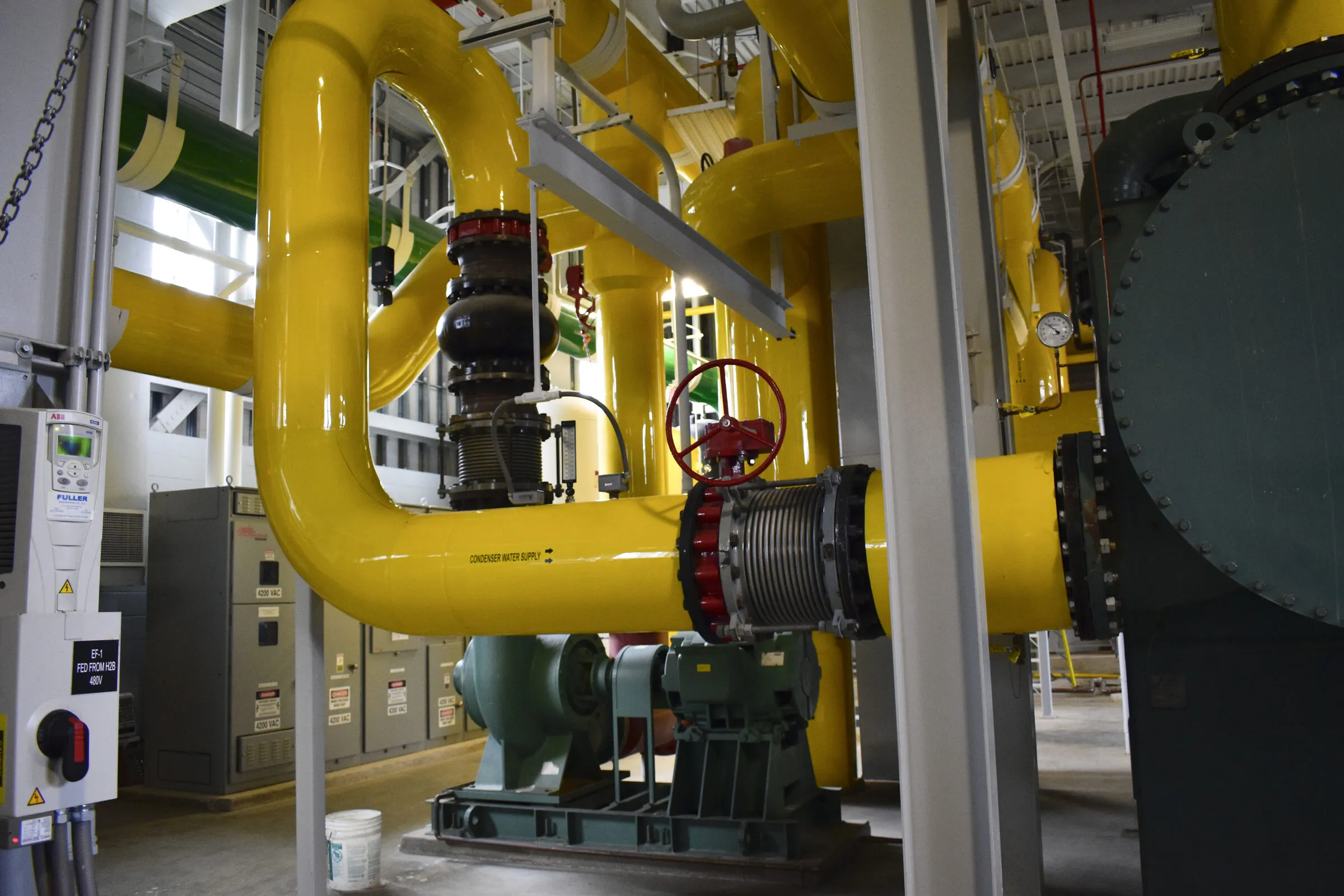
Paul Gipe / Wikimedia Commons (CC BY-SA 4.0)
In 2017 Ball State University in Indiana shut the last of the four coal-fired boilers that had heated its campus for decades. In their place it drilled about 3,600 boreholes under its grounds and connected them, through two energy stations, to heat pumps that warm and cool the campus. The system cost about $65 million, and the university committed to cutting its greenhouse gas emissions by nearly 80,000 tons a year (Wikipedia, Ball State University).
地熱ヒートポンプは新しいエネルギー源ではない。 It is a multiplier: it uses electricity to move heat that is already in the ground into a building, and delivers three to five units of heat for each unit of electricity it uses (IEA, 2022). 成熟,信頼性,静音である。 また、設置費用も高く、このページでは物理的なものと同じくらいコストに時間を費やしている。
何だ?
A ground-source heat pump has three parts: a ground loop of plastic pipe buried in trenches or dropped into boreholes, filled with water and antifreeze; a heat pump the size of a fridge, usually indoors; and a heat distribution system, such as radiators or underfloor heating. 冬季にはループ内の流体が地中から熱を取り込み,ヒートポンプはそれを家庭用に35〜55°Cまで濃縮する。 夏季には同じ機械が逆方向に走行し,建物を冷却し地中に熱を戻すことができる。
庭園を持つ小規模住宅では,水平ループを1〜2mの深さで敷設することができる。 Most other buildings use vertical boreholes, typically 15 to 150 m deep; a detached house needing 10 kW of heat might need three boreholes of 80 to 110 m (Wikipedia, Ground source heat pump). 地下水の流れを把握するために,地下水の流れを観測するための装置を開発した。 熱ネットワーク多数の建物をそれぞれ独自のヒートポンプで結ぶ環境温度水ループ。
仕組み
ヒートポンプは冷蔵庫の裏返しである。 作動流体(冷媒)は,地上ループに接続した熱交換器内で低温で蒸発し,熱を吸収する。 圧縮機は蒸気を押し上げ,その温度を上昇させる。 In a second heat exchanger it condenses and releases that heat into the water going to the radiators. 膨張弁が圧力を下げ,サイクルは再開する。
The multiplier. The heat delivered divided by the electricity used is the coefficient of performance, COP. ヒートポンプができる最高のことは カーノーCOPです
COP_max = T_hot / (T_hot − T_cold)ケルビンで表されます
地下水の温度を40°C(313K)に設定し,熱交換器損失後5°C(278K)で供給すると,以下の結果が得られた。 313 / 35 ≈ 8.9. 実際の機械は 半分 約4.5倍です 二つの事がこの方程式から直接導かれる。
- The lift matters more than anything. Every degree between the source and the radiators costs efficiency. Raising the flow temperature from 35 °C to 55 °C drops our modelled ground-source COP from about 4.5 to 3.0. ヒートポンプの特徴は,熱源を温度により調節できることである。
- 温度源が重要である。 外気は,熱が最も必要な時に一番冷たい。 At −7 °C and 55 °C flow, an air-source unit in our model falls to about 2.3; the ground, at about 10 °C, gives 3.0 at the same flow temperature. それが地面の全ての利点です。
The ground is a slow battery. A few metres down, daily swings vanish; by 10 to 20 m the ground sits close to the local average annual air temperature, and deeper it warms by about 0.025 °C per metre (Wikipedia, Ground source heat pump). 地球の熱は、地球の核ではなく、太陽が表面を暖めていることからほとんど来ている。 熱を抽出するだけのボアホールは周囲の岩石を徐々に冷却し,密集したボアホールフィールドは地盤が回復するよりも速く冷却することがある。 夏には建物を冷却して熱を取り戻すことでバランスを保つ。 これは,暖房負荷と冷房負荷を混合した共有ネットワークがうまく機能する理由である。
The seasonal number. The COP on a spec sheet is measured at one test condition. 重要なのは季節性能係数(SPF)である:全年間にわたって供給された熱を,ポンプやバックアップヒータを含む使用した全電力で割った値である。 実験室のCOPは,現場試験で測定したSPFよりも低い。
限界
- 物理学 Carnot限界は与えられたリフトに対するCOPを上限とし,冷媒や圧縮機がそれから逃れることはない。 実際の機械は既にその半分程度であり、最良のものは少し以上です。
- Ground capacity. Each metre of borehole can deliver only a few tens of watts of heat, depending on the rock and groundwater, so a building’s heat demand sets how many metres must be drilled. 掘削は最大の単一コストである。
- 空間とアクセス 地下掘削装置はアクセスが必要で,密集した都市ブロックや登録建物,小さな土地には掘削場所がない場合がある。
- 建築の質 漏れ屋根の場合,小型ラジエータを用いた高流量温度が必要であり,それによってCOPが低下する。
- 電気料金 運転コストは,電気の価格を代替燃料の価格で割った値に依存する。 Where electricity costs more than three times as much as gas per kWh, as in the UK, the heat pump needs a yearly COP near 3 just to break even on running costs.
- スキル 良好な設計とコマンドインストールは実際のSPFと大きな差がある。
実際のプロジェクト、測定
| プロジェクト | どこ、いつ | スケール | 報告内容 |
|---|---|---|---|
| フラウンホーフェルISE現場試験 | ドイツの1850年から2001年までに建設された既存住宅、2017年からのモニタリング | 住宅の空気源と地面源 | Yearly SPF: ground source about 4.1 (range about 3.3 to 4.7), air source about 3.1 (range about 2.5 to 3.8) (Fraunhofer ISE) |
| ボール・ステート大学地熱システム | Muncie, Indiana, USA, completed 2017 | About 3,600 boreholes, two energy stations, about $65 million | Replaced all four coal-fired boilers; the university committed to nearly 80,000 tons a year less greenhouse gas (Wikipedia) |
| エバーソース地熱パイロット | Framingham, Massachusetts, USA, 2024 | About three dozen homes and municipal buildings on a one-mile loop | First utility-run thermal network in the US; a school administration building, a fire station and public housing among the users; about $18.6 million; the network is planned to double in size (PBS NewsHour, 2025) |
| コロラド大学メサ校地理交換 | グランドジャンクション | 16 buildings, 1.2 million square feet, on a shared ambient loop | Provides 90% of the campus heating and cooling; the university reports $1.5 million a year of energy savings (US DOE case study) |
| ボイラー改修計画 | England and Wales, 2022 to 2026 | 82,651 grants paid for heat pumps and biomass boilers by April 2026 | 地熱は少数で,98%が空気‐水ヒートポンプ用であった。2026年) |
Europe’s fifth-generation heat networks, ambient-temperature loops that share heat between buildings through individual heat pumps, have been reviewed across dozens of sites (Buffa et al., 2019). これらの効率は,加熱と冷却がどれだけバランスを取るかに大きく依存する。
どれだけかかる?
A heat pump does not generate electricity, so the comparison with our site-wide benchmark (rooftop solar at about $0.19 per kWh in the Fan Wall model, within Lazard’s June 2026 range of $0.09 to $0.20 for commercial rooftop solar) is indirect: a ground-source heat pump turns each kWh of that solar electricity into about four kWh of heat. The direct competitor is a gas boiler, and the fair measure is the cost per kWh of heat, including the installation.
We use UK figures because they are public and recent: median installed costs from the Boiler Upgrade Scheme for January to March 2026 (£27,352 for ground source, £13,100 for air source, both including VAT) (DESNZ); the £7,500 grant; price-cap unit rates for October to December 2026 of 26.32p per kWh of electricity and 7.97p per kWh of gas (Ofgem); the Fraunhofer field SPFs; a home using 12,000 kWh of heat a year; and 20 years at a 7% real discount rate, as on our wind page. For the gas boiler we assume £3,000 installed and 90% efficiency.
| 暖房 | 設置費用 | Running cost per kWh of heat | 総費用/kWh熱無補助 | 7500ポンドの寄付金で |
|---|---|---|---|---|
| ガスボイラー | 3000ポンド(推定) | 8.9p | 11.2p | 資格がない |
| Air-source heat pump, SPF 3.1 | £13,100 | 8.5p | 18.8p | 13.9p |
| Ground-source heat pump, SPF 4.1 | £27,352 | 6.4p | 27.9p | 22.0p |
計算 常時料金と保守料は省略されており、オプション間で同じである。
The table is uncomfortable, and it should be. At UK prices, a ground-source heat pump for a single home costs about twice as much per kWh of heat as gas, even with the grant, almost entirely because of the installation. 運転コストは既に低い。 画像が変化するとき:
- 電気はガスより安い電力会社は,電力の供給を行うために,電力会社と電力消費者が協調して運用するシステムを構築し,その結果,電力会社の利用者数が増加した。
- The ground loop lasts longer than 20 years. Well-installed boreholes are expected to outlive several heat pumps; spread over 50 years instead of 20, the yearly cost of the loop falls by about a quarter.
- Many buildings share one borefield, cutting design, mobilisation and drilling cost per home, and letting cooling loads recharge the ground.
- **代替は油,LPG,直接電気暖房である。**ガソリンよりも高価なものです
- 建物は暖房と同様に冷却が必要ですほとんど追加費用がかからない
勝てる場所と 負けられる場所
勝ち取れるものは
- Campuses, hospitals, offices and new housing estates, where one borefield serves many buildings and both heating and cooling are needed.
- ガスを使わない家庭や農場 石油やLPGに取って代わるものです
- 寒冷気候空気ヒートポンプは最も寒い週間でも苦労し 地下温度を維持する
- 街路はガス網を再建する フレミングハムのような公共事業が運営する熱ネットワークは、古くなったガスパイプを共有水ループで置き換えることができる。
- 新築地下水の流れ温度を低く保つために,床暖房が設置されている。
勝てない
- Single existing homes where gas is cheap and electricity dear, as the cost table shows, unless the installation price falls sharply.
- 密集した古い街区で ドリルのスペースがない
- 断熱性が悪くラジエーターの小さい建物建物が改善されるまで
- 電気の源として 電気を使うが、作らない。
証明されたもの、可能性のあるもの、推測的なもの
テスト済み: 地上発電システムの特徴は,Carnot限界と低温揚力の重要性,安定した地下温度,現場で測定された年間SPFが4付近にあること,スウェーデン,スイス,ドイツおよび北米で数十年間信頼できる運転を行っていること,石炭やガスを置き換えるキャンパス規模のシステムである。
可能性: 地下熱を一般の街路に利用可能にする 電力会社所有の熱ネットワーク より良い装置、標準的な設計と規模による 安価な掘削 夏の熱を冬用に貯蔵するボアフィールド
推測: ヒートポンプは現場でカルノー限界の60%を大幅に超え,深い井戸(500m以上)は密集都市用に十分安価になっている。
開放的な研究課題
- 安いドリルだ 地上源システムの最大のコストは掘削である。 より高速なリグ,浅い密度アレイ,基礎のエネルギー杭,水平方向掘削はすべて実際のコストデータを必要とする。
- ネットワーク設計 共有ループとボアフィールドのサイズをどうして決めれば,数十年間にわたって暖房と冷却がバランスを保ち,誰が所有するべきか。
- 実際の性能を規模で示した。 Framinghamのようなネットワークの独立したモニタリング:年間SPF,ポンプエネルギー,地下温度の動向と顧客の請求書。
- 低温度加熱性冷媒 プロパンとCO2ヒートポンプは高効率で,室内における安全な設置が可能である。
- グリッド効果 数百万のヒートポンプが冬季ピーク需要をどう変え,地熱システムが空気源に比べてどうそれを減らすか。
- 改造パス また,住宅の種類別に断熱材,ラジエータ改造,ヒートポンプの最安値を求めた。
実用的なプロトタイプには
ヒートポンプ自体は成熟しており,安価な地上ループ,共有ネットワーク,スマート制御などの有用なアイデアがある。 実用モデルは計量電力入出力を持ち,計量熱を供給する。
| 位相 | ワーク | それが可能にする決定 | 粗費 | タイム |
|---|---|---|---|---|
| 1.デスクスタディ | 実際の建物の熱需要,地質調査から得た地盤データ,標準ソフトウェアによるループ設計,ドリラーからのコスト提案 | Is the idea cheaper per kW than today’s boreholes? | $5k to $20k | 2~3ヶ月 |
| 2. Test loop | One borehole or one new ground-exchanger design with a thermal response test, a small heat pump, heat and electricity meters, ground temperature sensors | Measured heat per metre and SPF over a winter | $30k to $80k | 6ヶ月から12ヶ月 |
| 3.ストリートパイロット | 5 to 20 buildings on a shared loop, a year of metered data, customer bills | Real cost per home and per kWh of heat | $0.5M to $3M | 18から24ヶ月 |
誰が必要なのか
- 地質学者・水文地質学者 地表を読み取るために使われています
- 掘削業者 実際のコストを分け合うことにしたいと思っています
- ヒートポンプ・HVAC技術者 設計、運用、監視に必要な資金を提供します
- 地域エネルギー・公共事業計画者 共有ネットワークや所有モデルを作りました
- 建築物理学者 低温エミッタを用いた 後付けシーケンシングに使われています
- 経済学者・関税設計者 熱の価格を公平にし 柔軟性を報酬にする必要があります
もっといい考えは?
財団のメンバーの中には 強力なエネルギーアイデアを 聞くことができる人がいるかもしれない アイデアをピッチするには 実際に電力を生み出すこれは,計測した熱を供給するモデルであり,その出力と電気使用量が計器に記録される。 論文のアイデアも歓迎する。物理学と数値が確実なら、ここでウェブサイトに公開できる。 しかし,実用的なモデルがないと資金調達は非常に困難であり,ここでは資金調達やリターン,導入の約束など何もない。
Send your idea through the contribution form with the problem it solves, the physics check, a rough cost per kWh of heat, and the cheapest test that could prove it wrong. 実験モデルがある場合は,その測定結果と測定方法を含める。 あの エネルギー源ページ これと他のアイデアを比較します
ソース
- ウィキペディア ボール・ステート大学地熱システムは2017年に完成した。
- IEA (2022). ヒートポンプの未来.
- フランケンシュタインの戦い 既存建物におけるヒートポンプの実験.
- ウィキペディア 地熱発電地熱の変化は,地下水温と深さに影響される。
- エネルギー安全保障・ネットゼロ部(2026年)。 Boiler Upgrade Scheme statistics, April 2026, tables Q1.1A and 1.1.
- Ofgem (2026). Energy price cap unit rates, 1 October to 31 December 2026.
- PBS NewsHour (2025). 地熱エネルギーの利用を促進するために、マサチューセッツ州で地熱発電所を建設した。.
- アメリカ合衆国エネルギー省。 地熱ヒートポンプ事例研究:コロラドメサ大学.
- Buffa,S.,Cozzini,M.,D’Antoni,M.,Baratieri,M.,Fedrizzi,R. (2019). 地域冷暖房システムの新しい技術として,地域熱供給と地域冷却を組み合わせた第5世代地域冷暖房システムが注目されている。 Renewable and Sustainable Energy Reviews 104, 504-522.
- Staffell,I.,Brett,D.,Brandon,N.,Howkes,A. (2012). 家庭用ヒートポンプの概要を紹介した。 エネルギー環境科学5, 9291.
- Lazard (June 2026). Levelized Cost of Energy+, version 19.
- Local Solar System ファウンデーション The Fan Wall open model: the rooftop solar benchmark of $0.19 per kWh.