
Small hydro and in-pipe hydro
Water running downhill is the oldest machine power there is. A small turbine in the right stream, weir or water main makes electricity day and night for decades. The catch is that most places have far less of it than people hope, and one equation tells you how much.
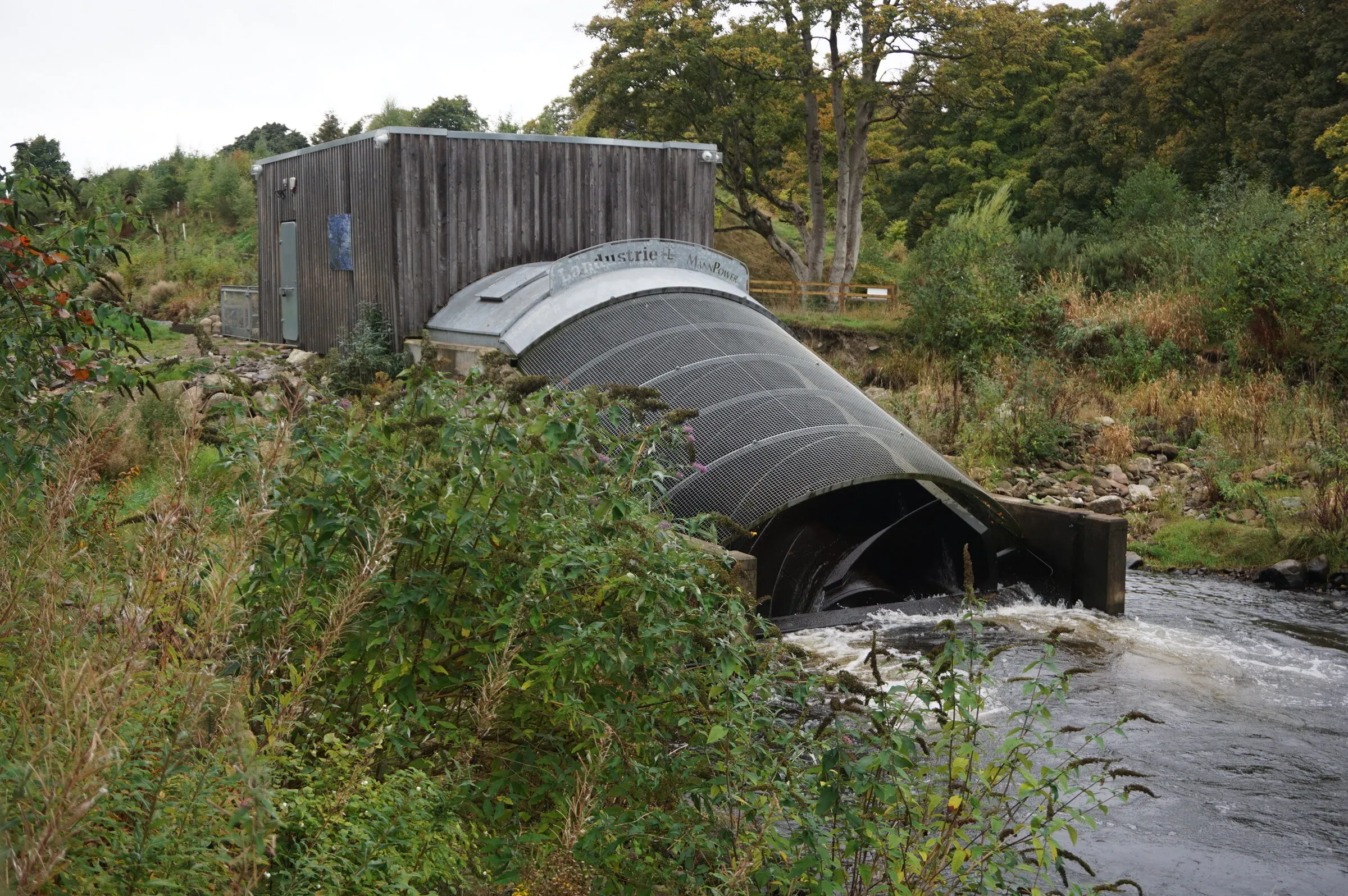
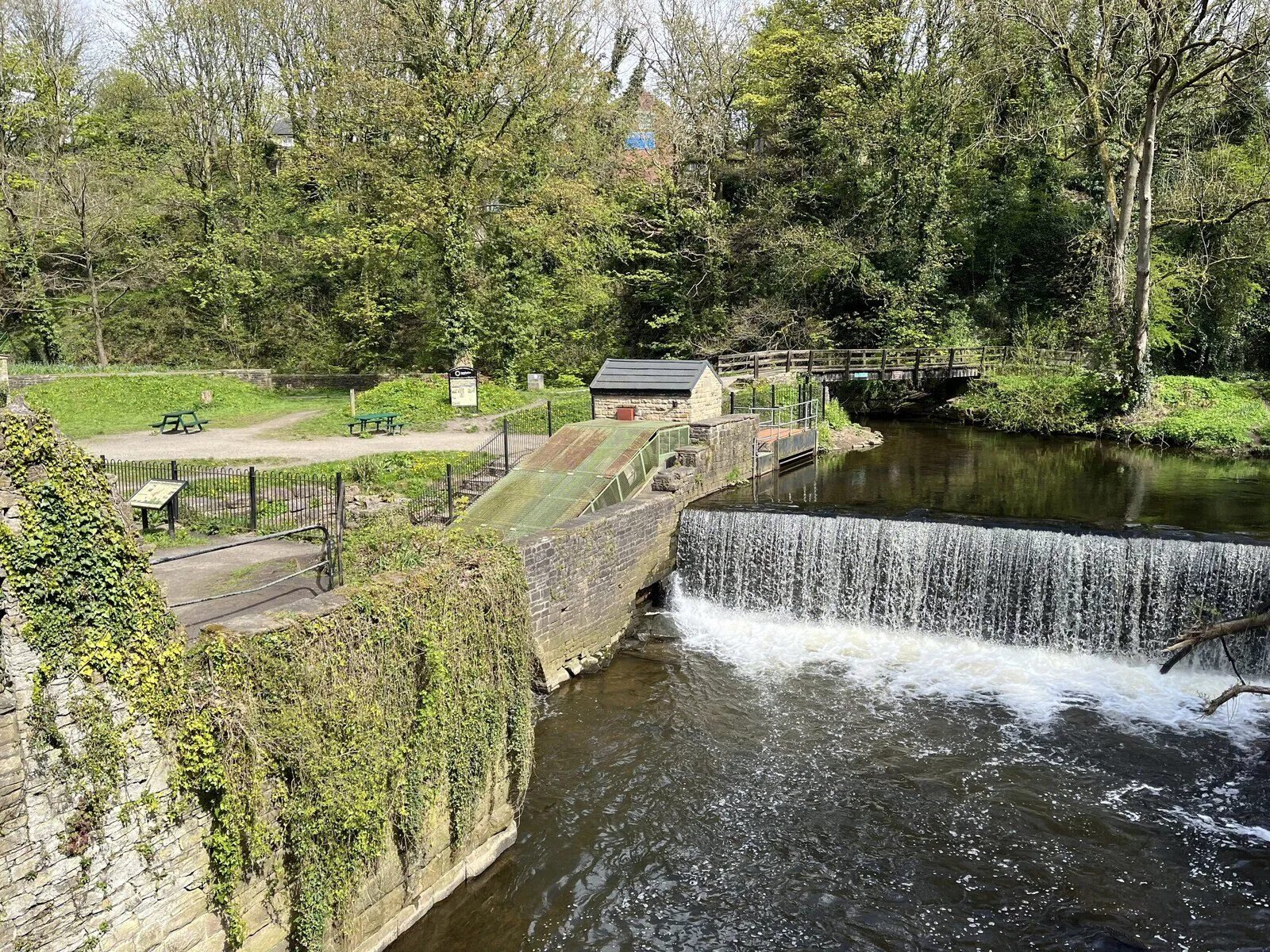
Ian S, via geograph.org.uk and Wikimedia Commons (CC BY-SA 2.0)
Before steam, mills along every river turned water into work. Many of their weirs and channels are still there. Hydropower is still the largest source of renewable electricity on Earth, about 15% of the world’s electricity in 2023, mostly from large dams (Hydroelectricity). This page is about the other end of the scale: turbines of a few kilowatts to a few megawatts in streams, old mill weirs, irrigation canals, and the pipes that carry drinking water to cities.
As on our Fan Wall research page, we start with the physics, then look at what real schemes measure and what they cost against our benchmark, a rooftop solar panel at about $0.19 per kWh. The short version: small hydro is proven, long-lived and runs at night, and a good site can beat rooftop solar comfortably. But power is simply flow times drop, most streams and pipes offer only a few kilowatts, and the fixed costs of permits, civil works and fish protection sink many small schemes. In-pipe hydro makes sense only where pressure is being thrown away anyway.
What it is
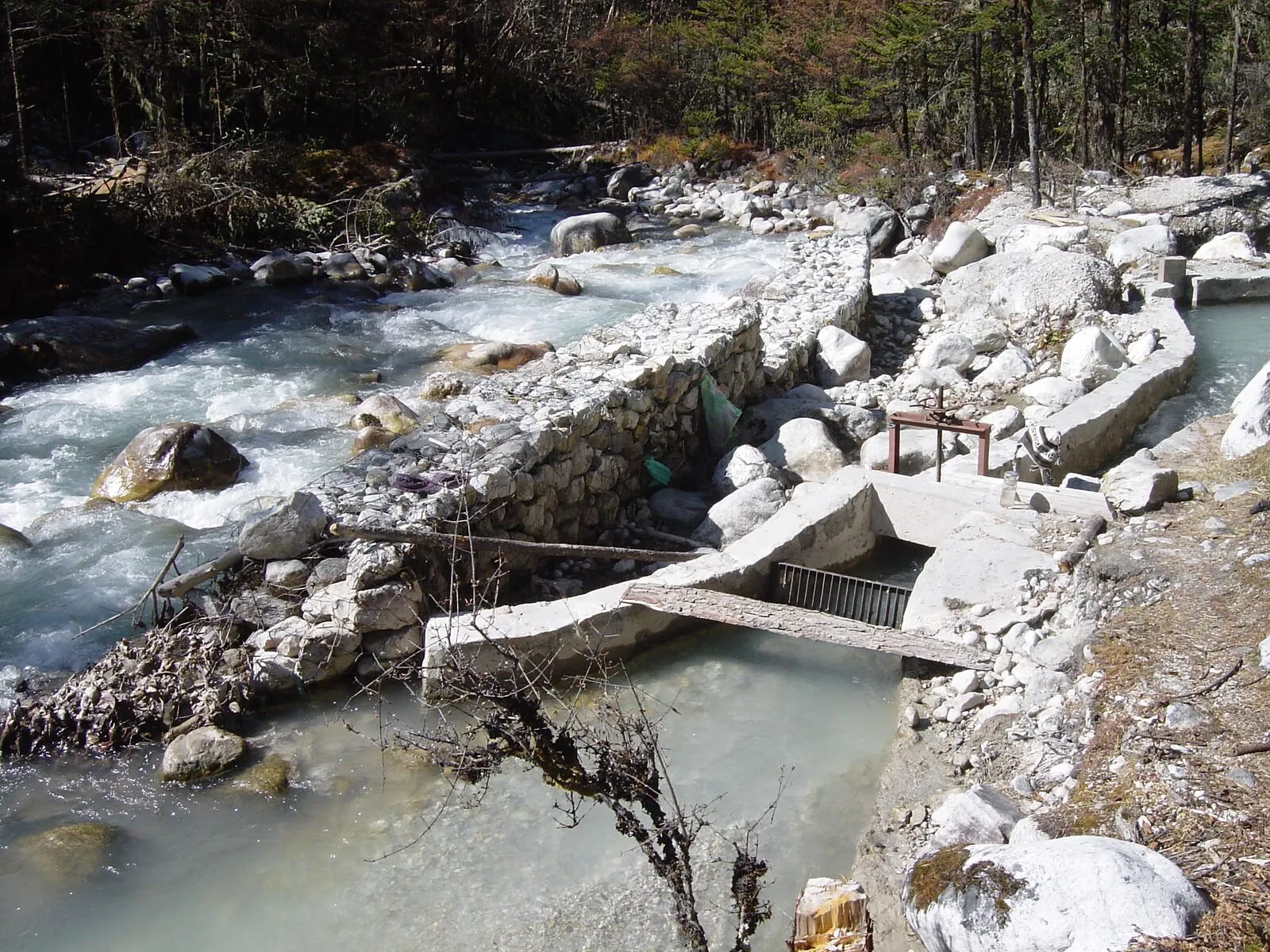
“Small hydro” covers a range of machines, usually classed by size: small up to about 10 MW, mini below 1 MW or 500 kW depending on the country, micro below 100 kW and pico below 5 to 10 kW (Small hydro; Micro hydro). Almost all of it is run-of-river: instead of a reservoir, a low weir diverts part of a river through a turbine and returns it downstream.
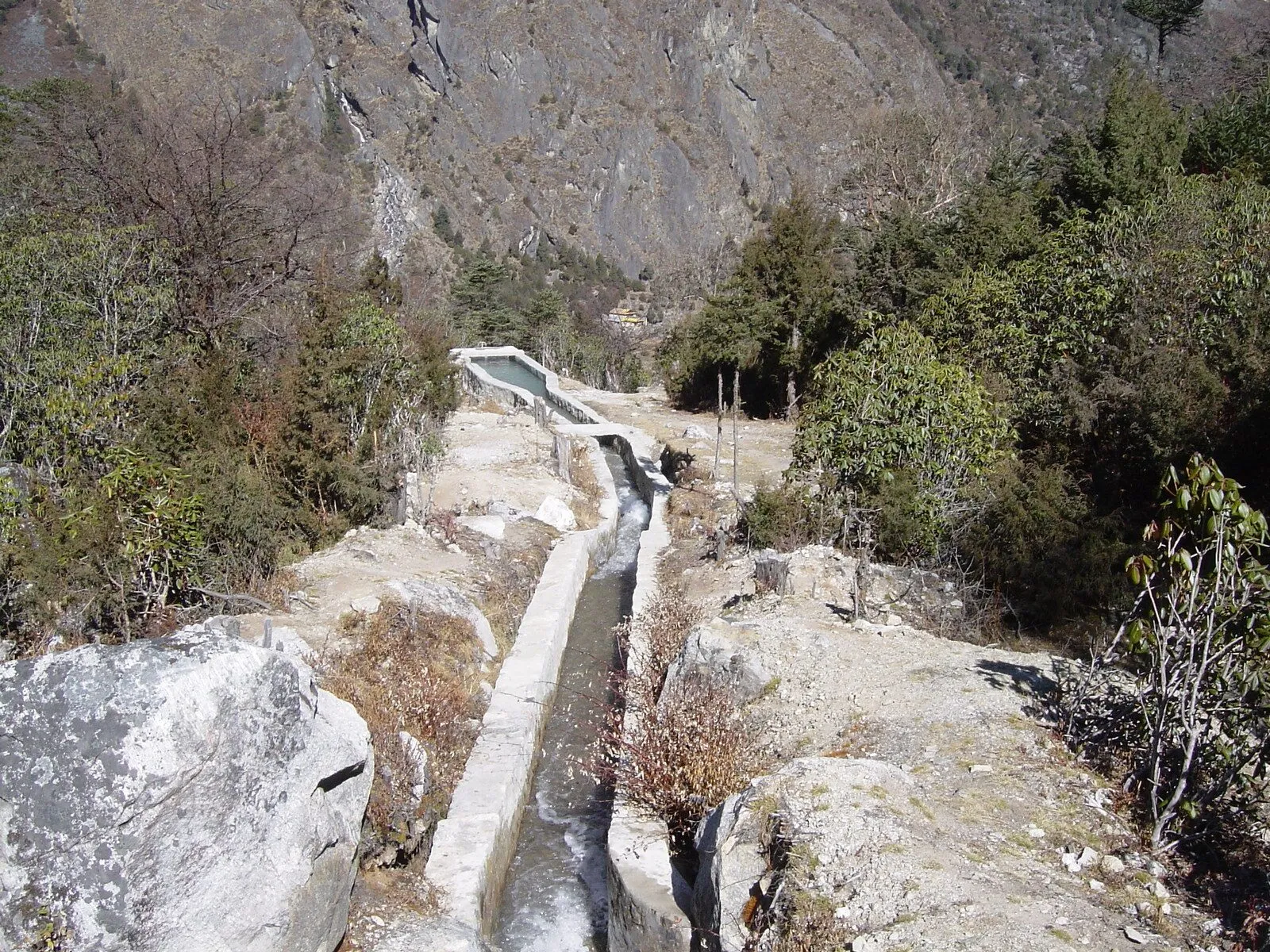
In-pipe or conduit hydro puts turbines inside water infrastructure that already exists: water mains running downhill from a reservoir, the valves that cut pressure before water reaches homes, irrigation canals with drops, and the outfalls of treatment works. No new dam and no new river crossing, which is why the United States exempted conduit projects up to 5 MW from federal licensing in 2013.
How it works
The one equation. A hydro turbine turns the potential energy of falling water into electricity. The power is P = ρ × g × Q × H × η, where ρ is the density of water (1,000 kg per cubic metre), g is gravity (9.81 m/s²), Q the flow in cubic metres a second, H the head, or height the water falls, in metres, and η the efficiency of turbine, generator and pipework together. Put plainly: every cubic metre a second falling one metre carries 9.81 kW. Large turbines convert over 90% of it; small ones typically 50 to 85% (Micro hydro).
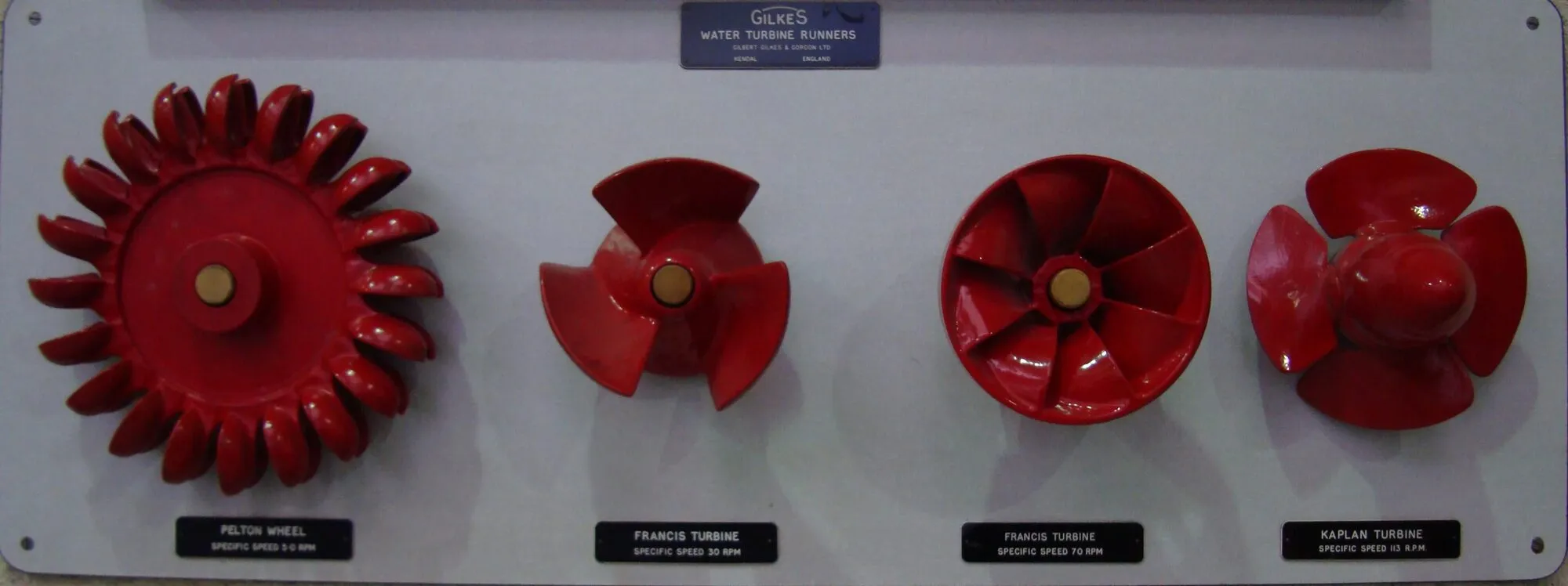
Head and flow trade places. A mountain stream with a trickle of flow and a 100 m drop can deliver the same power as a lowland river with a hundred times the flow over a 1 m weir. The turbine follows the site:
- High head, low flow (tens to hundreds of metres): Pelton and Turgo wheels, struck by jets of water.
- Medium head: Francis and crossflow turbines.
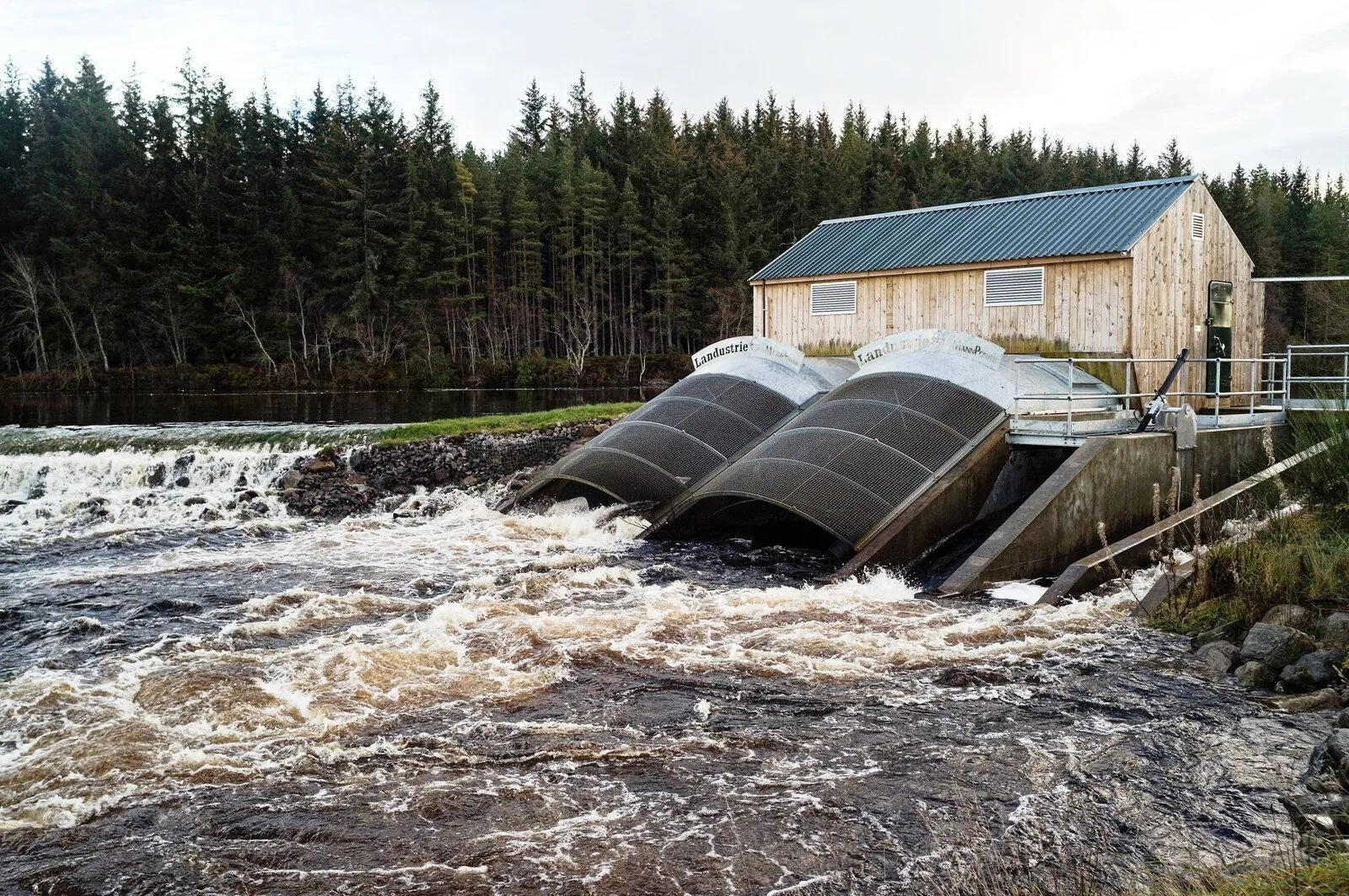
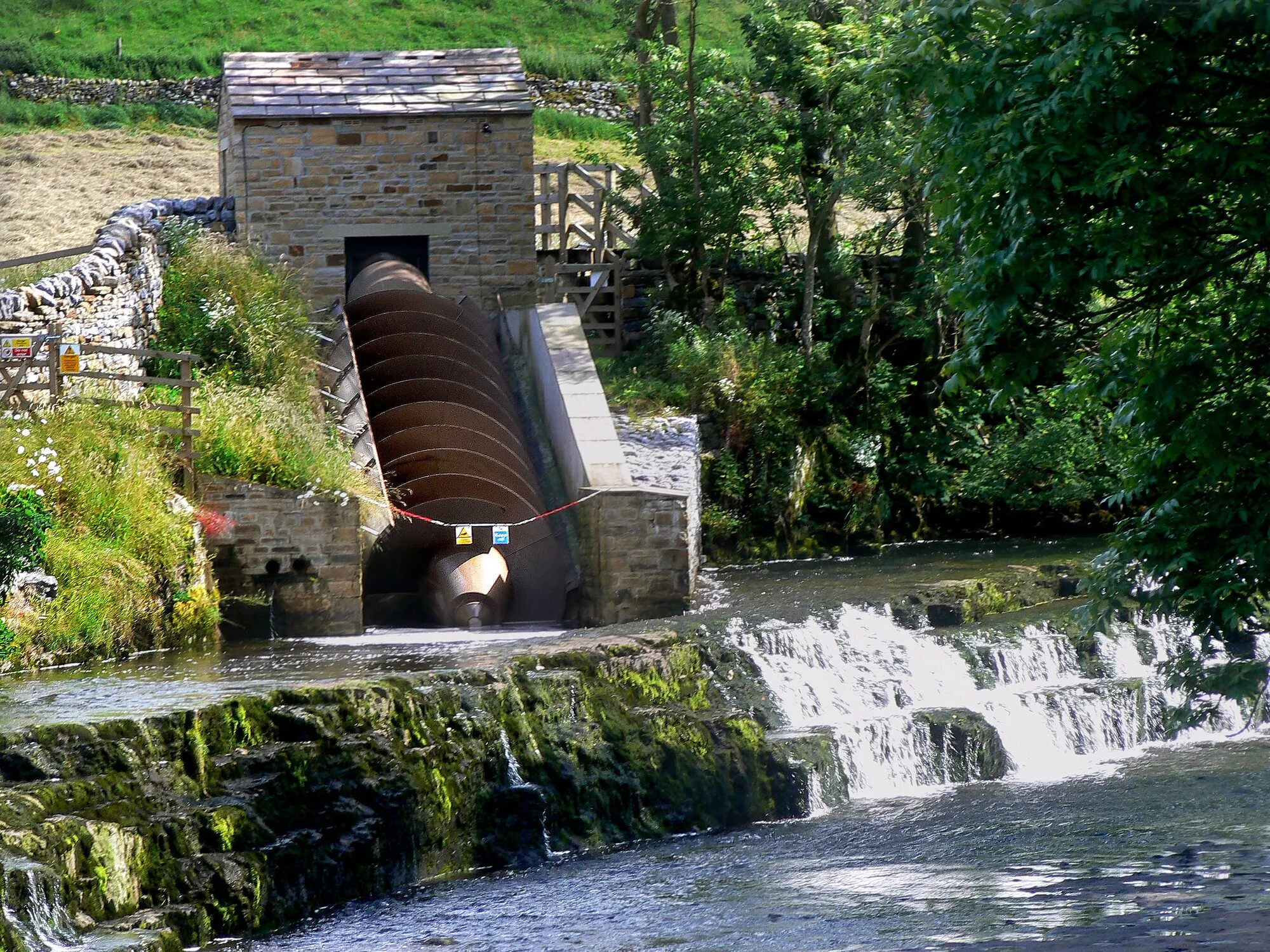
- Low head, high flow (1 to 10 m): Kaplan propellers and Archimedes screws, which turn slowly, pass debris and are gentler on fish.
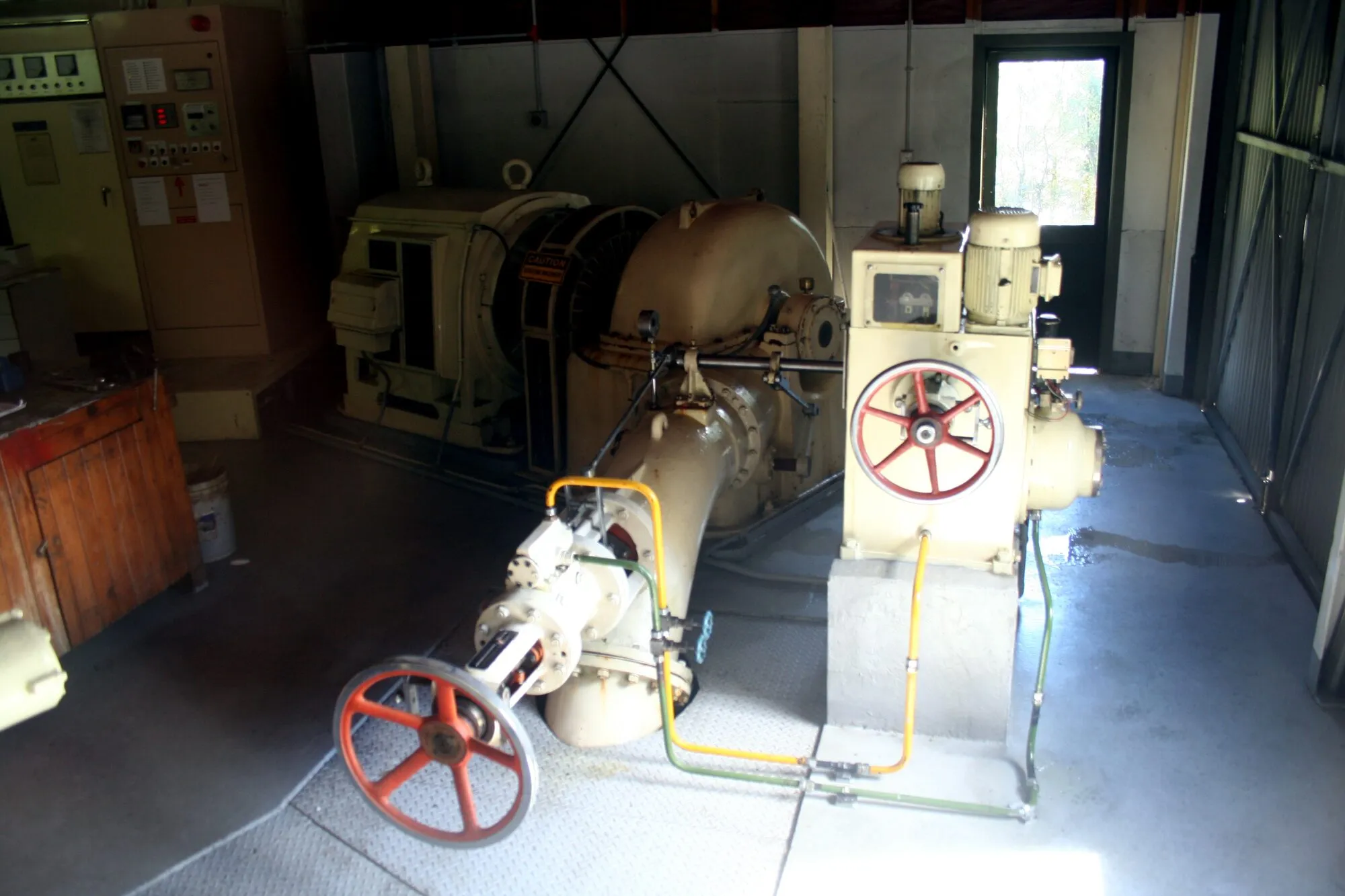
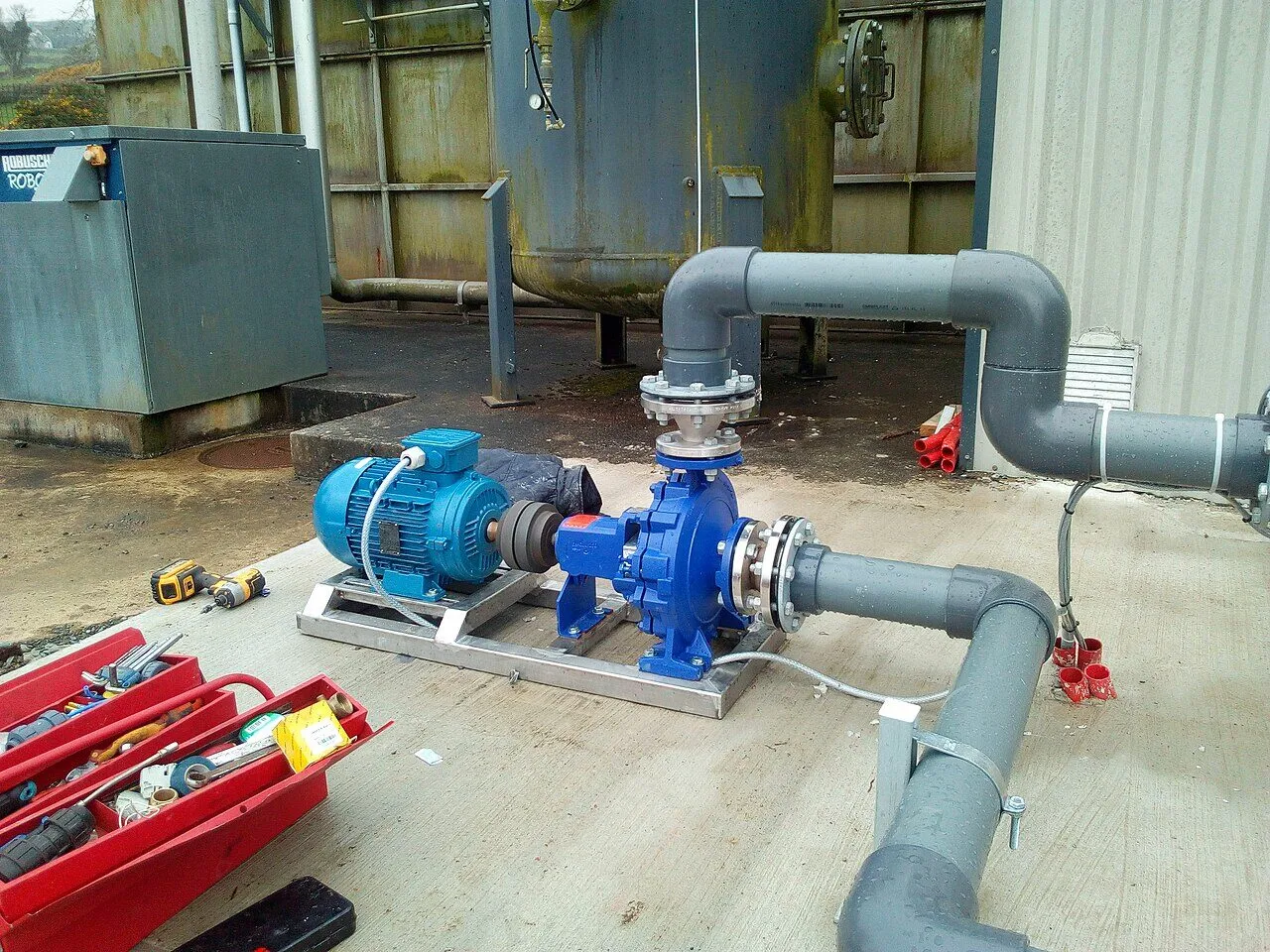
- In pipes: special in-line turbines, or standard pumps run backwards as turbines, a widely used low-cost option.
Pressure is head. In a pipe, height shows up as pressure: one bar equals about 10.2 m of head. That is the key to in-pipe hydro. Cities keep water mains at a few bars; where a main runs downhill from a reservoir, the pressure would be too high for homes, so a pressure-reducing valve throws the excess away as heat and noise. A turbine in place of that valve recovers it. The explainer’s “valve in a water main” example, 0.3 cubic metres a second across 3 bar, is about 60 kW that is otherwise wasted.
There is no free lunch in a pipe. A turbine can only take pressure that is not needed downstream. Putting one in a pipe that needs all its pressure simply steals it from customers or makes the pumps work harder, which costs more electricity than the turbine makes. Good in-pipe sites are therefore specific: gravity mains with surplus pressure, large enough flow, and steady use. One developer’s own site criteria were pipes of 0.6 to 2.4 m in diameter, flow speeds of 0.9 to 3.7 m/s and at least 5 psi (0.34 bar) of surplus pressure (Lucid Energy, archived).
Capacity factor comes from the river. Rivers rise and fall with the seasons, and a scheme must leave enough water in the river for fish and everything else. A small run-of-river plant is usually sized to use the flow available for a good part of the year; Settle’s 50 kW screw runs at a 38% capacity factor, and shuts itself down in dry spells to keep water flowing through its fish pass.
The limits: theoretical and practical
Physics. The energy is only as large as the flow times the drop. A garden stream with 10 litres a second falling 5 m gives about 0.3 kW, enough for lights and a fridge but not a home’s heating. A typical water main valve gives tens of kilowatts. That is the honest scale of most small sites: kilowatts, not megawatts.
Fixed costs. A 20 kW scheme needs almost the same surveys, environmental studies, permits, fish protection, grid connection and legal work as a 500 kW scheme. These costs do not shrink with size, so the smallest schemes are often the most expensive per kWh.
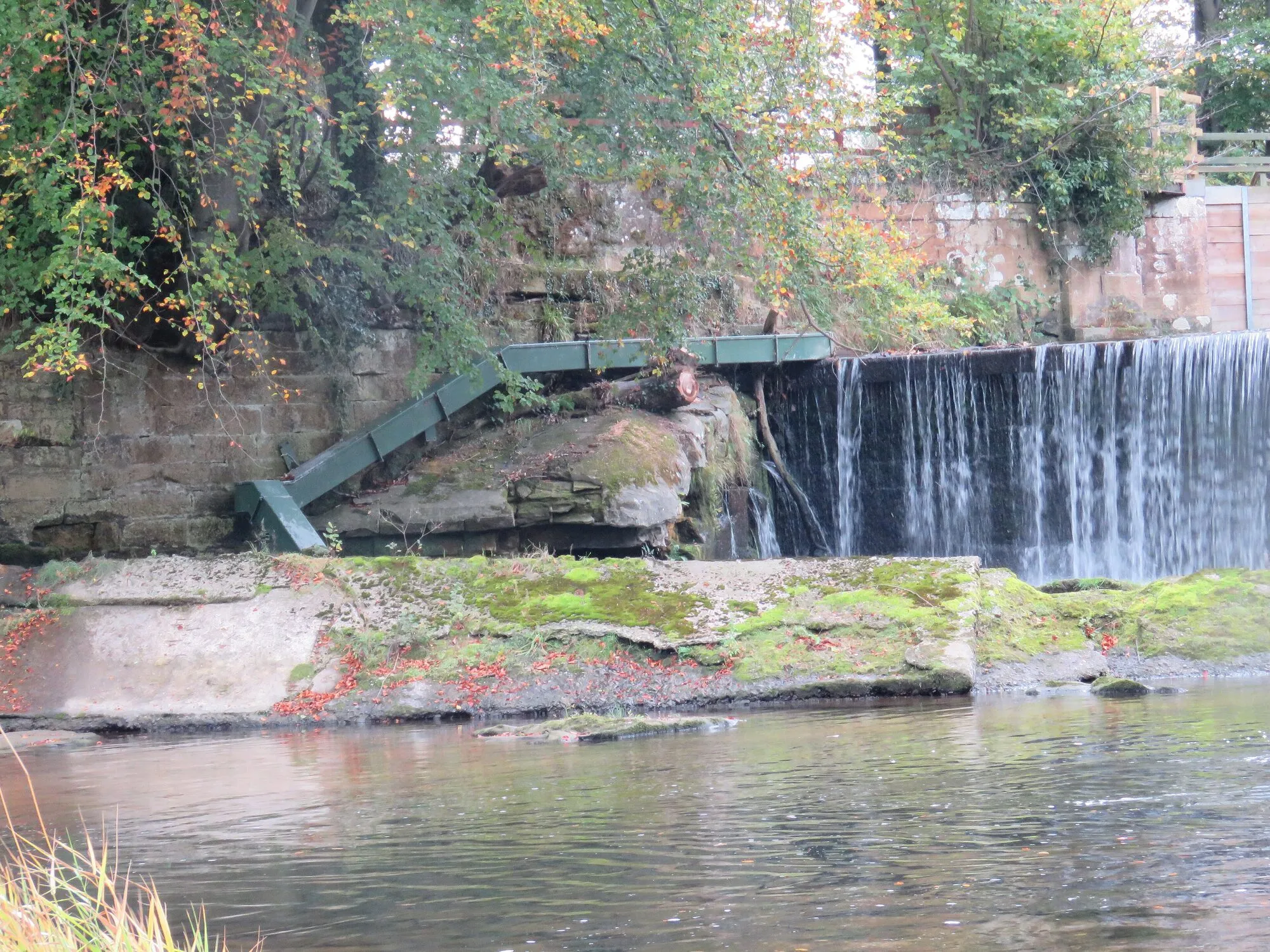
Environment. Weirs block fish migration, and turbines can injure fish. Even with a fish ladder, the community operators at Settle reported fewer salmon passing upstream and suspected noise from the screw (Settle Hydro). Many countries do not require full environmental assessment for small schemes, which has led to poorly placed plants in some regions (Small hydro). A good project leaves enough water in the river, passes fish both ways, and is monitored.
Water safety. Turbines inside drinking water mains touch water people drink. They must be certified for contact with drinking water, must never let air or contaminants in, and must fail safe, so a utility will not experiment with its mains lightly.
Real projects, measured
| Project | Where | Type and size | What was measured or reported |
|---|---|---|---|
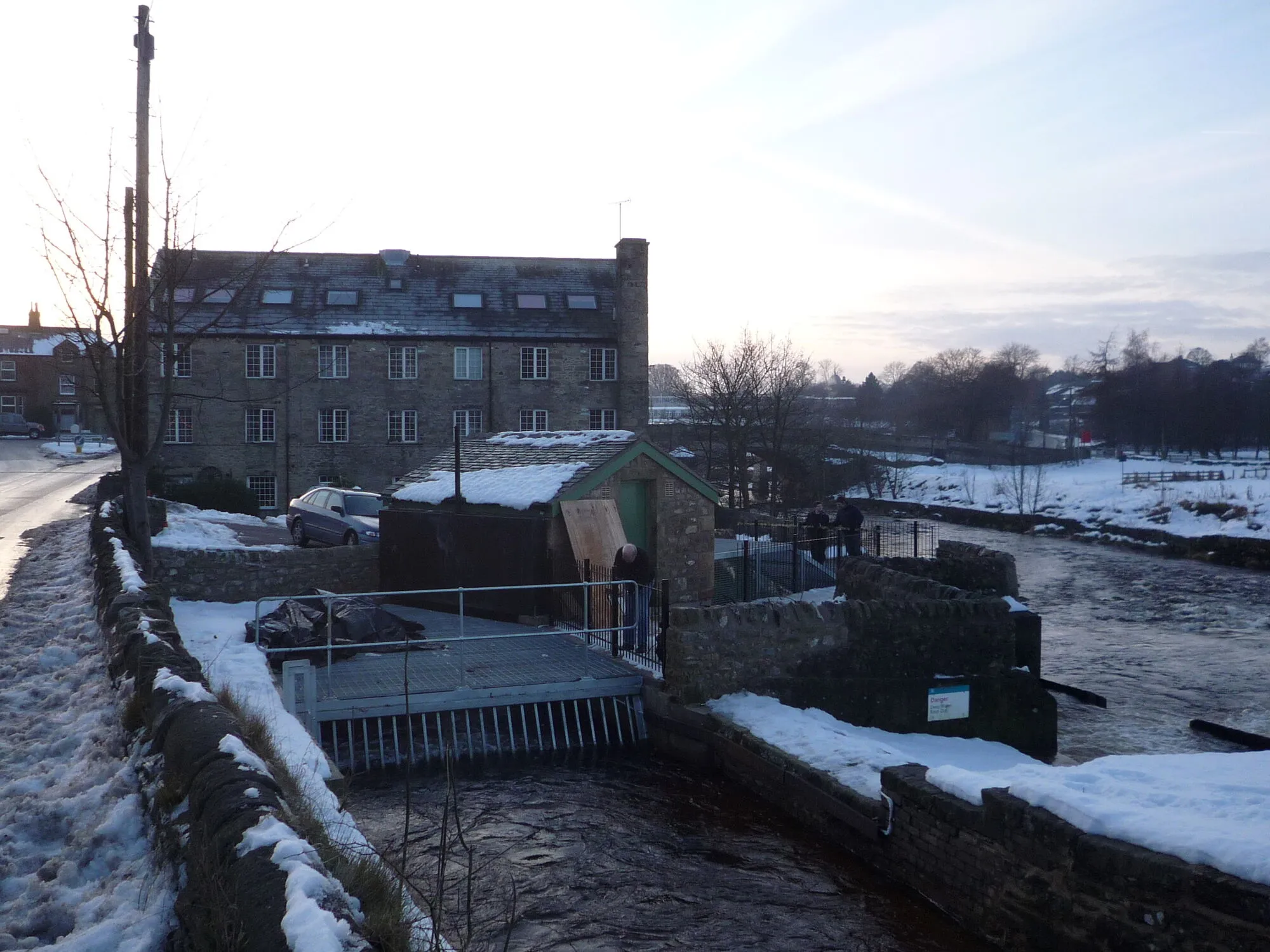
| Settle Hydro | River Ribble, North Yorkshire, England | Archimedes screw on a mill weir, 50 kW | Generating since November 2009; about 165 MWh a year (38% capacity factor); £410,000 raised through community shares; operators report fewer salmon upstream and suspect screw noise (Settle Hydro) |
| Torrs Hydro | River Goyt, New Mills, England | Archimedes screw, 2.4 m diameter, up to 63 kW | The UK’s first community-owned hydro scheme, handed over in September 2008; £100,000 raised from 200 community members (Torrs Hydro) |
| LucidPipe, Portland Water Bureau | Portland, Oregon, USA | In-line turbines inside a large gravity-fed water main | Installed in the city’s water pipes and generating by early 2015 (Oregon Department of Energy; Lucid Energy news, archived 2015). We found no published record of its measured yearly output, and by 2022 the developer’s web domain was being offered for sale (archived page). |
| North Unit Irrigation District | Near Madras, Oregon, USA | Conduit hydro on an irrigation canal (Natel Energy) | One of the operating conduit projects listed by the Oregon Department of Energy (Oregon Department of Energy) |
| US conduit exemptions | United States | Pipes and canals | 236 conduit projects had been authorised by the federal regulator by 2013 (Conduit hydroelectricity) |
| China’s small hydro | Rural China | About 45,000 small plants | About 160 TWh a year by 2010, much of it powering villages that had no grid (Small hydro) |
The lesson from these projects is consistent. Where the head, flow and a structure already exist, small hydro works for decades: mill weirs from the industrial revolution are making electricity again. Where the resource is thin, the output is small no matter how clever the turbine. In-pipe hydro in particular has had enthusiastic press and few published measurements; the physics is sound, but good sites are specific and the market has stayed small.
What it costs
| Source | What it is | Price |
|---|---|---|
| Micro hydro, typical installed cost | $1,000 to $5,000 per kW (Micro hydro) | |
| Our calculation from that range | 40 to 60% capacity factor, 20 years at 7% real, maintenance 3% of the investment a year (the Fan Wall method) | $0.02 to $0.18 per kWh |
| Settle Hydro, our calculation | £410,000 for 165 MWh a year, 20 to 40 years at 7% real, 3% maintenance | about £0.26 to £0.31 per kWh |
| Our benchmark | Rooftop solar on a building, Fan Wall model; Lazard 2026 commercial and community solar | $0.19 per kWh; $0.09 to $0.20 |
| Lazard (June 2026) | New utility solar / onshore wind | $0.04 to $0.10 / $0.04 to $0.10 per kWh |
The range is wide because sites are. A good high-head site with an existing intake can make electricity for a few cents per kWh, far below rooftop solar, and keep doing it for fifty years. A small low-head community scheme with full fish protection, like Settle, costs more per kWh than rooftop solar on our standard assumptions; such schemes are usually justified by long life, local ownership, output at night and in winter, and support tariffs. For in-pipe hydro the question is simpler: is there surplus pressure being destroyed in a valve today? If yes, recovering it can pay; if no, there is nothing to recover.
Where it can win, and where it cannot
It can win:
- Existing weirs and mill sites, where the civil works were paid for a century or two ago.
- Water utilities with gravity mains, reservoir outlets and pressure-reducing valves that throw away pressure every hour of the day.
- Irrigation canals with drops, and the outfalls of wastewater treatment works.
- Off-grid mountain villages, where a micro-hydro minigrid can supply power day and night at lower cost than diesel.
- Night and winter power in places where solar panels make little.
It cannot win:
- In flat country with small streams: without head or flow there is no power.
- In pipes that need their pressure, where a turbine only moves the energy bill from one meter to another.
- Where a new weir would harm fish in a river that matters for them, unless the harm can be avoided and shown.
- At pico scale on the grid, where fixed costs dwarf the energy.
What is proven, plausible and speculative
Proven: the hydropower equation; turbine efficiencies; that small hydro schemes run for decades with low running costs; that Archimedes screws and conventional turbines work on old weirs; that community ownership can finance small schemes; that conduit projects operate in water and irrigation systems.
Plausible: that many water utilities have enough surplus pressure at valves and reservoir outlets for useful kilowatts at each site; that standard pumps run as turbines can cut the cost of in-pipe schemes; that new fish-friendly designs can reduce harm at low-head sites.
Speculative: in-pipe turbines in ordinary distribution pipes without surplus pressure (the energy has to come from somewhere); large national contributions from micro hydro in countries with little head; very cheap “plug-in” river turbines without the usual civil works and permits.
Open research questions
- Mapping surplus pressure. How much energy do water networks destroy in valves today, site by site, and how steady is it through the day and year?
- Control. Turbines that hold downstream pressure as steadily as the valve they replace, even as demand changes.
- Fish. Which turbine designs and screens let fish pass both ways with low injury, measured, not assumed?
- Cost. Standardised small schemes with fewer bespoke civil works, and simpler permits for sites that already have weirs.
- Heat as well as power. Rivers and water mains are also stable heat sources for heat pumps; can one scheme do both?
What a working prototype would need
A small hydro idea is one of the easiest to test honestly, because water, pipes and meters are everyday things. Costs below are our rough estimates.
| Stage | Work | What it proves | Rough cost | Time |
|---|---|---|---|---|
| 1. Bench rig | A pump loop or a header tank with a measured flow (flow meter) and pressure (gauges before and after), turbine driving a load bank through a logged power meter | Efficiency against flow and head | $5k to $30k | 1 to 3 months |
| 2. Real site trial | A 1 to 20 kW unit on a stream, farm pipe or a utility’s valve bypass, with water-quality safeguards where needed, logging for a season | Real output over changing flow, debris, maintenance | $20k to $150k | 6 to 12 months |
| 3. Utility or community pilot | A permitted installation with grid connection, fish monitoring or drinking-water certification as needed | Bankable yearly energy, permits, costs | $100k to $1 million | 1 to 2 years |
Stage 1 is within reach of a school or a maker space. It is also exactly the evidence a pitch needs: a turbine, a measured flow, a measured drop and a meter showing the electricity it made.
Who we need
- Hydraulic and hydropower engineers for site assessment and turbine selection.
- Water utility engineers who know where pressure is reduced and how networks behave through the day.
- Fisheries biologists for fish passage design and monitoring.
- Electrical engineers for small generators, grid connection and islanded minigrids.
- Civil engineers for intakes, weirs and screens.
- Community energy groups and landowners with weirs, mill leats or farm pipelines.
- Drinking-water certification specialists for anything inside a potable main.
Have a better idea?
Some members of the Foundation may have contacts who could hear a pitch. To be pitched, an idea needs a working, real-life model that actually produces power, with its output measured on an instrument, not claimed: a turbine on a test rig with a flow meter, pressure gauges and a logged power meter is worth more than any drawing. Paper ideas are welcome too: if the physics and the numbers are solid, we can publish them here on the website. But raising capital without a working model is very difficult, and nothing here is a promise of funding, returns or introductions.
Send your idea through the contribution form, choosing the Green Initiative. Tell us the flow and head it works with, the efficiency you measured or expect, a rough cost per kWh, and the cheapest test that could prove it wrong. The energy sources page compares small hydro with eleven other ideas.
Sources
- Hydroelectricity, Wikipedia: share of world electricity and turbine efficiency.
- Small hydro, Wikipedia, drawing on UNIDO’s World Small Hydropower Development Report 2022.
- Micro hydro, Wikipedia: size classes, efficiencies and installed costs.
- Conduit hydroelectricity, Wikipedia.
- Hydropower Regulatory Efficiency Act of 2013, Wikipedia; text at congress.gov.
- Settle Hydro and Torrs Hydro, Wikipedia.
- Oregon Department of Energy. Hydropower in Oregon, including conduit projects in Portland and at North Unit Irrigation District.
- Lucid Energy. Target projects (archived 2021) and lucidenergy.com (archived 2022).
- Run-of-the-river hydroelectricity, Wikipedia: seasonality and environmental effects.
- Ofgem (2023). Typical domestic consumption values: 2,700 kWh of electricity a year for a medium user.
- Lazard (June 2026). Levelized Cost of Energy+, version 19.
- Local Solar System Foundation. The Fan Wall: open model and benchmark, rooftop solar at $0.19 per kWh.
- Water turbine, Wikipedia: typical range of heads for each turbine type, from water wheels (0.2 to 4 m) to Pelton wheels (80 to 1,600 m).