
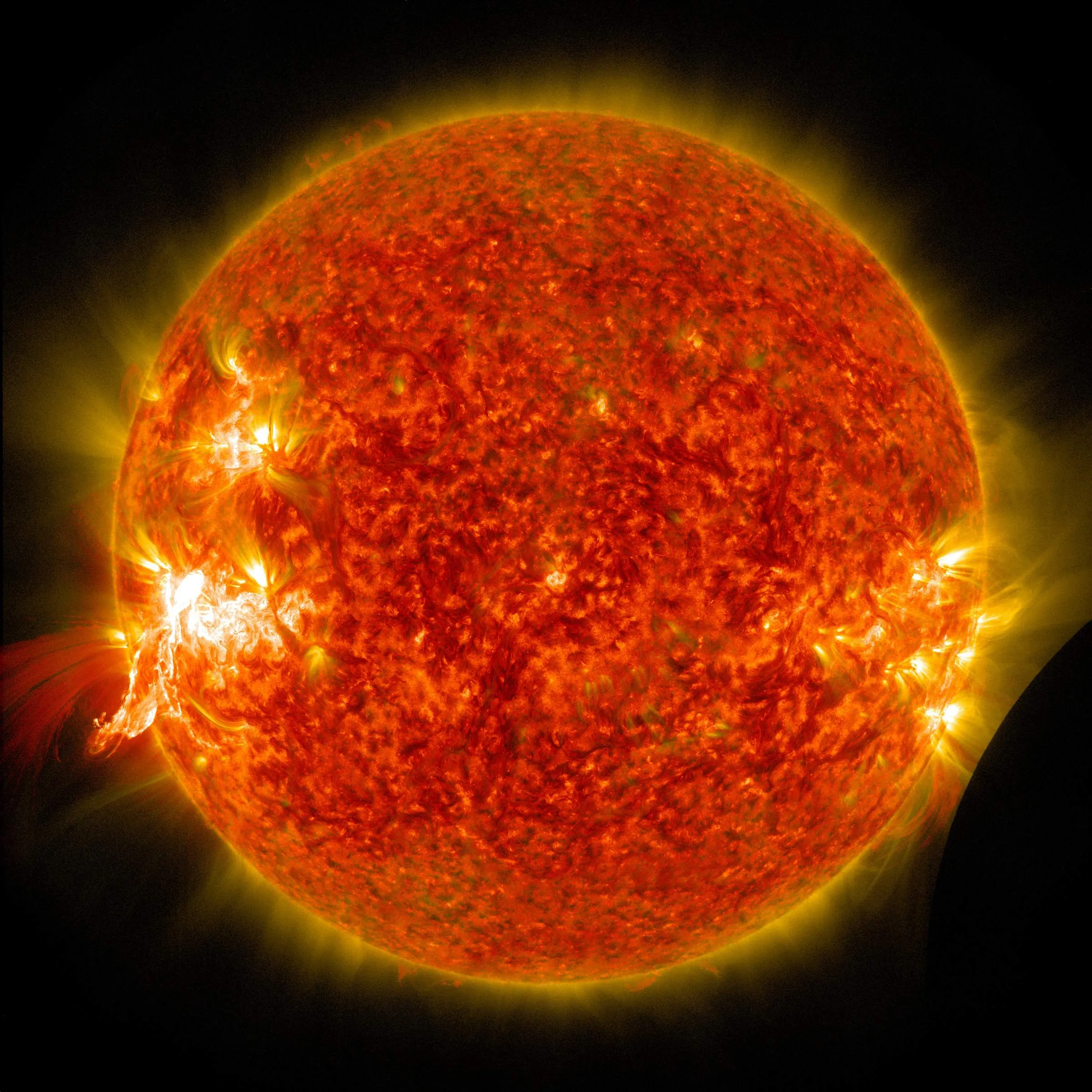
خۆر
Our star: a ball of hot plasma that holds about 99.86% of the solar system's mass.
NASA
Our star: the source of almost all the energy on Earth, and the anchor that holds every planet in its orbit.
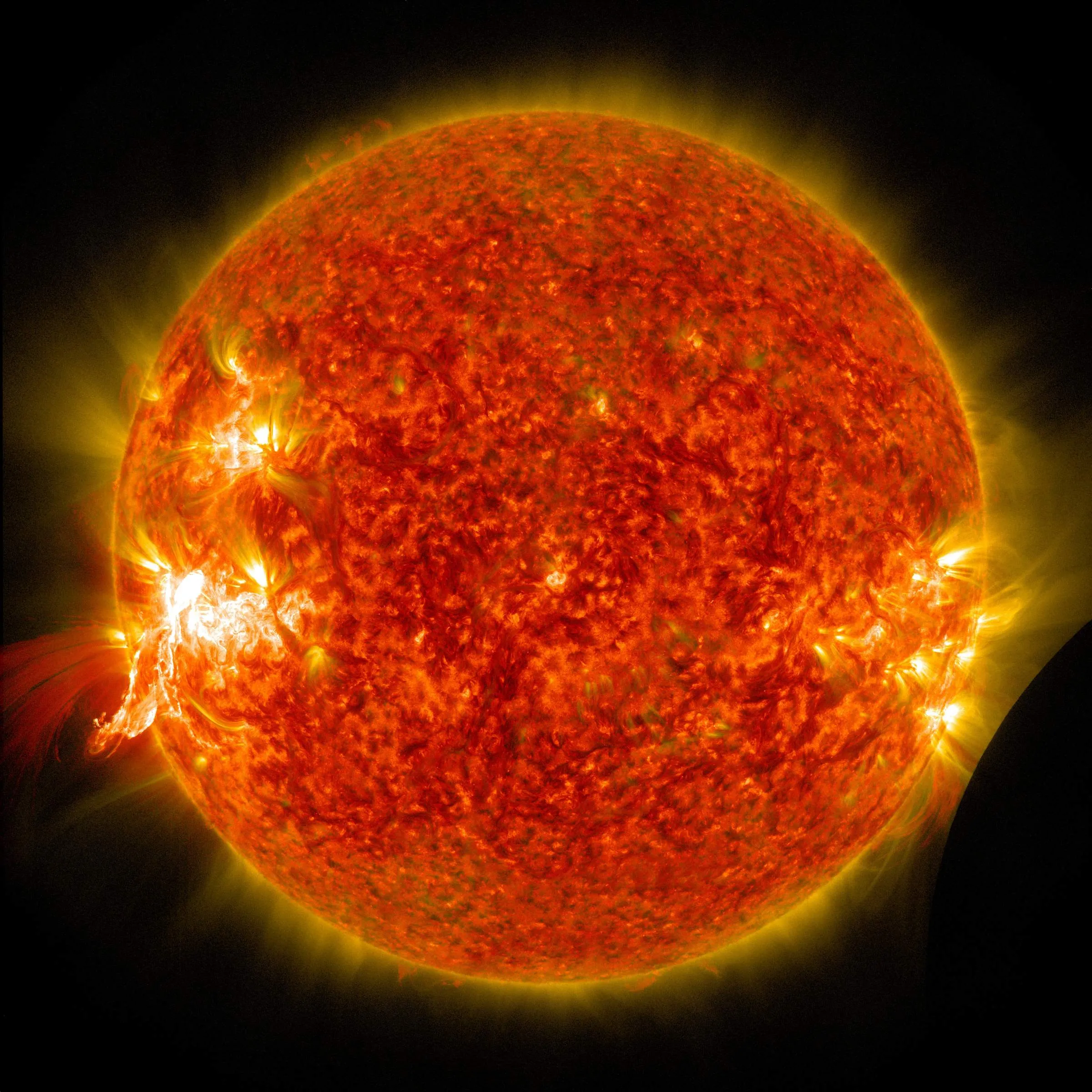
The Sun is a G-type main-sequence star (spectral type G2 V) about 4.6 billion years old. It shines by fusing hydrogen into helium in its core, where the temperature is about 15.7 million kelvin. Its visible surface, the photosphere, has an effective temperature of 5,772 K.
It does not rotate like a solid body: its equator turns once in about 25 days and its poles in about 35. Every planet, dwarf planet, asteroid and comet in the solar system orbits it.
سەرچاوەی زانیاریەکان
ئامرازەکان و وانەکان تەنها بۆ فێربوون بەکاردەهێنرێن. نابێت بەکاربهێنرێن بۆ گەڕان، پلانی ئەرک یان هەر بڕیارێکی کارگێڕی. گواستنەوەی بڕوانامە بێ پارەیەو پشتگیری ناکرێت نوسراوەکانی پەروەردەیی بخوێنەوە