
Sun
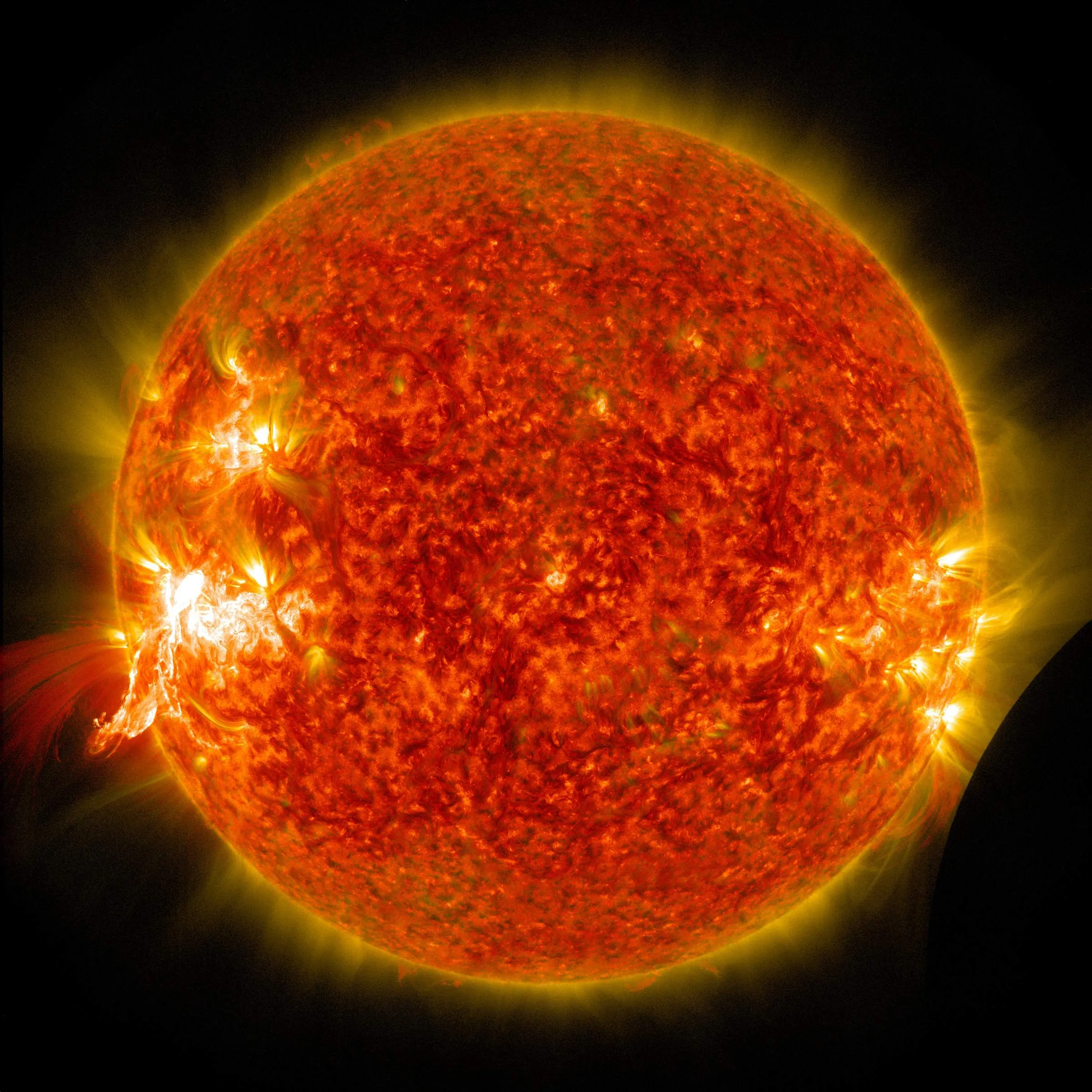
Our star: a ball of hot plasma that holds about 99.86% of the solar system's mass.
NASA
Our star: the source of almost all the energy on Earth, and the anchor that holds every planet in its orbit.
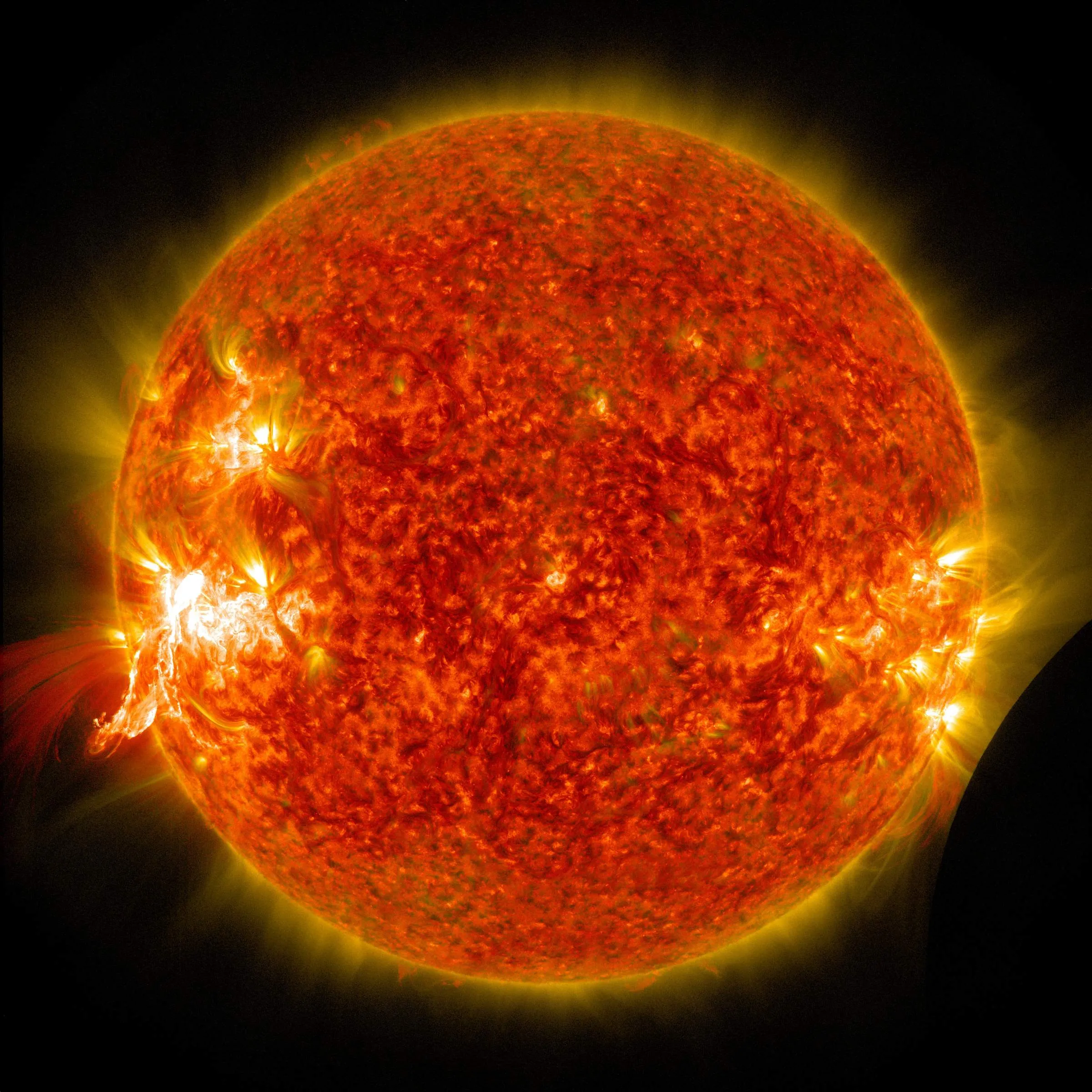
The Sun is a G-type main-sequence star (spectral type G2 V) about 4.6 billion years old. It shines by fusing hydrogen into helium in its core, where the temperature is about 15.7 million kelvin. Its visible surface, the photosphere, has an effective temperature of 5,772 K.
It does not rotate like a solid body: its equator turns once in about 25 days and its poles in about 35. Every planet, dwarf planet, asteroid and comet in the solar system orbits it.
Àwọn ìṣàmúlò-ètò ààyè-iṣẹ́
Àwọn ìrànwọ́ àti àkọlé lòòlù àwọn módè́ì tí a fi pamọ́ fún ìmọ̀. Kò yẹ ki wọn lò fún ìṣàfihàn, ìṣàmúlò-ètò àti àwọn ìṣẹ̀dá iṣẹ́. Àwọn ìwé-ẹ̀rì ní ọ̀fẹ̀ àti àwọn ààyè-iṣẹ́ kò ní ìgbà gbà. Ka àwọn ìṣàmúlò-ètò ìròyìn