
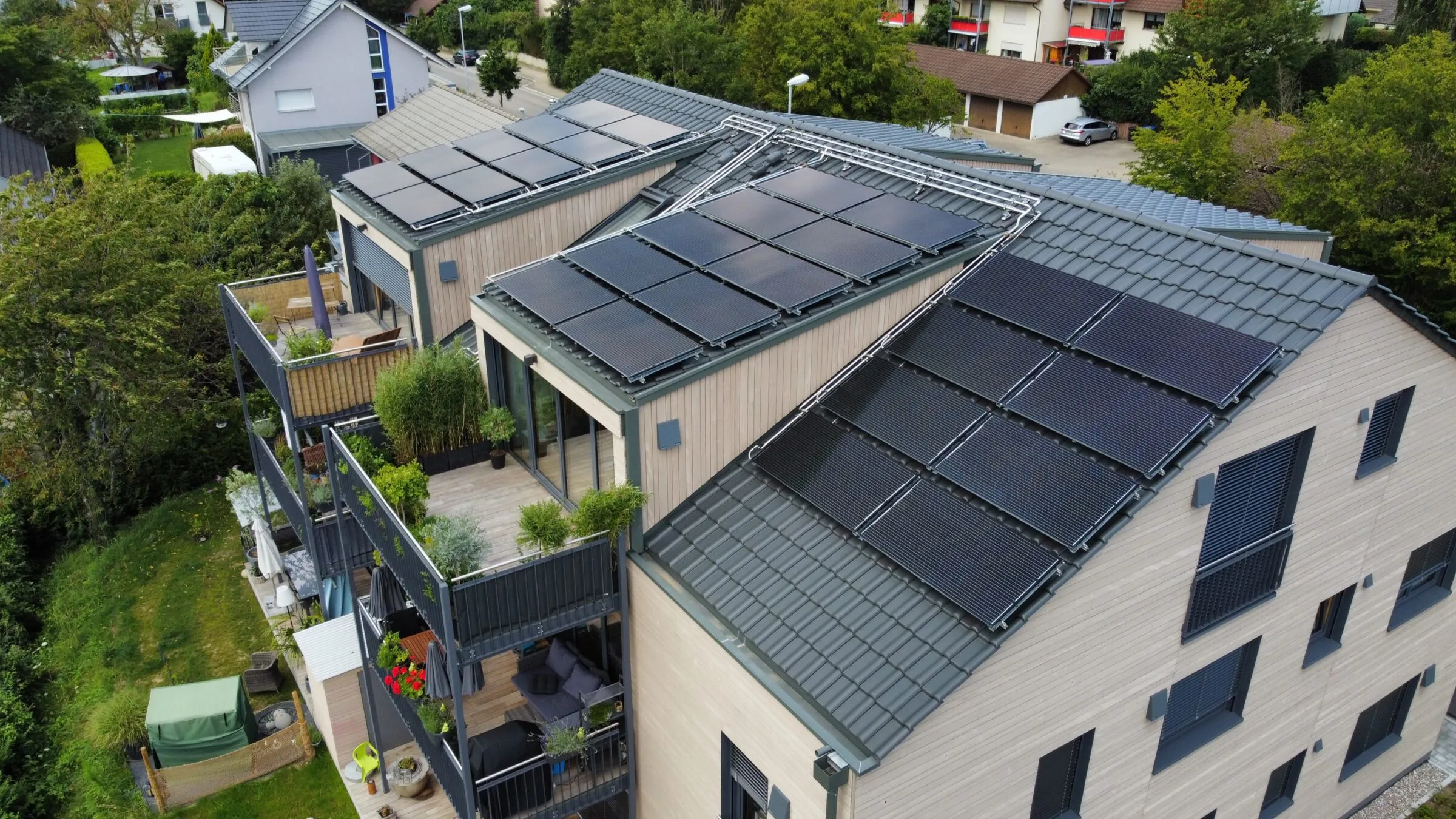
暖房もできるソーラー屋根
A solar panel turns a fifth of the sunlight into electricity and most of the rest into waste heat. A PV-thermal collector keeps that heat. The physics is simple; making it pay is not.
Andreas Siegemund (CC BY-SA 4.0)
太陽光発電の場合は、太陽光パネルに当たるエネルギーのほとんどが無駄になる。 The cells turn 15 to 20% of the light into electricity; 65 to 70% of it becomes heat, which warms the panel and makes it less efficient (IEA SHC Task 60, 2020). 太陽光熱(PVT)コレクタは,セルの後ろに熱交換器を設け,その熱を水または空気中で運び去り,それを温水,室内暖房またはヒートポンプとして利用する。
The honest summary: PVT works, is sold today and can deliver two to three units of heat for every unit of electricity from the same roof, but it only pays where there is a steady use for low-temperature heat, and its measured costs are still higher than separate panels and collectors in most places. This page explains why, with the numbers.
何だ?
PVTコレクタは太陽電池パネルと太陽熱集熱器を一体化したものである。 There are three main families (IEA SHC Task 60, 2020):
- 露天集水器 普通のパネルに見えますが 裏面には平らな熱交換器が付いています これらは,冷たい運転が可能であり,風に対して熱を容易に失う。 これらは世界のPVT熱容量の61%を占め,ヒートポンプの熱源として最もよく使用されている。
- Covered (glazed) collectors add a second sheet of glass and an insulating air gap in front of the cells. 家庭用の温水に必要な50〜60°Cまで達するが,余分なガラスは光を反射し,セルは高温で走行して電力を少なく生産する。
- 空気集塵機 風を吹き込んで 暖房や換気に使うのです これらはPVT設備容量の33%である。
Concentrating and evacuated-tube designs exist but play a minor role (IEA SHC, Solar Heat Worldwide 2025).
仕組み
The light budget. On a clear day about 1,000 W of sunlight reaches each square metre of a panel facing the sun; 800 W is a more typical bright hour. シリコン電池は,使用できるスペクトルの一部を電気に変換する。 残りは反射,通過またはセル内で熱となる。
Heat makes cells worse. The electrical efficiency of a crystalline silicon cell falls almost linearly with its temperature: η_el = η_ref × (1 − β × (T_cell − 25 °C)), where β is about 0.4% per kelvin (the measured range is 0.2 to 0.5%). In plain words: a panel labelled 20% efficient at 25 °C delivers about 18.4% when its cells sit at 45 °C, which is normal on a sunny day (Skoplaki and Palyvos, 2009).
Collecting the heat. The heat a collector delivers follows the equation in the testing standard EN ISO 9806: η_th = η_0 − a_1 (T_m − T_a) / G − a_2 (T_m − T_a)² / G. Here η_0 is the share of sunlight that becomes useful heat when the fluid is at air temperature (about 61% is typical for PVT), T_m is the mean fluid temperature, T_a the air temperature, G the sunlight in W per m², and a_1, a_2 describe how quickly heat leaks away. 簡単に言えば 水を暖めるほど 蓄熱量が減りますまた,風を遮断するガラスカバーがない露出型集熱器は,被覆型よりもずっと早く熱を失う。
トレードオフだ 冷水は二重に役立つ。 電池が冷たいので、少し電力を増やす。 そしてコレクタは熱を集める。 熱い水は二度痛む。 ヒートポンプは5〜20°Cの熱源を必要とする。 流体が空気よりも冷たいときは,露出型コレクタは昼夜問わず空気から熱を取り込むことで,空気ヒートポンプの屋外ユニットに代わるか,周辺地盤を再充電できる。 地熱ヒートポンプ 井戸だ 上の説明では、これを試すことができます。
The ratio. Because more of the light becomes heat than electricity, “two or more units of thermal energy are generated for each unit of electrical energy, depending on cell efficiency and system design” (IEA SHC Task 60, 2020).
限界
Theoretical. Sunlight delivers at most about 1 kW per square metre at noon and, averaged over a year, 100 to 300 W per m² depending on latitude and weather. 集熱器はそれに落ちるエネルギーよりも多くのエネルギーを供給できない(露出した集熱器が空気より冷たいときに吸い込む空気源の熱を除いて、これはヒートポンプ物理学であり、余分な日光ではない)。 Electricity is capped by the cell: about a fifth of the light for commercial silicon. 熱は必要な温度で制限される:60°Cでは集熱器は既に集めたものの大部分を失う。
実用的だ
- 熱は近くで使えるべきだ。 低温熱は電気のようにグリッドに売ることができない。 On a sunny afternoon in July, a house with a full hot water tank has nowhere to put more heat, so the collector stops collecting (“stagnation”) and heats up like an ordinary panel. 熱側の実需要に合ったサイズは,どんな集熱器の細部よりも重要である。
- 温度制限 ほとんどのパネルは約85°Cまでのセル温度に対して認証されている。 夏季に蓄熱器を閉じて停滞させると,その影響がカプセル材とはんだ接合部の老化に及ぶ。
- Two trades on one roof. PVT needs an electrician and a plumber, two sets of standards (IEC 61215 and 61730 for the electrical side, EN ISO 9806 for the thermal side) and, until recently, no single test standard of its own. The IEA’s experts list cost, testing and installer skills, not physics, as the barriers (IEA SHC Task 60 position paper).
- 安価なパネルからの競争。 普通のパネルは安価になってきたので,PVTシステムよりも安く屋根に単独の太陽光発電パネルと小型太陽熱集熱器,あるいは太陽光発電パネルと空気源ヒートポンプを設置できることが多い。
実際のプロジェクト、測定
| プロジェクト | 何だ? | 測定されたものまたは報告されたもの | ソース |
|---|---|---|---|
| IEA SHC Task60(ヨーロッパとその周辺,2020年)における26例のシステム | Domestic hot water, heat pump and industrial systems, monitored for about a year | Covered PVT for hot water: up to about 700 kWh of heat per m² a year; uncovered: about 400. Electrical performance ratio 0.66 for covered and 0.75 for uncovered collectors (ordinary PV: 0.7 to 0.85). Heat pump systems using uncovered PVT as their only source reached a seasonal performance factor of about 3 in Switzerland | Schubert and Zenhäusern, 2020 |
| 新市庁舎、ドイツ・フライブルク(2017年) | ネットプラスエネルギーオフィスビルにおける給湯用PVTコレクタ | Designed to deliver 22 MWh of heat a year against a hot water demand of 145 MWh. The measured demand was only 24 MWh a year, so the collector field was far too large, ran hotter and delivered less heat per m². Solar fraction 29.6%; electrical output as expected | IEA SHC Task 60, 既存のPVTシステム |
| ヘリザウ・カーロセリー・プフィスター | 工業ビルの露出PVT | 電力106kWp、熱出力324kW(定格・実測出力) | 世界太陽熱2025 |
| 新しいスポーツアリーナ | 1,130 m² of PVT with 80 ground probes and a 540 kW heat pump | Designed to meet a heat demand of 1.4 GWh a year without fossil fuel (design figure) | 世界太陽熱2025 |
| 世界市場、2024年 | 46のメーカーが報告しました | 2024年に設置される火力37.5MW、電力18.6MW;フランス(629,136m²)、ドイツ、オランダが先頭 | 世界太陽熱2025 |
Frieburgの事例はこのページで最も有用な教訓である:集熱器は機能したが,建物がどれだけの温水を使用するか予測は機能しなかった。 PVTシステムに関する独立した測定データはまだ少なく,ほとんどの数値はパイロットプロジェクトから得られている。
どれだけかかる?
| オプション | Cost per kWh | 年月日・出典 |
|---|---|---|
| PVT,Task60サンプルの良くサイズ化されたシステム | 電気は0.20ユーロ 暖房は0.10ユーロ以下です | 2020, シューベルトとツェンハイザーン |
| PVT,タスク60サンプルの平均 | 電気0.10〜0.15ユーロ、暖房0.25ユーロ(屋根付)〜0.45ユーロ(屋根なし) | 2020年同じ資源(熱電費の割合による) |
| モデル化されたPVT | electricity €0.20; heat €0.22 | Lämmle (2019) は同報告書に引用されている。 |
| 標準は同じ建物の屋上に設置した太陽電池パネルである。 | 0.19ドルです 中央 | 私たちの ファンウォールモデル |
| 商業用・コミュニティ用屋上ソーラー発電所 | $0.09 to $0.20 | June 2026, Lazard LCOE+ version 19 |
| 太陽熱温水 | €0.03 (south) to €0.19 (centre and north) per kWh of heat | 2015年、ESTIF、シューベルトとゼンハイザーンの引用 |
| ガスボイラからの熱、EU世帯 | 約0.14ユーロ/kWhの熱(燃料だけで:ガスは0.1228ユーロ/kWh、効率90%のボイラー) | 2025年の後半には ユーロスタット |
テーブルの上に書いてある事は 最高のPVTシステムは 既に熱を作り出しており ヨーロッパではガスボイラーの燃料コストよりも安く 電気は屋根上のパネルの値段ほどであるが 熱の価値は使用するかどうかに完全に依存しているので,その拡散は大きい。 IEA experts have set the goal of cutting PVT collector costs by a factor of 1.5 to 2 through volume and technology (Task 60 position paper).
勝てる場所と 負けられる場所
勝ち取れるものは
- 屋根が小さい年間熱需要の建物: アパート ホテル 病院 プール 洗濯場 スポーツホール Every square metre does two jobs.
- ヒートポンプの熱源として,水素を用いた。 露天PVTは騒音の多い屋外ユニットを置き換えたり,ボアホールフィールドを再充電することができ,最近の成長が起こった場所である年々冷却されない。
- 温水需要のある暖かく日当たりの良い場所Task60システムは70%の太陽光シェアを達成した。
- Low-temperature industrial heat (washing, drying, preheating), where there is a use every day of the year.
勝てない
- 熱は使い手がない また,熱源の選択においては,暖房用ヒートポンプを使用する場合と,単独で屋外ユニットを設置した場合がある。
- 高温で 太陽熱発電の特徴は,太陽光発電における水蒸気とプロセス熱の温度が約80°C以上であることが挙げられる。 熱貯蔵 もっと似合う
- 価格単位で比較すると安価なパネルに対してこれらの技術は,普通のPVと同じようにルーチン化されるまで,設置が困難な場合にも有効である。
証明されたもの、可能性のあるもの、推測的なもの
Proven: the temperature penalty of silicon cells; the collector physics of EN ISO 9806; that PVT collectors deliver both electricity and heat in real buildings, with measured yields of roughly 400 to 700 kWh of heat per m² a year; that uncovered PVT can serve as the sole source for a heat pump with a seasonal performance factor near 3 in Switzerland; that oversizing the heat side lowers the yield.
可能性: 量産と標準キットはコストを1.5から2倍に下げる PVTプラスヒートポンプは密集した都市のブロックを脱炭素化できる 屋外ユニットやボアホールの空間がない
推測: PVT駆動の夜間放射冷却が有用規模で実現(研究で証明されたが,建物ではほとんど実現していない),25年以上の熱サイクルにおけるセル‐吸収体結合の長期耐久性,競争的な価格で建物に統合したPVTファサード。
開放的な研究課題
- 日常的な熱サイクルと夏の停滞下で,細胞‐吸収体結合およびカプセル材はどのように老化するかを調べた。 Twenty-five-year field data does not yet exist.
- ヒートポンプシステムにおけるPVT,通常のPVとボアホール長の正しい分割は何であり,PVT再生が実際どれだけボアホール寿命を延ばすか。
- 試験規格と認証を一つに統合することで,PVT製品の市場への導入コストと時間を削減できるか。
- 実際の熱水需要が不確定な場合,インスタレーターはどうして熱側をサイズするべきか。
- 低コストの高分子熱交換器は金属と同等の伝熱性能と寿命を持つことができるか。
実用的なプロトタイプには
PVTの新しい設計を発明した者にとって,重要な証拠は,良い日と悪い日を見るために十分長く校正センサで太陽中で測定された集光器である。
| 位相 | ワーク | 証明する事は | 粗費 | タイム |
|---|---|---|---|---|
| 0. Desk study | 設計の熱伝達モデル,公表された集熱器データとの比較,コスト推定 | 既存のPVTを打ち破るアイデア | $5k to $15k | 1〜2ヶ月 |
| 1. Bench and outdoor test of one collector | EN ISO9806及びIEC60891に従って,認定された研究所または注意深い大学設置で,種々の流体温度で電気出力(I‐V曲線)と熱効率を測定した。 | リアル η_0, a_1電気温度のペナルティは | $15k to $40k | 3~4ヶ月 |
| 2.小規模システムパイロット | 10 to 20 m² feeding a real hot water tank or heat pump, with heat meters, electricity meters and weather station, one year | 季節収量,停滞挙動,信頼性 | $40k to $100k | 12ヶ月 |
| 3. Certification | IEC61215,61730(電気安全性と耐久性),ソーラーキーマーク(熱),建築認証 | 売り保険できる商品 | $60k to $150k | 9ヶ月から12ヶ月 |
フェーズ0から2の費用は $60,000 to $155,000. これらは,典型的な実験室と監視費用からの推定値であり,引用ではない。
誰が必要なのか
- 太陽熱工学 エン ISO9806テスト経験者です
- 太陽光発電モジュール技術者 熱サイクルやIEC61215の知識がある
- 建築設備技術者 ヒートポンプと蓄熱を組み合わせるための 規模を決めることが必要です
- モニタリング専門家 熱電計を設計するために 必要なものです
- 製造パートナー 熱交換器を積層しボンドすることができるのです
- 配管工 組み合わせ設置を試して 実際の労働時間を報告する意思がある
もっといい考えは?
もっと良い吸収材を持ってるかもしれない 安い接着方法や 熱を使う賢い方法がある Local Solar System財団のメンバーの中には、強力なエネルギーアイデアのためにピッチを聞くことができる人がいるかもしれない。 ピッチングするには,実際に電力と熱を生成し,計測器で測定した実用的なリアルライフモデルが必要である。 論文のアイデアも歓迎する。物理学と数値が確実なら、ここでウェブサイトに公開できる。 実用化モデルがないと資金調達は非常に困難であり,資金調達やリターン,導入を約束することはできない。
For PVT, the cheapest measurement that counts as a working model is one collector outdoors next to an identical ordinary panel, with the inlet and outlet water temperatures, the flow rate and both panels’ electrical output logged for a few sunny weeks. That shows the heat gained and the electricity gained or lost. それを 貢献フォーム を通して送信し,PVTが他のアイデアと比較されるかを アイデアレーダー で確認する。
ソース
- ^ a b c d e f g h i j k l m n o p q r s t u v w x y z aa ab ac ad ae af ag ah ai aj ak at au aq ak aq aq aq aq aq aq aq aq aq aq aq aq aq aq aq aq aq aq aq aq aq aq aq aq aq aq aq aq aq aq aq aq aq aq aq aq aq aq aq aq aq aq aq aq aq aq aq aq aq aq aq aq aq aq aq aq aq aq aq (2020). PVTコレクタ技術の基本的な概念,応用分野と市場. IEA SHC Task 60, Report D5.
- Skoplaki,E.とPalyvos,J.A. (2009). 太陽光発電モジュールの電気的性能の温度依存性について:効率/出力相関のレビュー。 太陽エネルギー83(5),614-624.
- AEE INTECとIEASHC(2025年)。 Solar Heat Worldwide, 2025 edition, chapter 5.4, Photovoltaic-thermal systems.
- IEA PVPS (2025). 2025年の世界太陽光発電市場スナップショット.
- IEA SHC Task 60 (2020). PVT技術ポジションパネル.
- シューベルト,M.とゼンハイザーン,D. (2020). PVTシステムの性能評価例を示した。. IEA SHC Task 60, Report D2.
- IEA SHC Task 60 (2020). 既存のPVTシステムとその解決策これらの研究は,新市庁舎フライブルクファクトシート(Réhault et al., 2019)を含む。
- 』(2017年)に出演。 ISO 9806:2017, Solar energy: solar thermal collectors, test methods.
- チャウ (2010). 太陽光発電と熱ハイブリッド太陽光技術の概要を述べた。 応用エネルギー87(2),365‐379.
- Herrando,M.,Markides,C.N.,Hellgartt,K. (2014). 家庭用暖房と電力のためのハイブリッドPVと太陽熱システムの英国に基づく評価:システム性能。 応用エネルギー学会誌122,288-309.
- Lazard (June 2026). Levelized Cost of Energy+, version 19: community and C&I solar $88 to $197 per MWh.
- Eurostat (2026). Natural gas price statistics: EU household average €0.1228 per kWh, second half of 2025.
- Local Solar System Foundation (2026). ファンウォール:開放型屋上ソーラーベンチマークです