
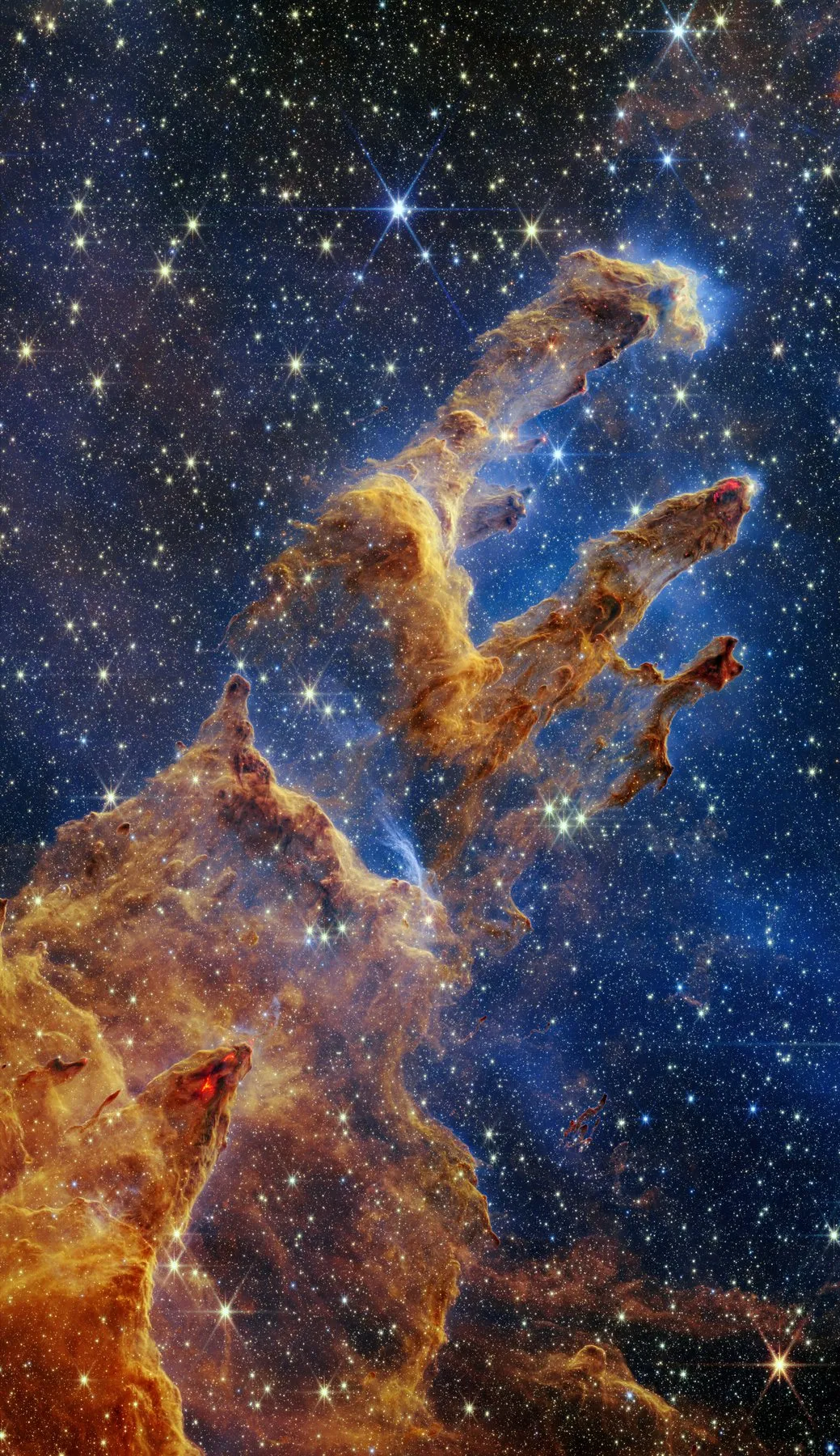
Triton
Neptune's largest moon, which orbits backwards and is probably a captured Kuiper belt object.
NASA, ESA, CSA, STScI; J. DePasquale, A. Koekemoer, A. Pagan (STScI) (CC BY 4.0)
A moon that orbits backwards, and one of the coldest places ever measured.
Triton orbits Neptune in the opposite direction to Neptune’s rotation, which strongly suggests it was captured rather than formed in place.
When Voyager 2 flew past in 1989 it saw a young, sparsely cratered surface and active geyser-like plumes. Its surface temperature of about −235 °C makes it one of the coldest places measured in the solar system.
Àwọn ìṣàmúlò-ètò ààyè-iṣẹ́
Àwọn ìrànwọ́ àti àkọlé lòòlù àwọn módè́ì tí a fi pamọ́ fún ìmọ̀. Kò yẹ ki wọn lò fún ìṣàfihàn, ìṣàmúlò-ètò àti àwọn ìṣẹ̀dá iṣẹ́. Àwọn ìwé-ẹ̀rì ní ọ̀fẹ̀ àti àwọn ààyè-iṣẹ́ kò ní ìgbà gbà. Ka àwọn ìṣàmúlò-ètò ìròyìn