
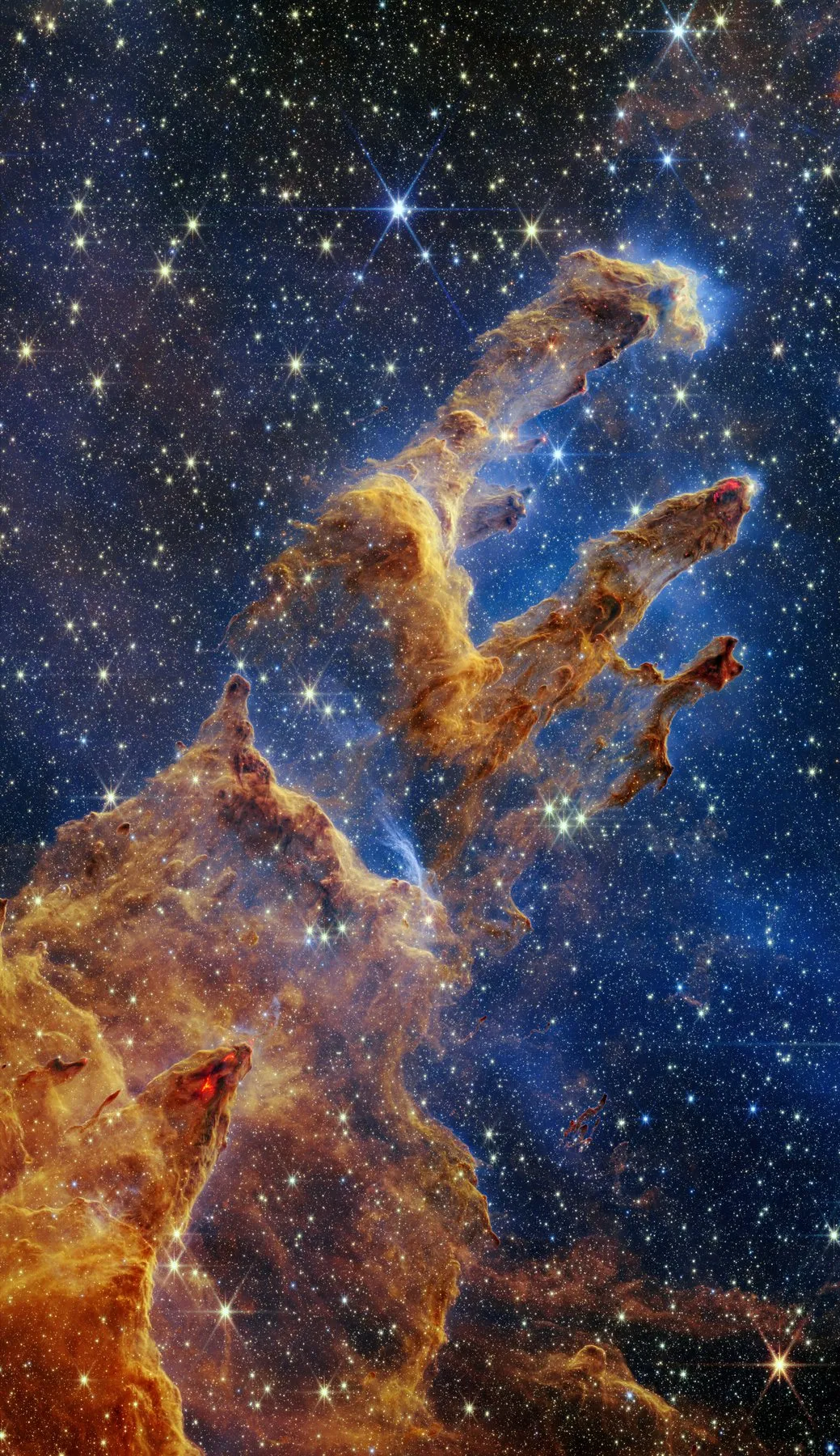
Tritone
Neptune's largest moon, which orbits backwards and is probably a captured Kuiper belt object.
NASA, ESA, CSA, STScI; J. DePasquale, A. Koekemoer, A. Pagan (STScI) (CC BY 4.0)
A moon that orbits backwards, and one of the coldest places ever measured.
Triton orbits Neptune in the opposite direction to Neptune’s rotation, which strongly suggests it was captured rather than formed in place.
When Voyager 2 flew past in 1989 it saw a young, sparsely cratered surface and active geyser-like plumes. Its surface temperature of about −235 °C makes it one of the coldest places measured in the solar system.
Fonti di dati
Gli strumenti e le lezioni utilizzano modelli semplificati solo per l’apprendimento, non devono essere utilizzati per la navigazione, la pianificazione delle missioni o qualsiasi decisione operativa. I certificati sono gratuiti e non accreditati. Leggi il disclaimer sui contenuti educativi