
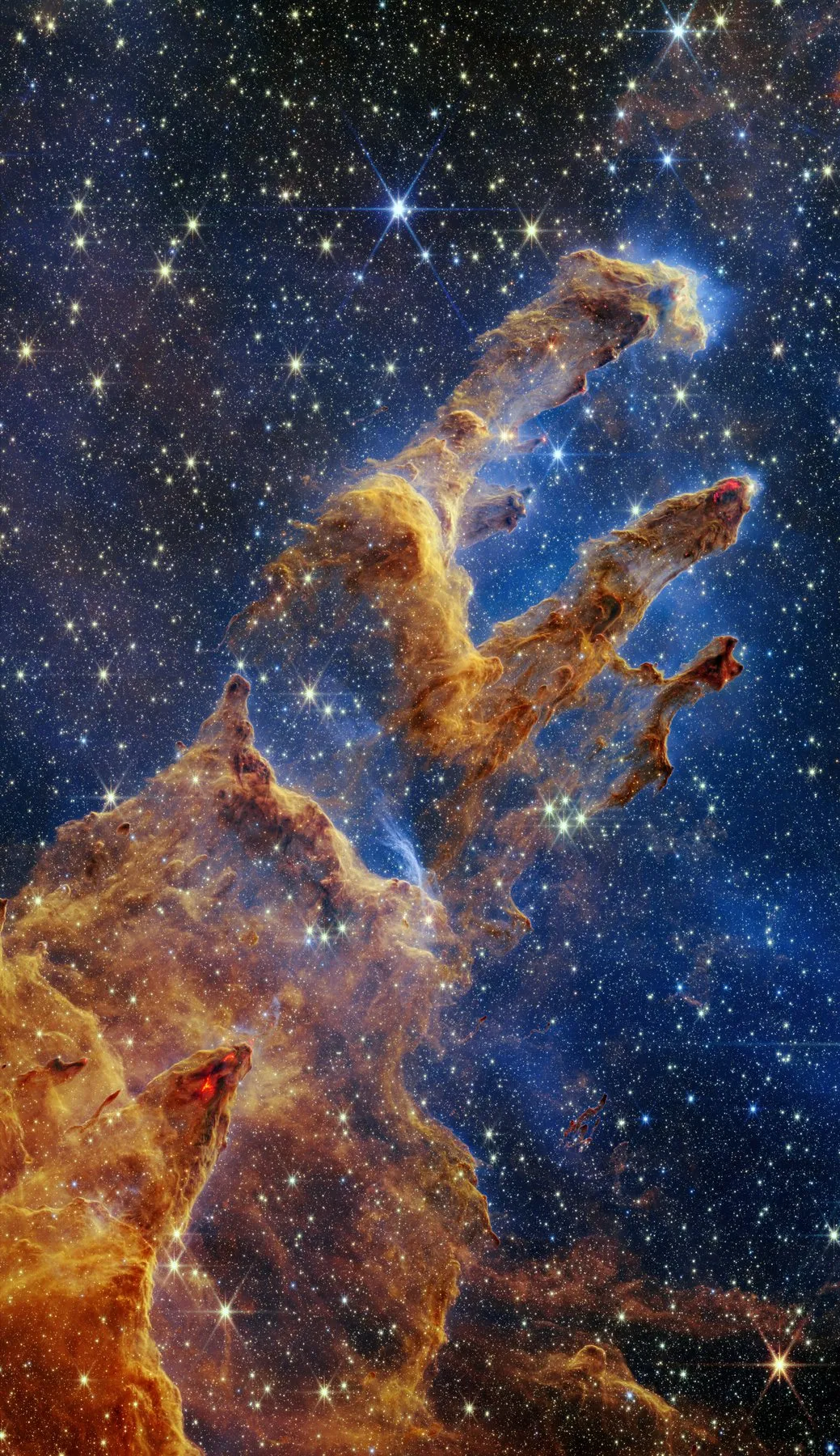
Triton
Neptune's largest moon, which orbits backwards and is probably a captured Kuiper belt object.
NASA, ESA, CSA, STScI; J. DePasquale, A. Koekemoer, A. Pagan (STScI) (CC BY 4.0)
A moon that orbits backwards, and one of the coldest places ever measured.
Triton orbits Neptune in the opposite direction to Neptune’s rotation, which strongly suggests it was captured rather than formed in place.
When Voyager 2 flew past in 1989 it saw a young, sparsely cratered surface and active geyser-like plumes. Its surface temperature of about −235 °C makes it one of the coldest places measured in the solar system.
Nguồn dữ liệu
Công cụ và bài học chỉ dùng mô hình đơn giản để học. Chúng không được dùng cho định hướng, kế hoạch nhiệm vụ hay bất kỳ quyết định hoạt động nào. Chứng nhận là miễn phí và không được công nhận. Đọc bản tuyên bố nội dung giáo dục