
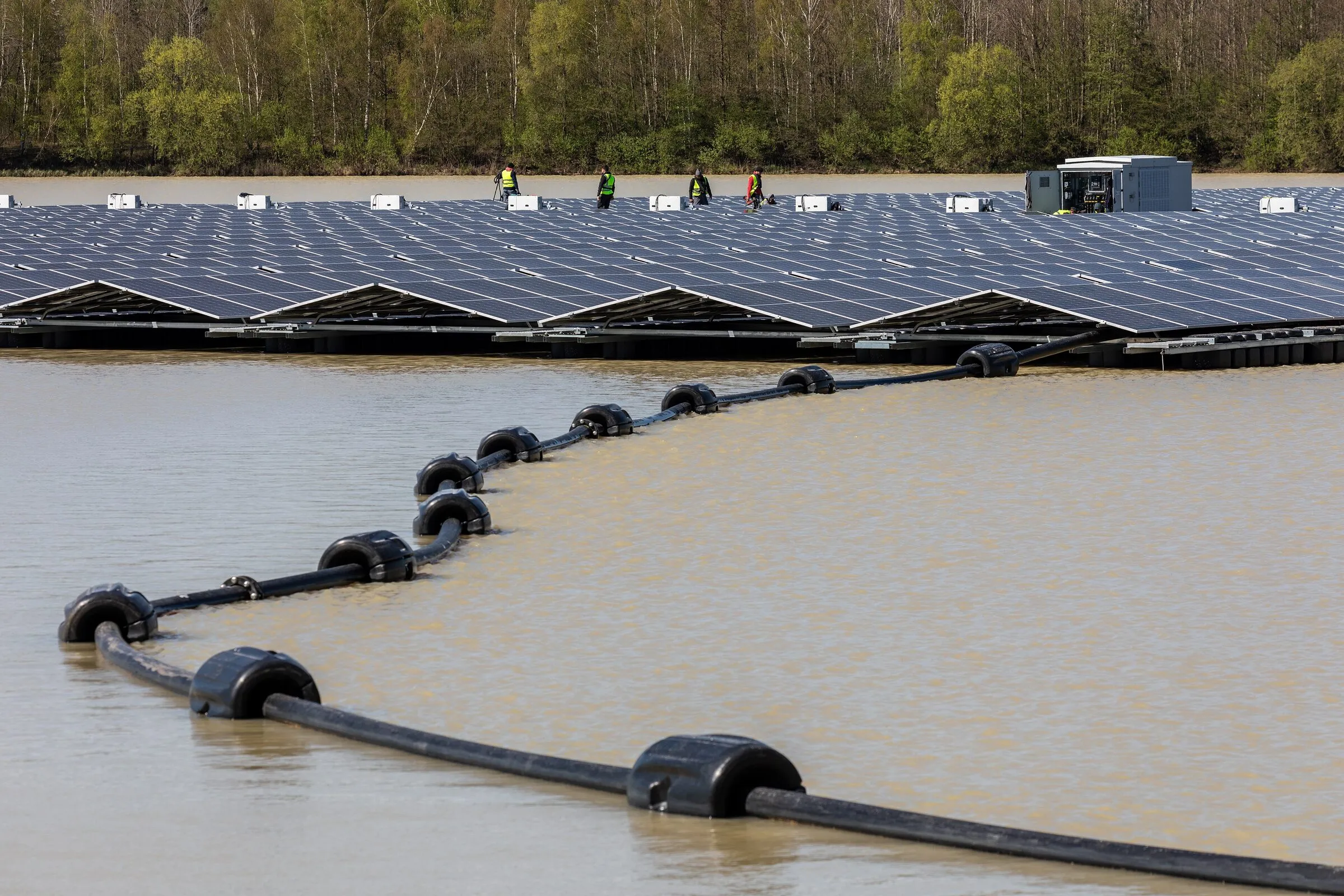
貯水池上の浮遊太陽光発電
Humanity has already flooded more than 400,000 square kilometres behind dams. Floating solar asks a simple question: why leave all that sunlit water empty?
Dietmar Rabich (CC BY-SA 4.0)
貯水池は,道路や電力網,水力発電ダムでは送電線に接続されている大きな平坦な開放的な陽光のある表面である。 浮遊型太陽光発電(FPV)は,普通の太陽電池パネルを底または岸に固定したプラスチック浮体上に設置する。 2007年から2013年の間に数キロワット規模のパイロットから、数百メガワットのプラントへと成長した。
浮体式太陽光発電は,陸上の太陽光よりもコストが少し高く,土地が乏しいところや価値のある場所,貯水池や電力網接続が既にあるところで勝つ。 また,風力発電の効果は,熱効率が向上し,水分を節約できることである。
何だ?
A floating solar plant has four parts: the panels and inverters (the same as on land), floats (usually high-density polyethylene pontoons that hold the panels at a low tilt), walkways for maintenance, and moorings: ropes, chains and anchors or shore ties that keep the island in place as water levels rise and fall and wind pushes on it. ケーブルは浮体に沿って,岸上あるいは浮き台上のインバータへと走る。
水力発電所や飲料水貯留池,灌漑用の池,採石場や鉱山の洪水,排水ラグーンなど人工的な水に生息する植物は多い。 海上浮動ソーラは,より新しい,より難しい変種である。 The World Bank’s market report counted more than 400,000 km² of man-made reservoirs worldwide.
仕組み
同じパネル、同じ日光 浮遊パネルは屋根や田畑でのように電気を作ります P = η × A × G効率に面積を乗せて太陽光を加えるのです 変わるのは周囲の状況だ
Cooling. Panels lose about 0.4% of their output for every degree they warm above 25 °C (see PV-thermal for the physics). 太陽光が熱し,風と放射が冷やすというバランスでパネルの温度を設定する。 技術者はこれをこう書きます T_module = T_air + G / Uここで U 熱損失係数です 水面上では空気が冷たく湿度が高く,開放型の場合はパネルの背面が水面を見ている。 Field tests found the best floating designs raised U by up to 22 W/m²K compared with reference systems, made panels 3.2 °C cooler in the Netherlands and 14.5 °C cooler (compared with a rooftop system) in Singapore, and gave up to 3% and 6% more energy a year (Dörenkämper et al., 2021). 浮体がパネル下の水を覆う設計では,得られる効果はかなり少ない。
蒸発 パネルは水を遮蔽し、風の速度を遅らせるため、蒸発量が少なくなる。 On hot, dry reservoirs this can matter as much as the electricity: Jin and colleagues estimate 106 km³ a year saved in their 30% scenario, modelled rather than measured.
Power per hectare. Floating arrays usually sit at a low tilt and are packed closely, so one hectare of water holds roughly as much capacity as one hectare of land, about 1 MW, and produces similar energy. Cirata in Indonesia fits 192 MWp on about 200 hectares (Jakarta Post, 2023).
水力発電とハイブリッド 水力発電用貯水池では,同じ配電網を利用して太陽光発電が可能であり,日中はダムに蓄えられた水を夜間に放出できる。
限界
理論的に 浮遊は日光を変えない:浮遊パネルは陸上の同じパネルよりも、よくても数%多く作る。 地球規模の潜在力は大きいが,それぞれの貯水池を損なわずにどれだけカバーできるかによって制限される。 The Jin et al. study caps each reservoir at 30% and 30 km².
実用的だ
- 風、波、水位 また,パネルの島を嵐や数十mの水位変動に耐えられるような係留が必要である。 In April 2024 a storm with winds of about 50 km/h badly damaged the newly completed 88 MW Indawadi plant, part of the Omkareshwar floating solar park in India (Times of India, 2024).
- Cost. Floats, anchors and marine-grade connections cost more than ground frames; the US benchmark premium is about 25% (Ramasamy and Margolis, 2021).
- 保守 水中の生物汚染は,鳥類排せつ物や藻類などが原因である。
- 生態学 水を覆うことにより,光と風の混合が減少する。 水温,酸素,藻類および魚に対する影響を系統的に検討した結果,関係者は蒸発の減少が最大の機会であり,脱酸素を含む水化学変化が最大の脅威であると評価した。 Only 15% of operators surveyed had tested water quality at all (Exley et al., 2021).
- 他のユーザー 飲料水の公共事業者、ボート乗り、釣り人、自然保護区はすべて表面に言葉を持っている。
実際のプロジェクト、測定
| プロジェクト | 何だ? | 測定されたものまたは報告されたもの | ソース |
|---|---|---|---|
| オランダとシンガポールの浮体式太陽光発電試験場 | 地上および屋根上の基準系に加えて,温度と照射センサを備えた幾つかの浮遊設計について述べた。 | Best floating systems 3.2 °C (Netherlands) and 14.5 °C (Singapore) cooler, weighted by sunlight; heat-loss coefficient up to 22 W/m²K higher; up to 3% and 6% more yield | Dörenkämper et al., 2021 |
| テンゲ貯水池、シンガポール(2021年) | 国水事業所の飲料水貯留池60MWp | Opened July 2021 as one of the largest inland floating plants of its time | Straits Times, 2021 |
| インドネシア西ジャワ州チラタ(2023年) | 192 MWp, about 340,000 panels, on a hydropower reservoir | Expected to supply about 50,000 households; reported cost about $100 million (expected output, not yet independently published) | Jakarta Post, 2023 |
| インド・マディヤプラデーシュ州オムカレシュワル(2024年) | インダワディの88MWを含むダムの後水道にある複数の発電所 | A storm in April 2024 caused “major loss” to panels a week after the Indawadi plant began operating | Times of India, 2024 |
| 世界市場 | 2018年中頃の約1.1GWから2022年までに約13GWに増加し、主にアジアである。 | 産業推定 | World Bank, 2018; Bloomberg, 2023 |
世界銀行の報告書によれば、性能上の利点は「まだ大規模な設置で確認されておらず、複数の地域にわたり、時間をかけて確認されている」。 大規模運営者は測定した収量,水質,または嵐被害をほとんど公表しない。
どれだけかかる?
| オプション | コスト | 年月日・出典 |
|---|---|---|
| 浮体式太陽光発電所,10MW,アメリカ合衆国 | $1.29 per W installed against $1.03 on land; cost of electricity about $0.057 per kWh against $0.047 on land (without tax credits) | 2021, NREL、ラマサミとマーゴリス |
| 浮体式太陽光発電プラント,50MWジェネリックプラント | 7%の割引率で陸上5.0円/kWhに対し5.6米ドル/kWh;資本費 $0.8 to $2018年のワット当たり1.2 | 2018, 世界銀行 |
| アメリカ合衆国の陸上型太陽光発電 | $0.04 to $0.10キロワット時 | June 2026, Lazard LCOE+ version 19 |
| ベンチマーク:建物の屋上ソーラー | about $0.19 per kWh, central | 私たちの ファンウォールモデル |
| 商業用・コミュニティ用屋上ソーラー発電所 | $0.09 to $0.20キロワット時 | June 2026, Lazard |
What the table says: floating solar costs about 10 to 20% more per kWh than solar on land, and much less than solar on a typical roof. Where land is expensive, protected or simply not available near the grid, that premium is small. NREL研究では,コストはフロートの価格,風荷重と雪荷重,モジュール効率に最も敏感であった。
勝てる場所と 負けられる場所
勝ち取れるものは
- 人口密集地域 シンガポール 日本 韓国 オランダ 南アジアや東南アジアの多くです
- 水力発電所太陽が輝く間は水を止められる
- 採石場、鉱山、工業用池の浸水 使い道がないものです
- 熱帯・乾燥地域 蒸発に伴う水の損失が高く 冷却効果が最大になるのです
- 水道事業 貯水池から自分たちでポンプと処理を行うことができるのです
勝てない
- 土地が安く豊富な場所 乾燥地における太陽光発電は,一般的に安価で簡単である。
- 野生生物が豊富な湖や遊泳用の湖生態学的証拠が無害だと言わない限り
- 暴露された嵐の中で 高価な係留施設もなく 工学的に飛躍することもなく海上で運用できます
- 水源としての重要性が高まる 蒸発節約は実在するがモデル化されており,助けるが新しい川を作らない。
証明されたもの、可能性のあるもの、推測的なもの
テスト済み: 数百メガワットの浮遊プラントが建設され運用できること 陸上での太陽光よりも少し高いコストだと 水冷は開放的な設計では収量を数パーセント増やすことができる 嵐は不適切に停泊したプラントを損傷させる
可能性: 蓄水池の適度な割合を覆うことで蒸発が減少するとモデル化されており、太陽光と水力の組み合わせによって貯蔵として利用することにより価値が付加され、遮光はある蓄水池で有害な藻類の繁殖を減らすことができる。
Speculative: that global potential in the thousands of terawatt-hours is practical once ecology, water use and grids are counted; long-term (25 year) behaviour of floats and moorings in sunlight and water; that open-sea floating solar can be made affordable.
開放的な研究課題
- 10,30,50%の被覆率は酸素,温度層分布,藻類および魚にどう影響するかを年間測定した。
- 実際にどれだけの蒸発が減少しているかを,モデルよりも水平衡で測定した。
- 浮体は紫外線下でどれだけ長く持続するのか,また微小プラスチックや化学物質を飲料水に放出するのか。
- 極端な嵐や大規模な水位変動に耐えられるような係留設計はどのようなものであるか。
- 太陽光発電と水力発電をどうすれば一緒に運転して両者がより多くの収益を得られるか?
実用的なプロトタイプには
浮遊の新しいアイデア(より良い浮体,モーリング,冷却方法または生態的設計)に対して,実際の水上で陸上基準と並んで測定した小さなアレイが作動モデルである。
| 位相 | ワーク | 証明する事は | 粗費 | タイム |
|---|---|---|---|---|
| 0.設計研究 | 風・波・水位からの荷重,浮体と係留設計,簡単な熱モデル | 紙の上でのデザインは 現場の嵐を生き延びる | $10k to $30k | 2~3ヶ月 |
| 1. Test raft | 5 to 20 kW on a pond or reservoir beside an identical land array, module temperatures, output, wind and water data, one year | 測定した降伏増加,温度,早期摩耗 | $40k to $120k | 12ヶ月 |
| 2.生態学と耐久性 | 嵐の季節におけるラフト下と離れた水質サンプル,浮体老化と係留荷重 | 環境影響と生存 | $50k to $150k | 1年~2年(重複) |
| 3.パイロットプラント | 0.5 to 2 MW with a reservoir owner, permits, grid connection | 銀行に適した設計 | 大きさによって | 1年から2年 |
フェーズ0から2の費用は $100,000 to $300,000. これは私たちの予測で、引用ではありません。
誰が必要なのか
- 海軍建築家 船の浮き輪や泊地、嵐荷を用意しました
- 太陽光発電システム技術者 電気設計や水辺の安全に関するものです
- 淡水学者 水質や野生生物のモニタリングを設計するために使われています
- 水文学者 蒸発と水分バランスを測定するために使われています
- 貯水池所有者・給水施設 テストラフトを開催する気がある
- ポリマー専門家 浮体の老化と浸出をテストしました
もっといい考えは?
もしかしたら安い浮き輪や 賢い泊まり方 パネルを冷却する設計があるかもしれない Local Solar System財団のメンバーの中には、強力なエネルギーアイデアのためにピッチを聞くことができる人がいるかもしれない。 ピッチングするには、アイデアは実際にパワーを生み出す、機器で測定された、実在のモデルが必要である。 論文のアイデアも歓迎する。物理学と数値が確実なら、ここでウェブサイトに公開できる。 実用化モデルがないと資金調達は非常に困難であり,資金調達やリターン,導入を約束することはできない。
For floating solar, the cheapest measurement that counts as a working model is a small raft of panels on a pond next to an identical set on land, both metered, with module temperatures logged through at least one summer. That shows whether the cooling gain is real for your design. それを 貢献フォーム に送り、 アイデアレーダー の他のアイデアと比較する。 関連ページ: 農業用太陽光発電 水の代わりに農地を共有し 小規模な水力発電や 既に流れている水からエネルギーを取り出します
ソース
- Jin, Y., Hu, S., Ziegler, A.D. et al. (2023). 地球規模の貯水池における浮遊太陽光発電によるエネルギー生産と節水について述べた。 Nature Sustainability 6, 865-874.
- ^ a b c d e f g h i j k l m n o p q r s t u v w x y z aa ab ac ad ae af ag ah ai aj ak at au aq ak aq aq aq aq aq aq aq aq aq aq aq aq aq aq aq aq aq aq aq aq aq aq aq aq aq aq aq aq aq aq aq aq aq aq aq aq aq aq aq aq aq aq aq aq aq aq aq aq aq aq aq aq aq aq aq aq aq aq aq aq aq aq aq aq aq aq aq aq aq aq aq aq aq aq aq aq aq aq aq aq aq aq aq aq aq aq aq aq aq aq aq aq aq aq aq aq aq aq aq aq aq aq aq aq aq aq aq aq aq aq aq aq aq aq aq aq aq aq aq aq aq aq aq aq aq aq aq aq aq aq aq aq aq aq aq aq aq aq aq aq aq aq aq aq aq aq aq aq aq aq aq aq aq aq aq aq aq aq aq aq aq aq aq aq aq aq aq aq aq aq aq aq aq aq aq aq aq aq aq aq aq aq aq aq aq aq aq aq aq aq aq aq aq aq aq aq aq aq aq aq aq aq aq aq aq aq aq aq aq aq aq aq aq aq aq aq aq aq aq aq aq aq aq aq aq aq aq aq aq aq aq aq aq aq aq aq aq aq aq aq aq aq aq aq aq aq aq aq aq aq aq aq aq aq aq aq aq aq aq aq aq aq aq aq aq aq aq aq aq aq aq aq aq aq aq aq aq aq aq aq aq aq aq aq aq aq aq aq aq aq aq aq aq aq aq aq aq aq aq aq (2021). The cooling effect of floating PV in two different climate zones: a comparison of field test data from the Netherlands and Singapore. Solar Energy 214, 239-247.
- Ramasamy, V. and Margolis, R. (2021). 浮遊太陽光発電システムコストベンチマーク:人工水域における2021年第1四半期の設置. NREL/TP-7A40-80695.
- ^ 世界銀行グループ、ESMAPとSERIS(2018年)。 太陽と水の会合:浮動ソーラー市場報告書,要約.
- また,この方法は,従来の方法と比較して,より高い精度を有する。 (2021). 科学的および関係者の証拠に基づく評価:浮遊太陽光発電への生態系応答と持続可能性への意味。 再生可能エネルギーと持続可能なエネルギーレビュー152, 111639.
- Ember (2025). Global Electricity Review 2025:低炭素源は2024年の世界電力の40.9%(12,609 TWh)であり、総計約30,800 TWhを意味する。
- チョン (2021). シンガポール初の大規模太陽光発電プラントがテンゲ湖にオープン. The Straits Times, 14 July 2021.
- AFP (2023). ジョコビが東南アジア最大の浮遊型太陽光発電所を開業. The Jakarta Post, 9 November 2023.
- Times of India (2024). Storm damages world’s biggest floating solar plant in Madhya Pradesh, 12 April 2024.
- Bloomberg (2023). Floating solar panels turn old industrial sites into green energy goldmines, 3 August 2023.
- Lazard (June 2026). Levelized Cost of Energy+, version 19.
- Local Solar System Foundation (2026). ファンウォール:開放型屋上ソーラーベンチマークです