
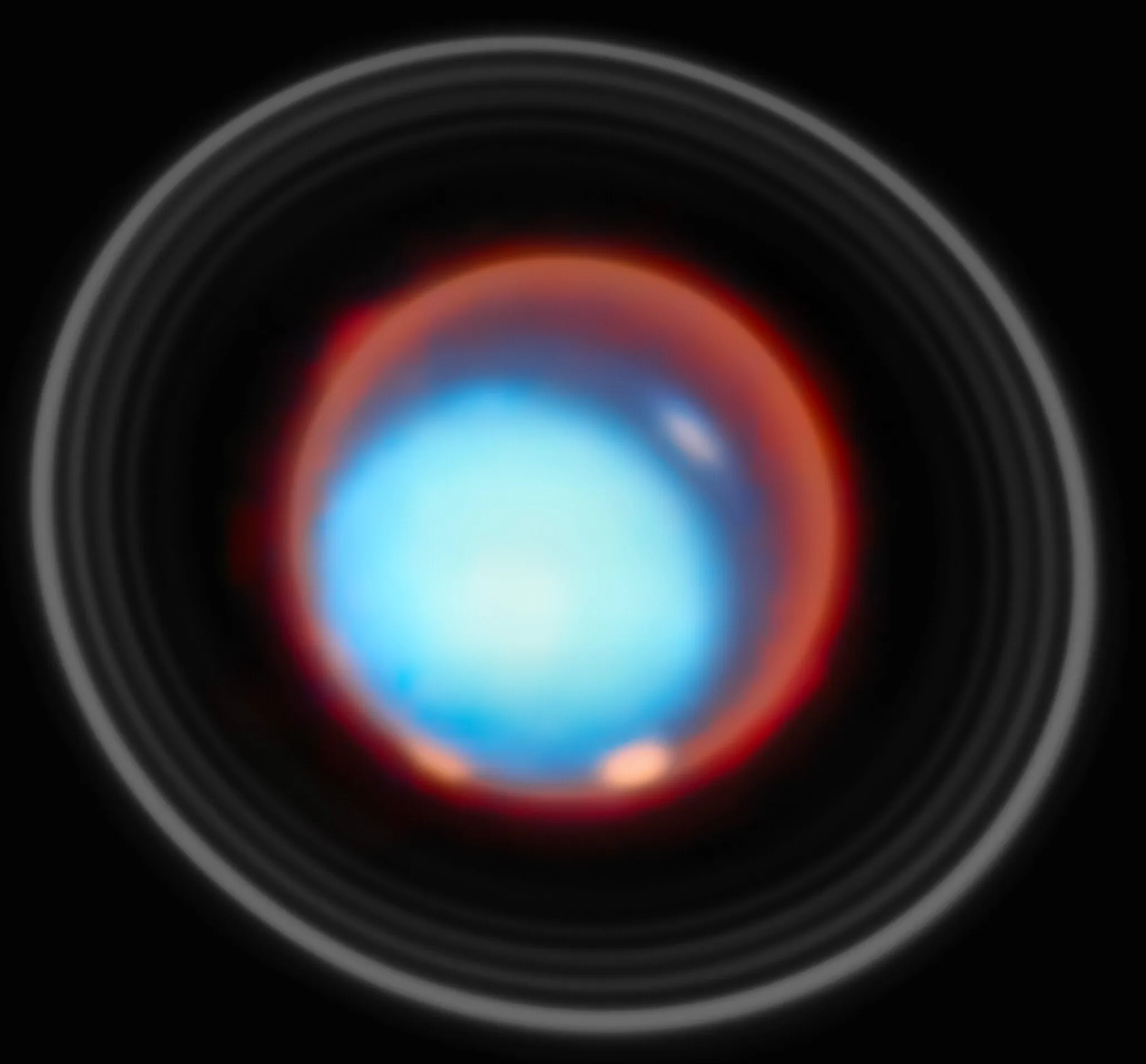
ESA/Webb, NASA, CSA, STScI, P. Tiranti, H. Melin, M. Zamani (ESA/Webb) (CC BY 4.0)
A planet knocked on its side, where each pole gets decades of daylight and then decades of night.
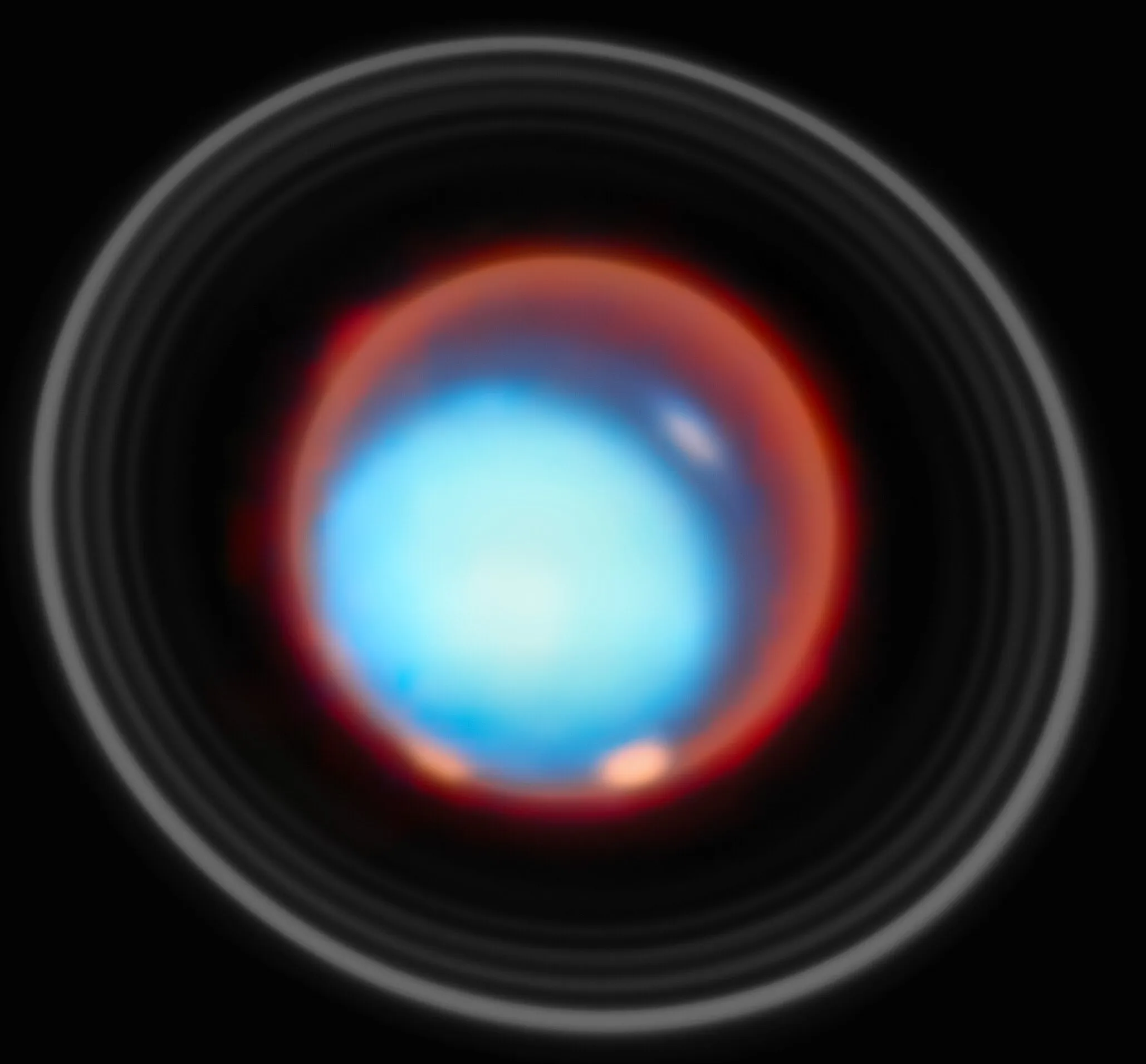
Uranus is an ice giant: beneath its hydrogen and helium atmosphere lies a thick layer of water, methane and ammonia ices. Methane in its atmosphere gives it a pale blue-green colour.
Its axis is tilted so far that it rolls around the Sun on its side. Each pole gets about 42 years of continuous sunlight followed by 42 years of darkness. It was the first planet discovered with a telescope, by William Herschel in 1781.
数据来源
工具和课程仅使用简化模型进行学习,不得用于导航、飞行任务规划或任何操作决策。 证书是免费的且无认证。 阅读教育内容免责声明