
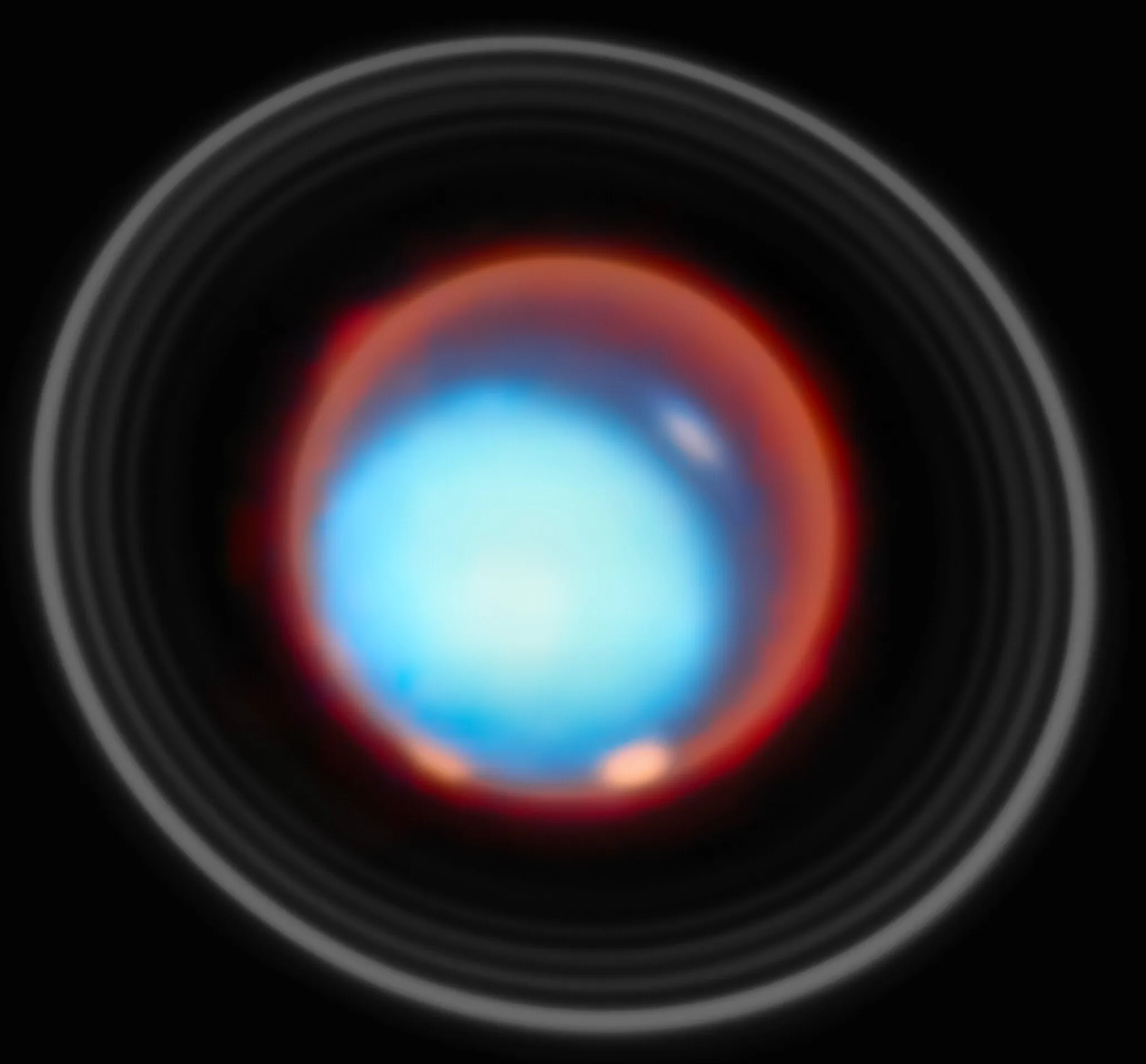
Uran
An ice giant that spins on its side, with an axial tilt of about 98 degrees.
ESA/Webb, NASA, CSA, STScI, P. Tiranti, H. Melin, M. Zamani (ESA/Webb) (CC BY 4.0)
A planet knocked on its side, where each pole gets decades of daylight and then decades of night.
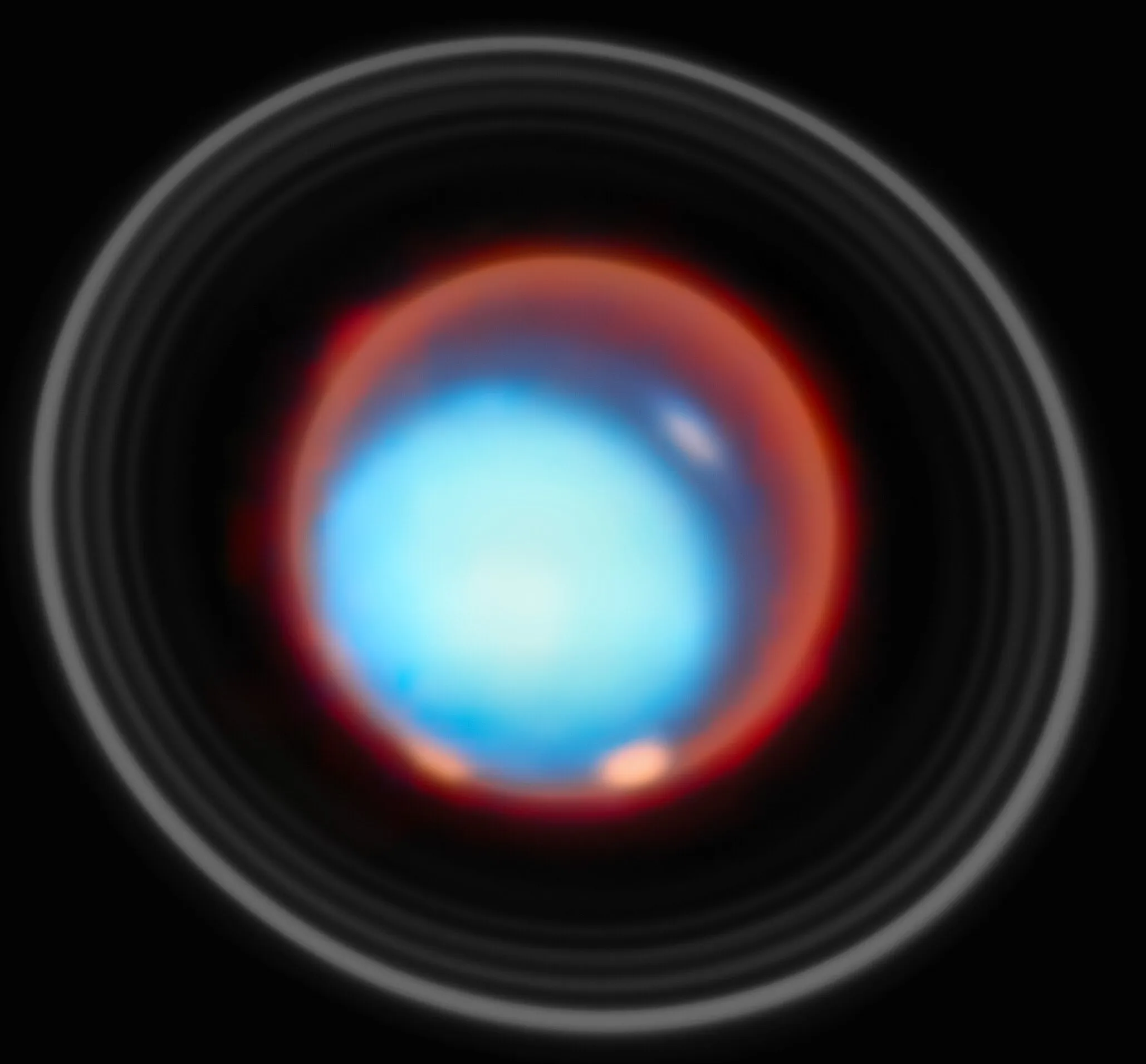
Uranus is an ice giant: beneath its hydrogen and helium atmosphere lies a thick layer of water, methane and ammonia ices. Methane in its atmosphere gives it a pale blue-green colour.
Its axis is tilted so far that it rolls around the Sun on its side. Each pole gets about 42 years of continuous sunlight followed by 42 years of darkness. It was the first planet discovered with a telescope, by William Herschel in 1781.
Məlumat mənbələri
Vasitələr və dərslər yalnız öyrənmək üçün sadələşdirilmiş modellərdən istifadə edir. Onlar səyahət, missiya planlaşdırması və ya hər hansı bir əməliyyat qərarı üçün istifadə edilməməlidir. Vəsiqələr pulsuzdur və akkreditə edilmir. Təhsil məzmununun məsuliyyətsizliyini oxu