
Àwọn àyọkà ìṣàfarawégbè
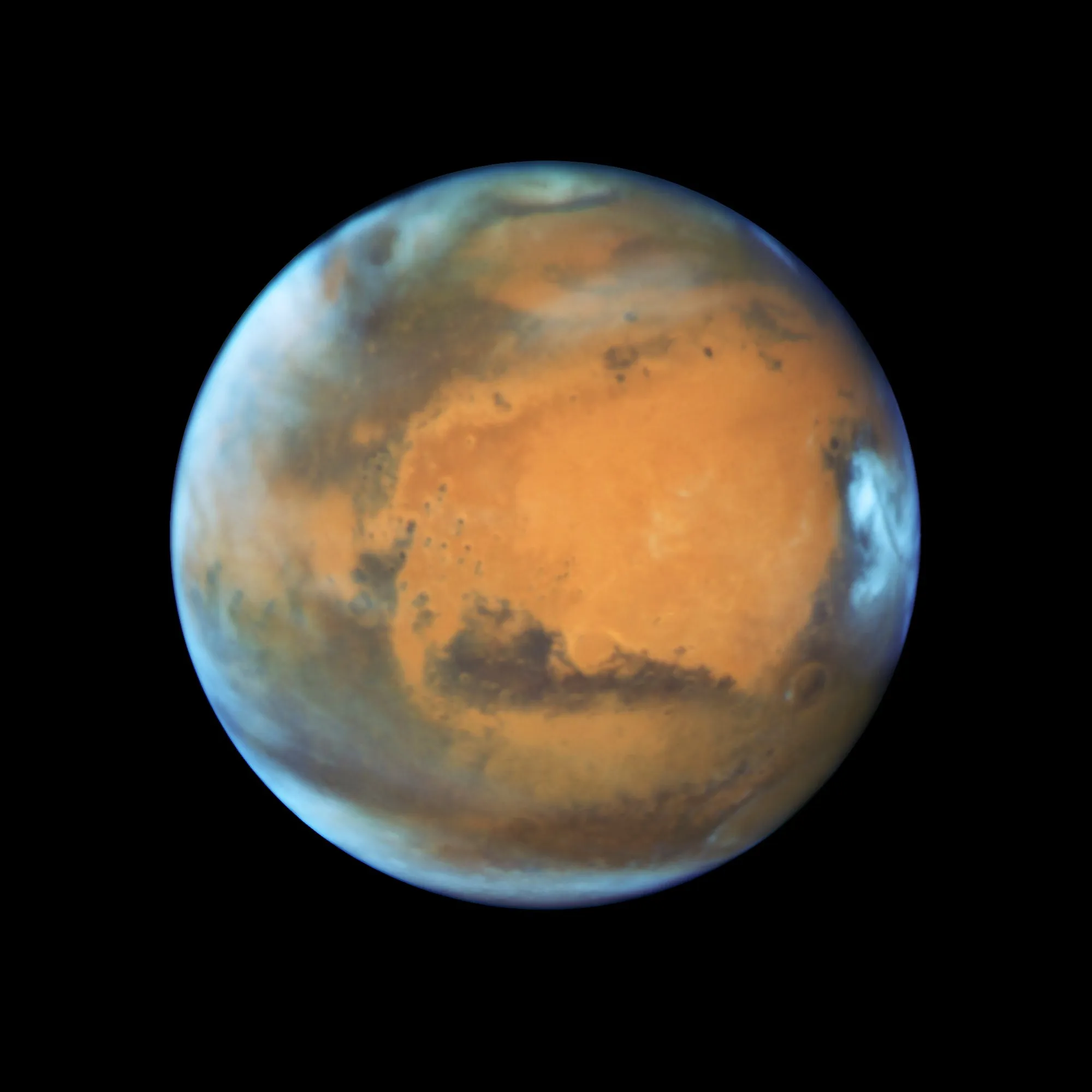
The red planet: cold, dusty, with the largest volcano and one of the longest canyons in the solar system.
NASA, ESA, the Hubble Heritage Team (STScI/AURA), J. Bell (ASU), and M. Wolff (Space Science Institute)
A cold red desert with the largest volcano and one of the longest canyons in the solar system.
Mars is about half Earth’s diameter. Iron oxide dust gives it its red colour. Its thin carbon dioxide atmosphere has a surface pressure below 1% of Earth’s.
Olympus Mons, an extinct volcano, rises about 22 km above its surroundings, and the Valles Marineris canyon system stretches about 4,000 km. A Mars day lasts 24 hours 40 minutes, and its axial tilt (25.2°) gives it seasons like Earth’s. It has two small moons, Phobos and Deimos.
Àwọn ààyè-iṣẹ́ nínú ìmọ̀dá
Wáròyìn nínú àwọn ìṣàmúlò-ètò
Àwọn ìṣàmúlò-ètò ààyè-iṣẹ́
Àwọn ìrànwọ́ àti àkọlé lòòlù àwọn módè́ì tí a fi pamọ́ fún ìmọ̀. Kò yẹ ki wọn lò fún ìṣàfihàn, ìṣàmúlò-ètò àti àwọn ìṣẹ̀dá iṣẹ́. Àwọn ìwé-ẹ̀rì ní ọ̀fẹ̀ àti àwọn ààyè-iṣẹ́ kò ní ìgbà gbà. Ka àwọn ìṣàmúlò-ètò ìròyìn