Saturn
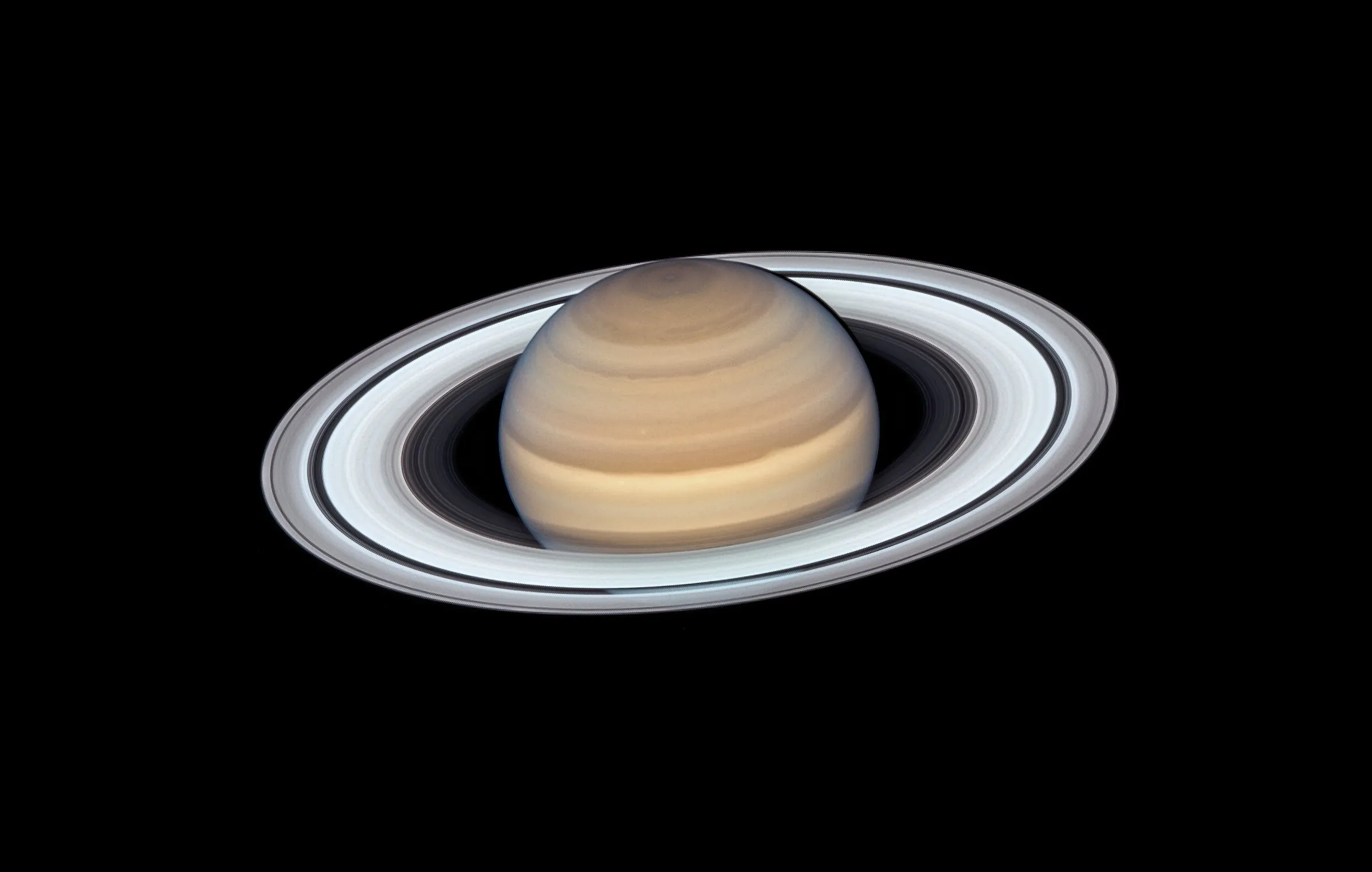
The ringed giant, the least dense planet: its average density is lower than water's.
NASA, ESA, A. Simon (Goddard Space Flight Center), and M.H. Wong (University of California, Berkeley) (CC BY 4.0)
A giant light enough to float in water, if you could find a bathtub big enough, wearing the most spectacular rings in the solar system.
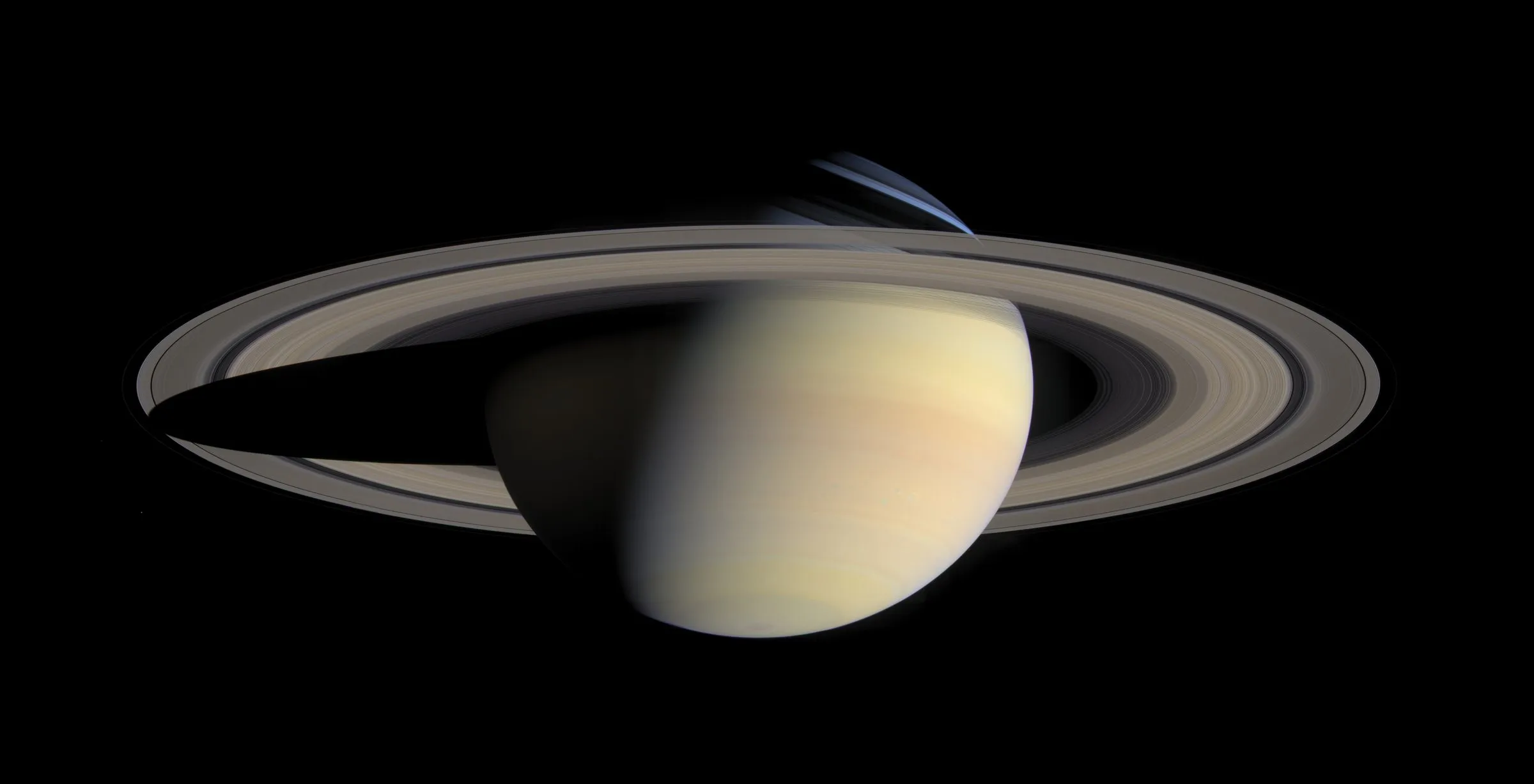
Saturn is a gas giant made mostly of hydrogen and helium. Its bright rings are made of countless pieces of water ice and rock, from dust grains to boulders; they are hundreds of thousands of kilometres wide but mostly only tens of metres thick.
Its average density, about 0.69 g/cm³, is lower than that of water. Its largest moon, Titan, has a thick atmosphere, and the small moon Enceladus sprays water ice from an underground ocean.
Księżyce w bazie wiedzy
Źródła danych
Narzędzia i lekcje wykorzystują uproszczone modele wyłącznie do celów edukacyjnych, nie mogą być używane do nawigacji, planowania misji ani podejmowania jakichkolwiek decyzji operacyjnych. Certyfikaty są bezpłatne i nieakredytowane. Przeczytaj zastrzeżenie dotyczące treści edukacyjnych